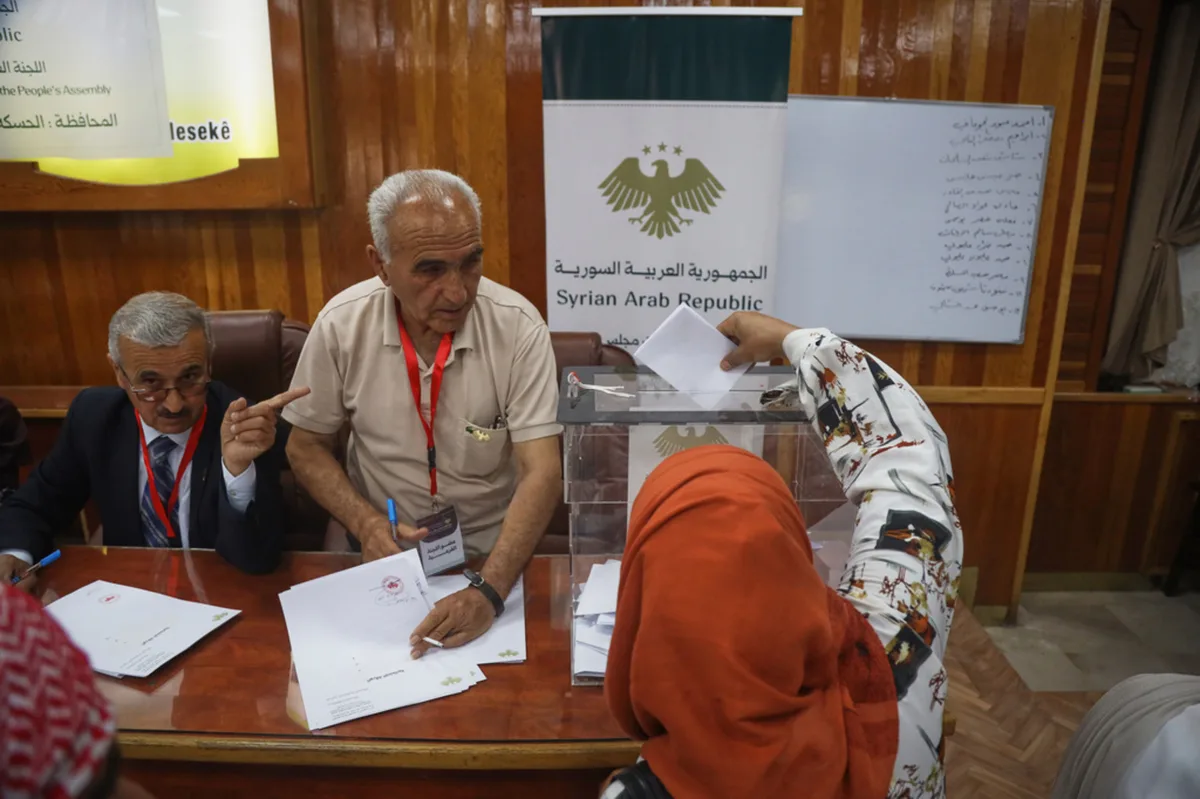
Syria held parliamentary elections on May 24, 2026, in the northeastern and northern districts of Hasakah, Qamishli, and Ain al-Arab (Kobane), areas formerly controlled by Kurdish forces and now reintegrated under government authority after more than a decade [1, 2].
Polling stations opened in Hasakah and Qamishli districts within Hasakah province and in Ain al-Arab district of Aleppo province [2]. In Ain al-Arab, 12 candidates competed for two seats, with 100 eligible electors registered to vote [2]. Hasakah had 13 candidates vying for three seats among 150 eligible voters, while Qamishli saw seven candidates contest four seats with 198 registered electors [2].
In Hasakah’s al-Malikiyah district, seats were filled uncontested as only two candidates registered [2]. Voting was scheduled to continue until midday, with a possible one-hour extension if voter turnout failed to meet a threshold [2]. Vote counting began immediately after polls closed, with preliminary results expected on the same day [2].
These elections are part of a transitional period under the Syrian People's Assembly, which has 210 members serving 30-month renewable terms. The Assembly is responsible for proposing and passing laws, ratifying treaties, approving national budgets, and granting amnesties [2].
The contest marks a continuation of Syria's post-conflict political reorganization following the fall of the Bashar al-Assad regime in late 2024. The first parliamentary elections under the new regime were held in October 2025, though elections in Suwayda, Raqqa, and Hasakah were postponed in August 2025 due to security concerns [2]. Elections in Raqqa took place in March 2026, recording over 90% turnout and resulting in four successful candidates [2].
The May 24 vote in Hasakah, Qamishli, and Ain al-Arab marks the first elections in these formerly autonomous Kurdish areas since their reintegration. Authorities expect final results to be announced soon following the vote count [1, 2].