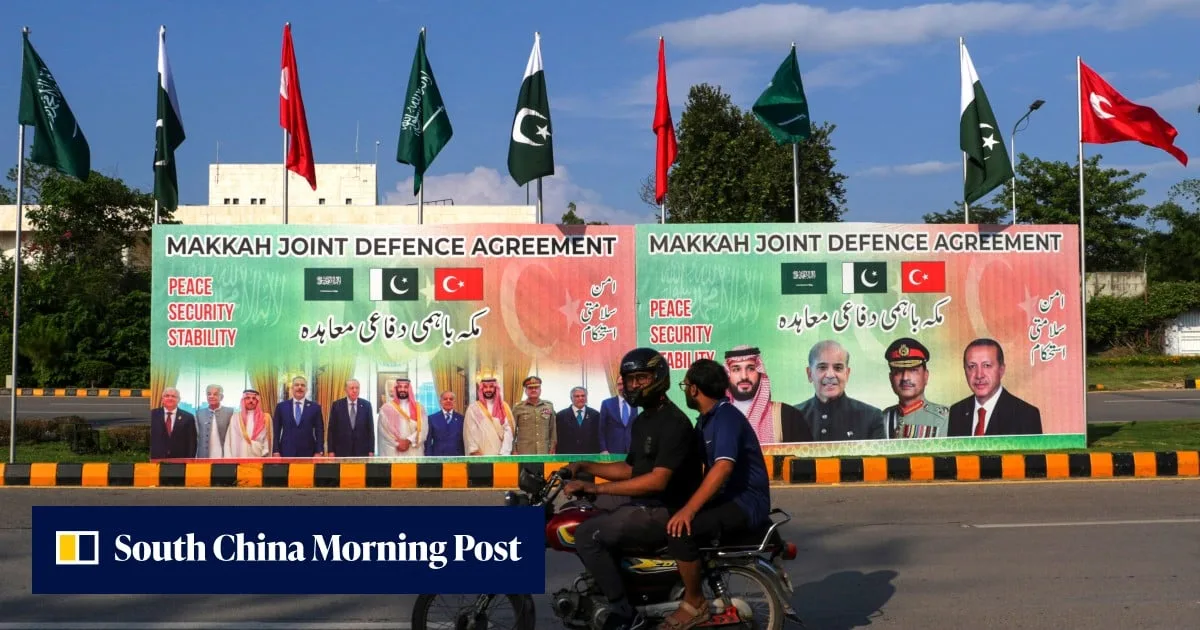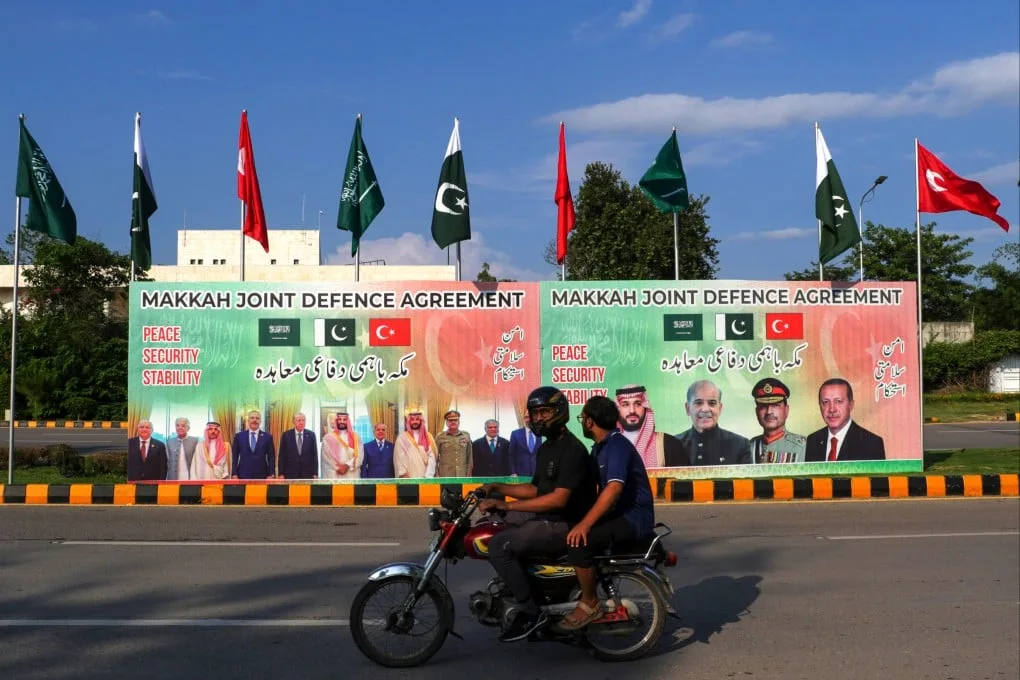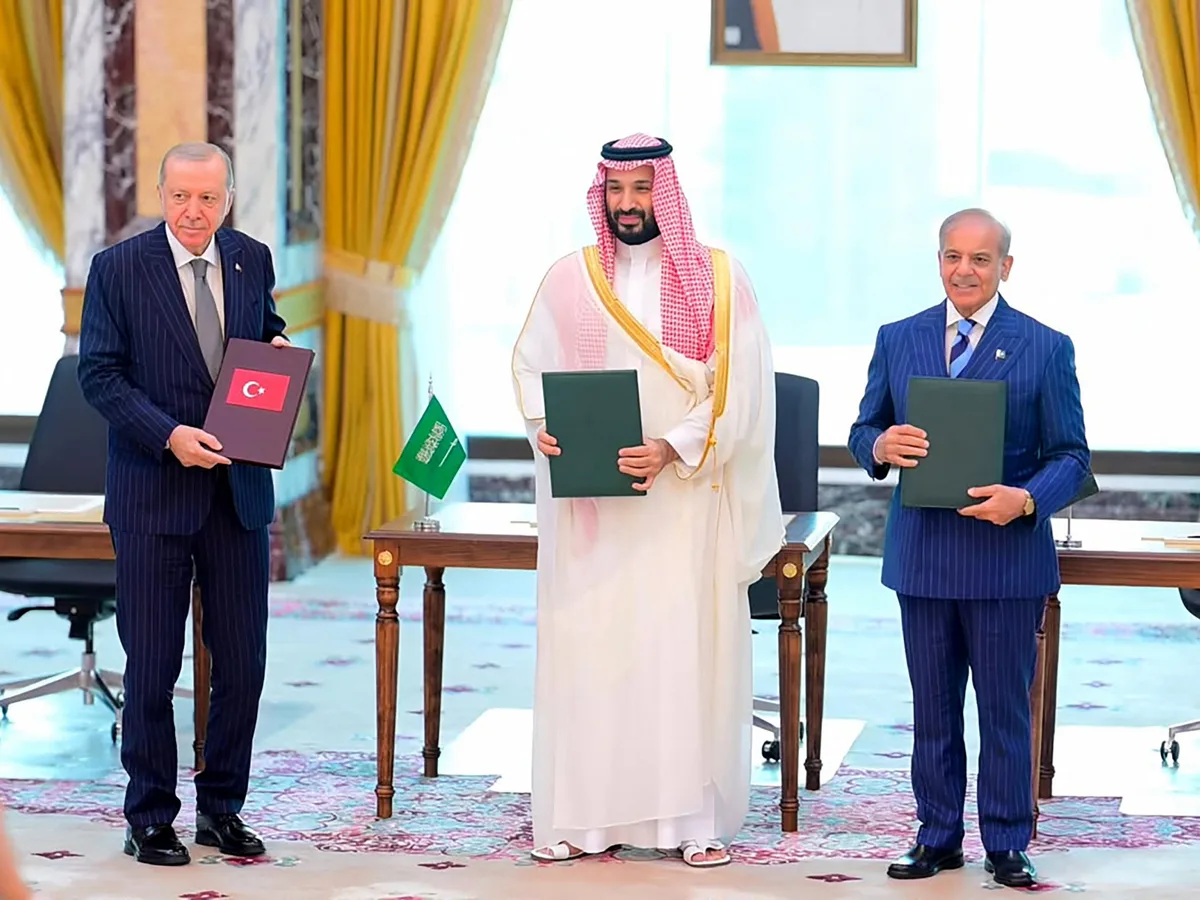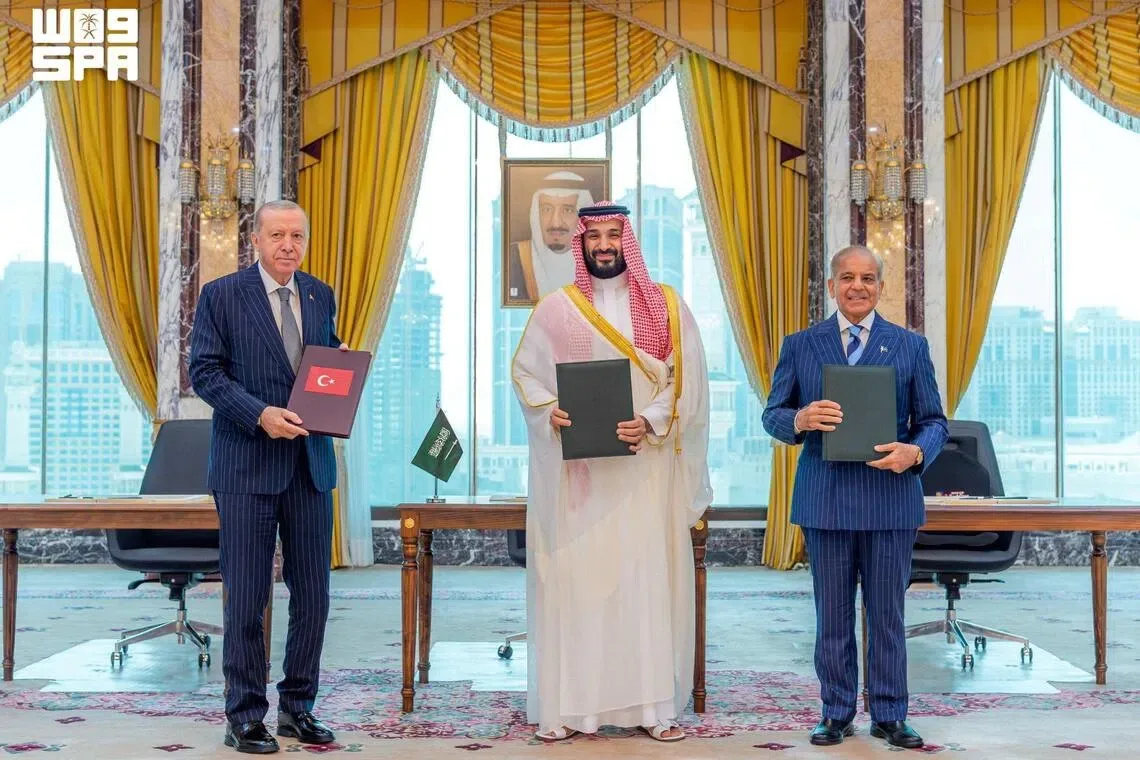
Turkey, Saudi Arabia, and Pakistan signed a joint defence agreement on August 7, 2026, in Mecca, committing to regard an armed attack against any one of the three countries as an attack against all three [1, 2, 3, 4, 5]. The agreement was signed by Turkish President Recep Tayyip Erdogan, Saudi Crown Prince Mohammed bin Salman, and Pakistani Prime Minister Shehbaz Sharif [1, 4, 5, 6].
The pact aims to strengthen collective deterrence, deepen defence cooperation, and promote regional peace and stability [4, 5, 6, 7]. Officials said the agreement is a defence-oriented cooperation arrangement that does not target any specific country [4, 8, 5, 9, 7]. Pakistan’s Foreign Minister Ishaq Dar emphasized the pact is purely defensive, consistent with Article 51 of the UN Charter, and open to peaceful conflict resolution [8, 9, 7]. He stated, “Any external armed attack on any one of the three countries will be considered an attack on all,” and reaffirmed commitment to peace and stability [8].
The agreement does not replace or override any existing bilateral or multilateral agreements that the three countries have with each other or other states [8, 9]. It remains open to other regional countries willing to uphold its principles and resolve differences through peaceful means [8, 9].
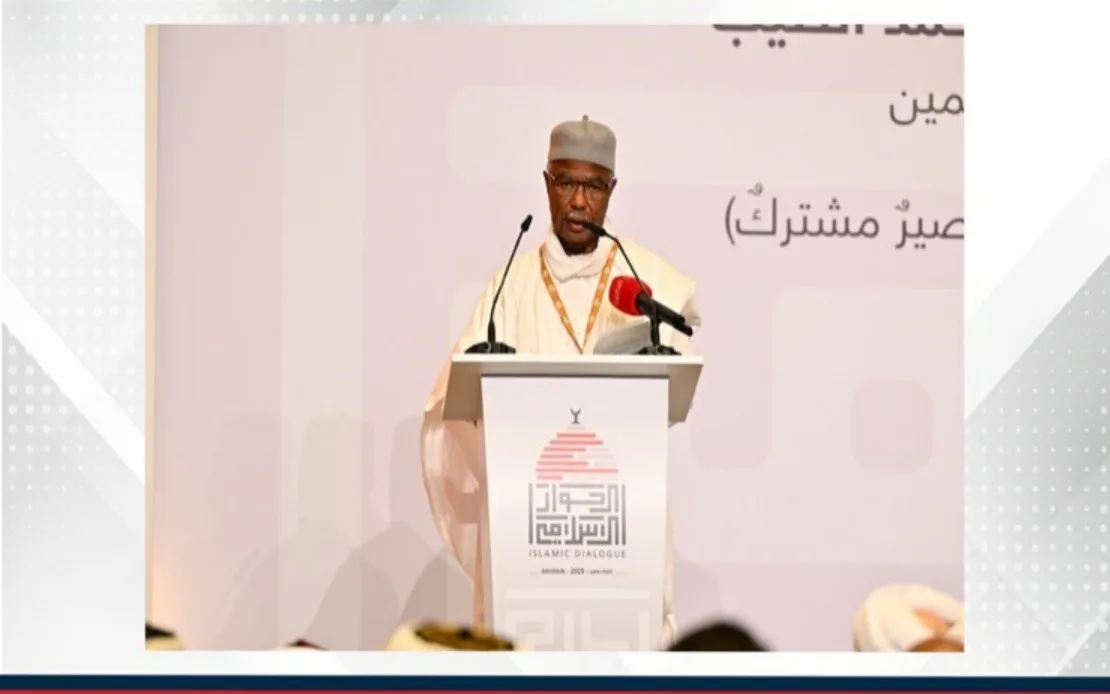
The Organisation of Islamic Cooperation (OIC) welcomed the pact on August 8, calling it a historic step. OIC Secretary-General Hissein Brahim Taha said the agreement constitutes “a fundamental pillar for supporting security and stability in the region and across the Muslim world” [4, 5]. Yemen’s Foreign Ministry also praised the pact as a strategic advancement in enhancing defense cooperation and collective deterrence [6].
The signing venue of Mecca was chosen symbolically as the shared spiritual center of the Islamic world [10]. Analysts note the pact could serve as a model for other Middle Eastern countries and marks a shift from relying on US security guarantees [11, 10]. Saudi Arabia anchors the group as regional hub, Turkey covers the western flank, and Pakistan contributes nuclear weapons and military experience, although the pact does not confer a shared nuclear umbrella [10].
On August 10, Saudi and Pakistani foreign ministers met to discuss regional issues and reaffirmed their commitment to the Mecca pact [7]. The agreement marks the start of a coordinated defence approach among the three countries.