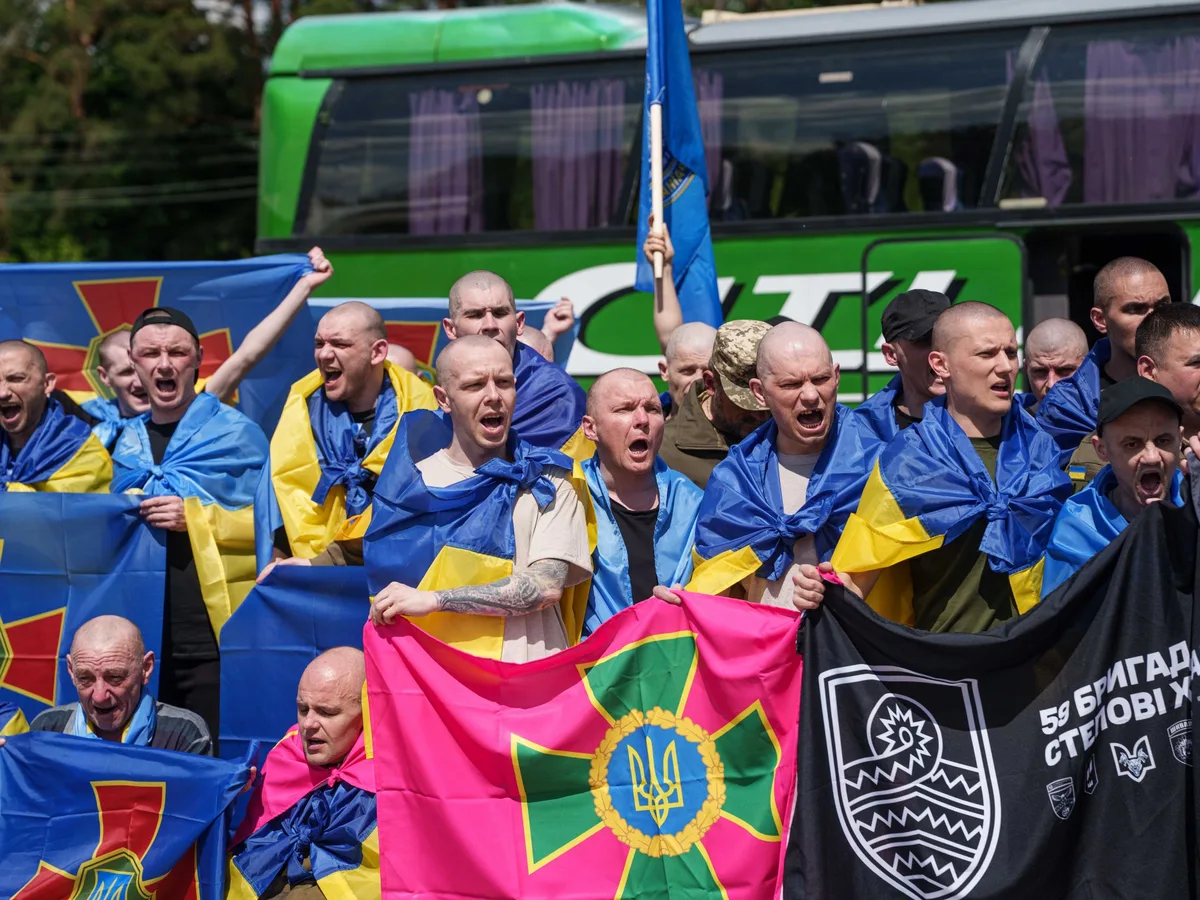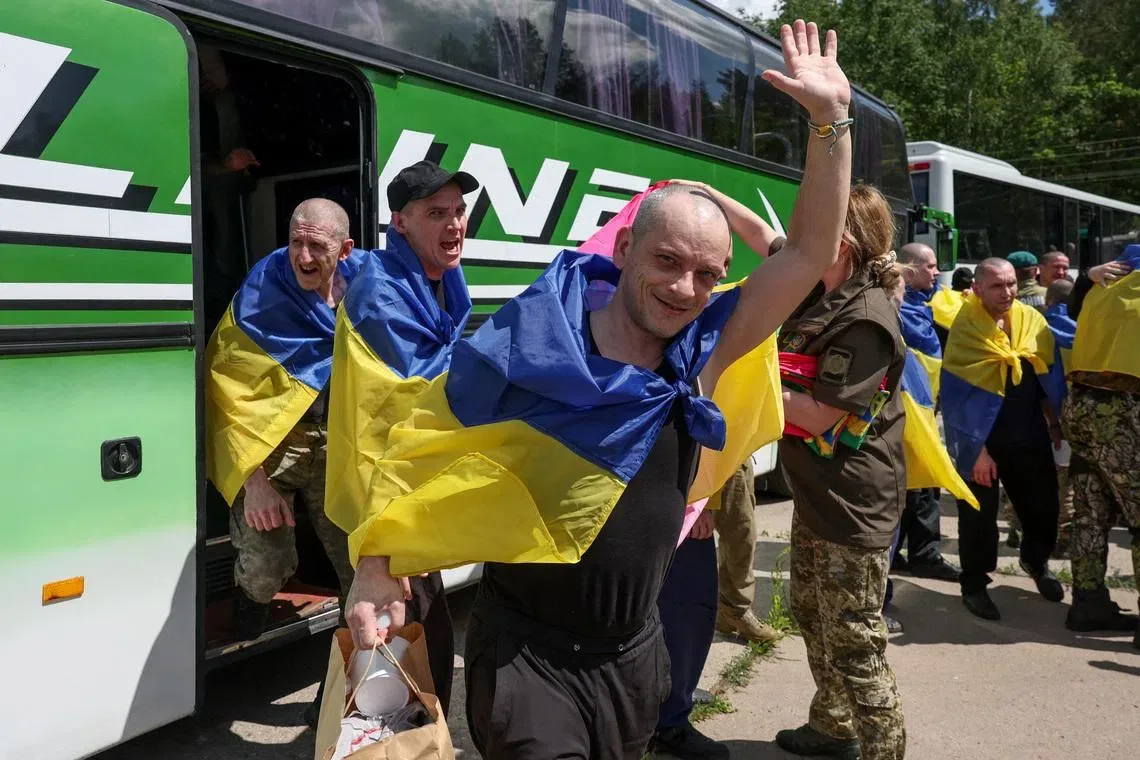
Ukraine and Russia conducted a large prisoner swap on June 5, 2026, exchanging 185 prisoners of war each at the Novaya Guta checkpoint in Belarus [1, 2]. Russia also returned one civilian alongside the servicemen [1, 2].
Most of the Ukrainians freed had been held in Russian captivity since 2022, with the oldest released prisoner being 62 years old [1]. Ukrainian President Volodymyr Zelenskyy announced the swap, stating, "Another 185 Ukrainian defenders are returning home from Russian captivity today. And one civilian is also returning with the defenders" [2]. He reaffirmed Ukraine's ongoing commitment to bring all its detained citizens home, saying, "讓我們的人民回家,始終是烏克蘭的首要之務。我們每天都在努力,讓每一位烏克蘭男女脫離囚禁" (Bringing our people home is always Ukraine’s top priority. Every day we work to free every Ukrainian man and woman) [3].
The exchange was facilitated and mediated by the United Arab Emirates, with coordination by commissioners from both countries and support from the International Committee of the Red Cross [1, 4, 5, 2]. Several families were reunited during the swap, which saw movement of people across the Russia-Ukraine border [2]. Ukrainian officials released photos showing soldiers embracing with Ukrainian flags after the exchange [6].
The released Russian servicemen were taken to Belarus for psychological and medical assistance before being transferred to Russia for further treatment and rehabilitation, according to Russia’s Defense Ministry [5, 2].
This swap follows a three-day ceasefire brokered by the United States in early May 2026, which included an arrangement to exchange up to 1,000 prisoners from each side [1]. Ukraine has carried out dozens of exchanges since the 2022 invasion, freeing thousands of captured personnel [3, 7, 8, 6, 9].
One day before the exchange, Zelenskyy publicly invited Russian President Vladimir Putin to meet to discuss ending the conflict [3, 7, 8, 6, 9]. The prisoner swap marked a significant humanitarian development amid ongoing diplomatic efforts.
The released prisoners’ reception and processing continue, with Russia providing follow-up care to its returned servicemen in Belarus and Ukraine working to reintegrate its released defenders [5].