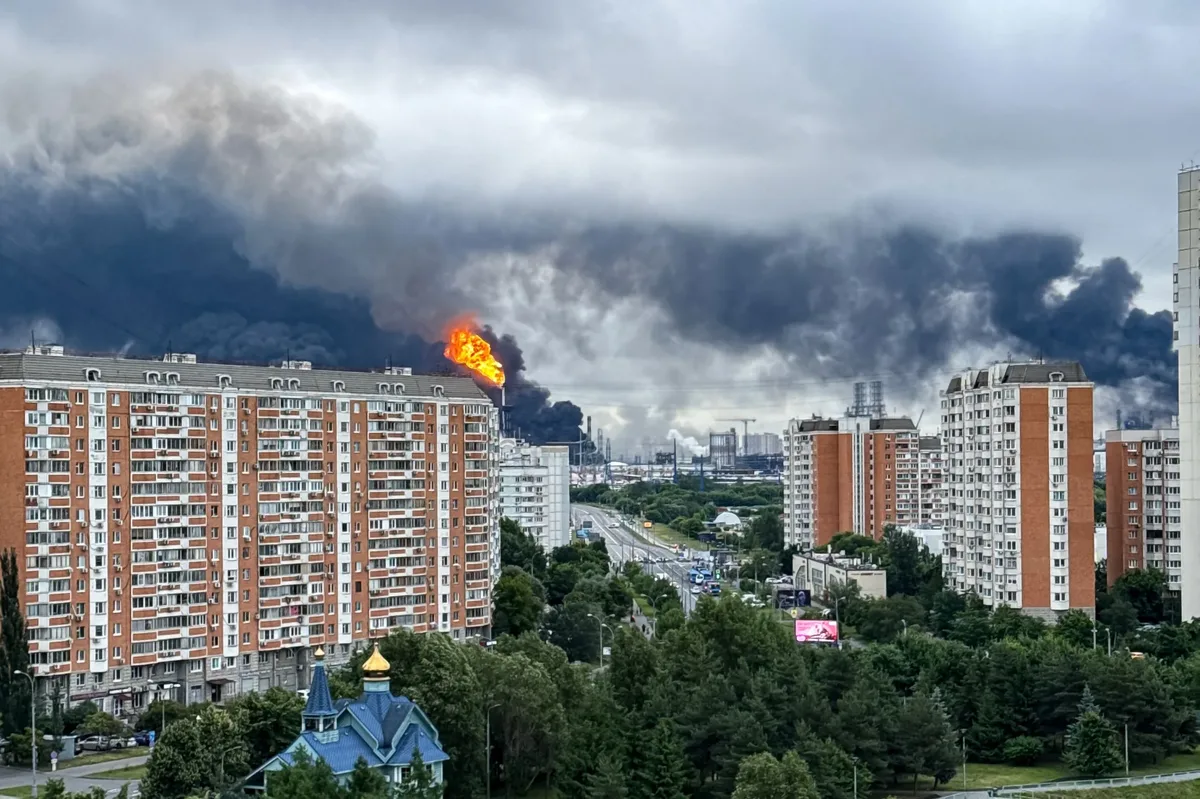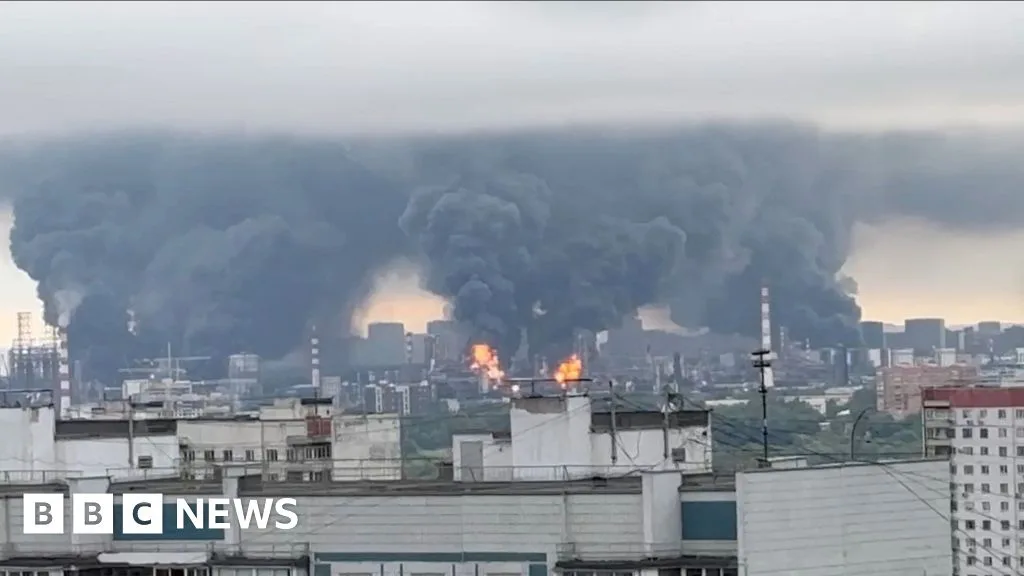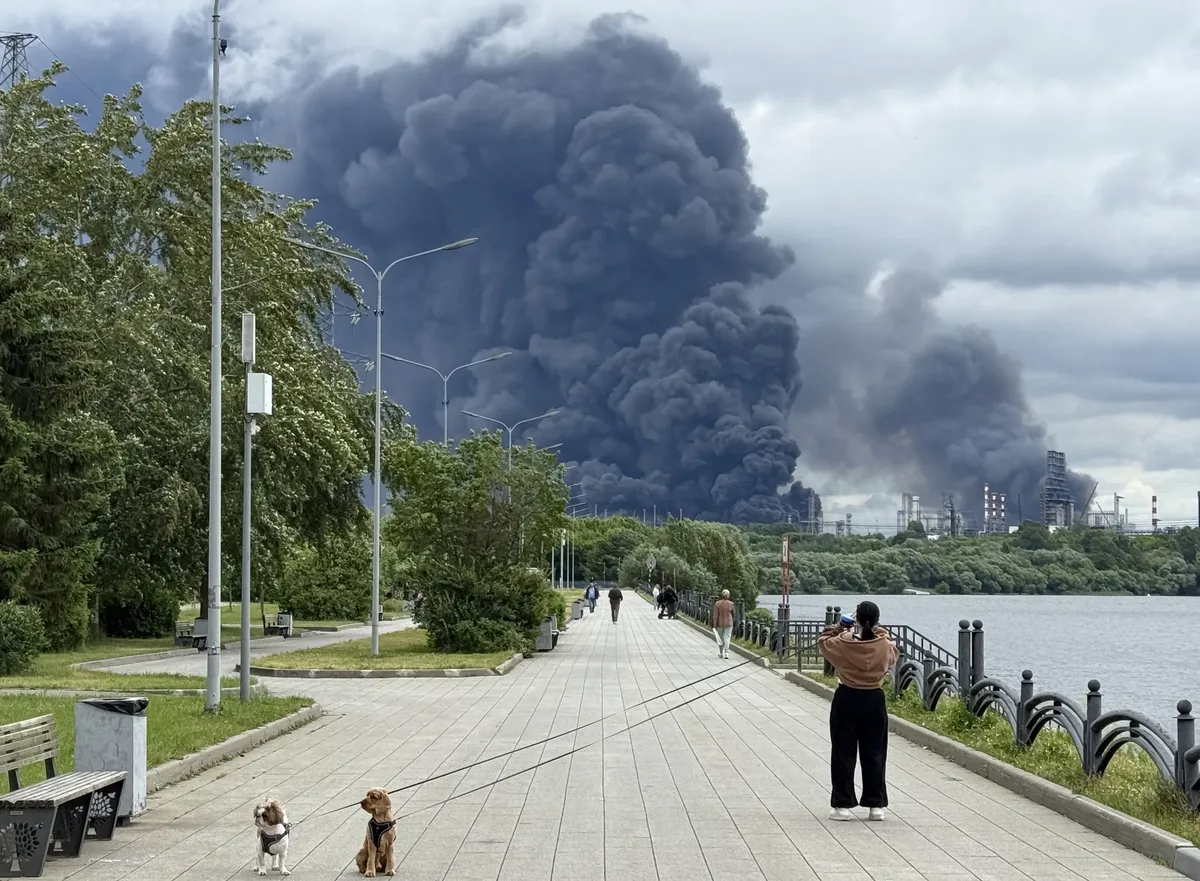
Ukraine launched a large-scale drone attack on Moscow on June 18, 2026, sending roughly 180 drones to strike the Moscow oil refinery in the Kapotnya district and other targets [1, 2, 3, 4]. The refinery, owned by Gazpromneft, was hit for the second time in one week after an attack on June 16 damaged key processing units including the Euro+ combined refining unit and the CDU-6 crude distillation unit [5, 2, 6]. Fires broke out at the refinery, prompting partial shutdowns of its operations.
Moscow’s airports were forced to temporarily close, leading to flight cancellations, delays, and evacuation of Sheremetyevo airport [1, 2, 3, 4, 7]. The drone strikes also caused traffic stoppages on the Moscow ring road and damage to high-rise buildings and shopping centers, resulting in evacuation of civilians [1, 2, 4, 7, 6]. Moscow Mayor Sergei Sobyanin confirmed the refinery damage and infrastructure disruption, stating, "Air defence forces are continuing to repel a large-scale attack. Several drones managed to reach the [Moscow oil refinery]" [5, 2, 3, 4, 6].
Russian air defenses intercepted between 555 and almost 1,000 Ukrainian drones nationwide over 24 hours, including about 180 targeting Moscow, though sources differ on the exact number intercepted [1, 2, 3, 4]. The June 18 strikes injured 17 people in the Moscow region [1].
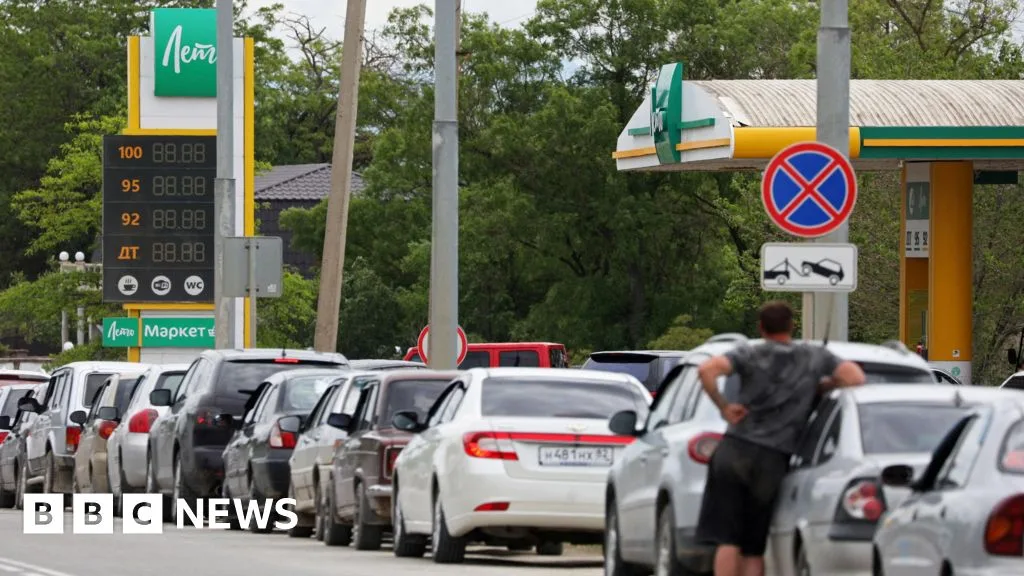
In addition to Moscow, Ukraine carried out drone attacks on oil depots and logistics facilities in Crimea, Krasnodar, and Rostov regions. These attacks caused at least 4 deaths and multiple injuries, leading to fuel rationing and sales restrictions across Crimea and several Russian regions [8, 9, 10, 11]. Due to these disruptions, Russia lost around 25% of its gasoline output compared to June 2025 and saw seaborne oil product exports decline about 15% month on month [10, 11].
In response to the supply crisis, the Russian government is considering banning diesel exports, importing fuel, and providing subsidies to mitigate shortages [12, 11]. On June 23, reports confirmed Russia’s plans to impose new measures to manage the fuel crunch [12, 11].
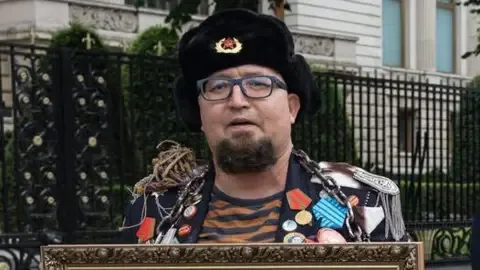
Russian President Vladimir Putin called the Ukrainian strikes "a ploy to destabilise society" and urged efforts to offset the consequences [11]. Ukrainian President Volodymyr Zelensky called the attacks a "fully justified response" to Russian aggression, stating "It's time to end this war... if Ukraine burns, your Moscow will burn too" and adding, "Russia understands only strength, and our long-range strength is certainly working for peace" [1, 8, 3, 4]. Ukraine’s Foreign Minister Andrii Sybiha told Moscow residents to ask their government "when he is planning to end it," referring to the war [7].
The attacks and resulting disruptions have forced ongoing fuel rationing and closures, including the suspension of children's summer camps in Crimea since June 22 [10]. Moscow and Russian authorities continue emergency measures to deal with the damage and shortages caused by the repeated drone strikes.