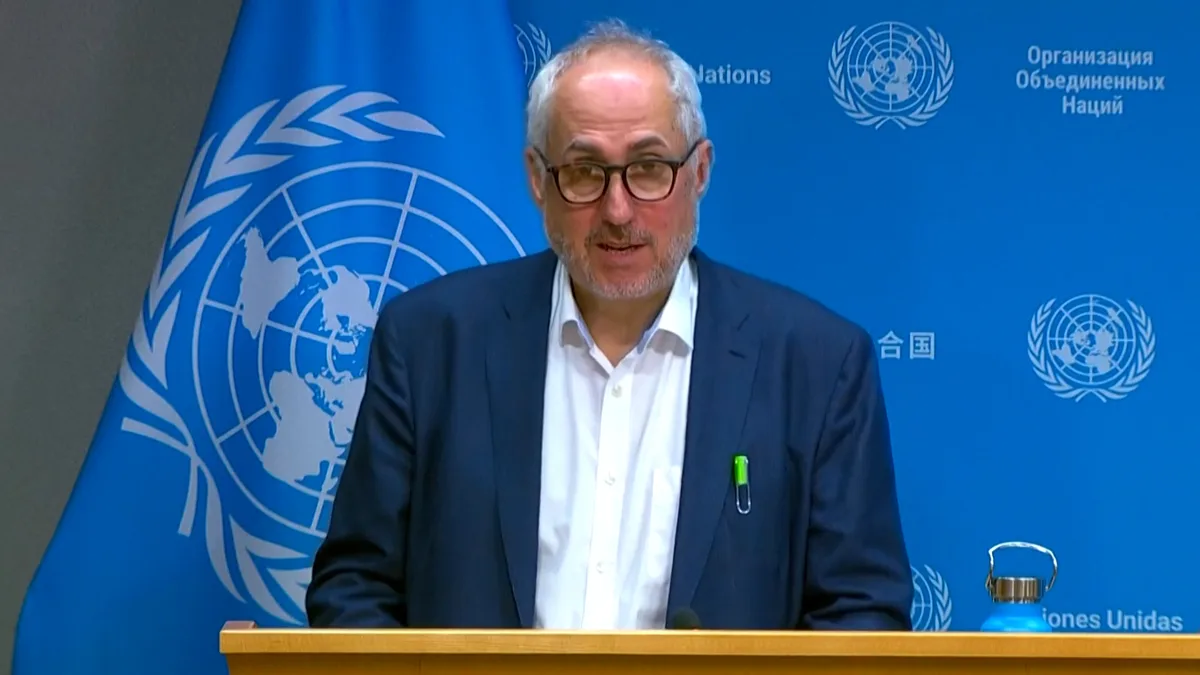
The United Nations reported a significant decrease in exchanges of fire and overall violence in southern Lebanon since the US and Iran announced a Pakistani-mediated agreement on June 14 to end military operations including in Lebanon [1, 2, 3]. UN spokesperson Stephane Dujarric said, "We observed a decrease in violence and exchanges of fire. UNIFIL recorded 25 violations of Lebanese airspace by Israeli forces, with overflight time of approximately 40 hours," representing a notable drop from 135 violations and 222 hours of overflight before the agreement [2].
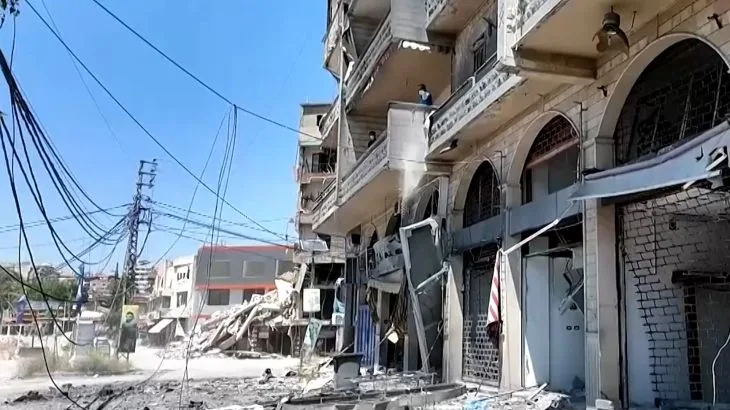
Despite the decline, the UN Interim Force in Lebanon (UNIFIL) still documented ongoing Israeli military activities, including projectile launches, two airstrikes, and demolitions in southern Lebanese towns after the deal [2]. Prior to June 14, Israeli projectile trajectories reached 1,374 over a single weekend, mostly attributed to Israeli forces, while UNIFIL found no projectile trajectories from Hezbollah or other non-state groups during the period following the agreement [2].
On the humanitarian front, some displaced Lebanese families have cautiously begun returning home, with shelter populations declining by about 10,000 over four days—from roughly 134,000 on Friday to 124,000 as of Tuesday [3]. Dujarric noted, "Some families have reportedly started to return to their homes or are assessing the conditions in communities in parts of southern Lebanon, particularly in Nabatieh," but he added, "It remains unclear whether these movements represent temporary returns to assess homes and property or more sustained returns" [2, 3]. No large-scale return of displaced persons has occurred so far due to ongoing incidents affecting movement and access to property [2, 3].
The agreement, announced June 14, also included reopening the Strait of Hormuz and lifting the naval blockade on Iran [2]. UNIFIL’s latest report on June 15 confirmed the continuation of Israeli airspace violations and military actions despite the easing violence [2].
The UN will continue monitoring military activity and displacement trends in southern Lebanon to assess the durability of the current calm.