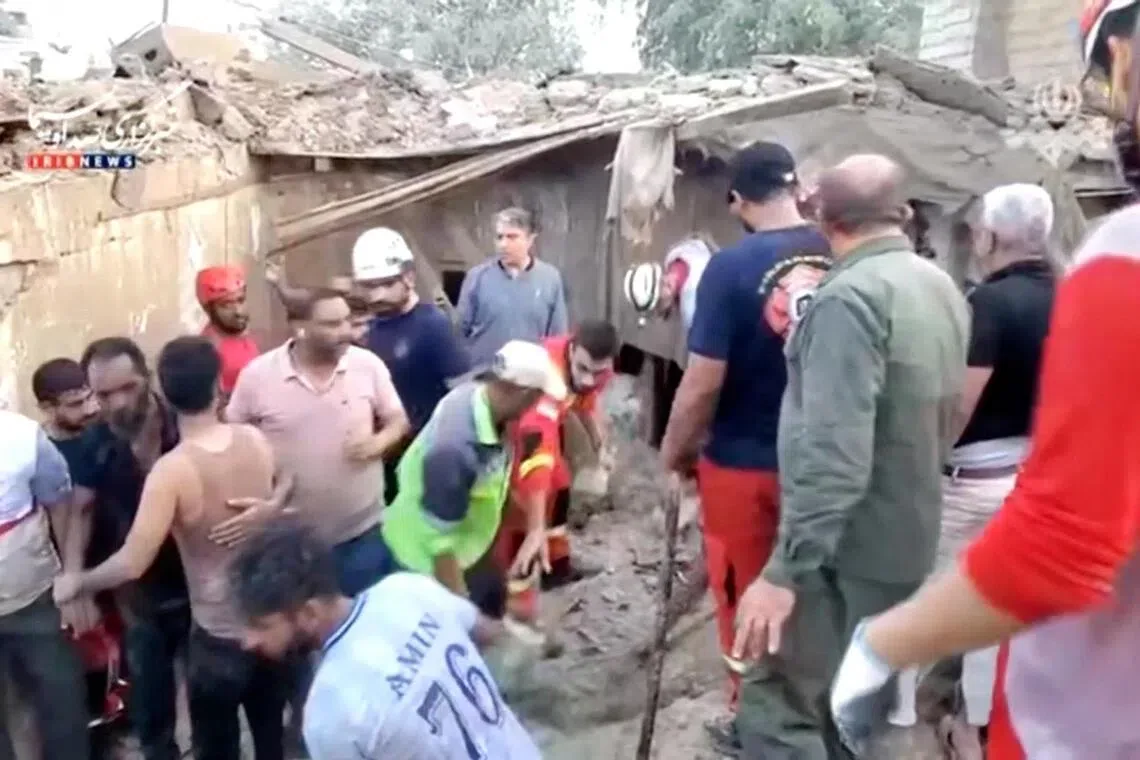
The United States conducted an airstrike using a 2,000-pound Mark-84 bomb on a family home in the Chah-Tangu neighborhood of Qeshm City, Iran, overnight on July 30, 2026 [1, 2, 3]. The strike killed a husband, wife, and their two-year-old son, while their two other children were rescued alive from the rubble [1, 2, 3]. The bomb created a crater at least nine meters wide (approximately 30 feet), scattering debris and damaged vehicles between 60 and 200 feet away [1, 2, 3]. About 20 neighboring households were displaced by the blast [1, 2, 3].
The attack occurred in a densely populated residential area without any identified military targets nearby, according to visual and satellite analyses [1, 2, 3]. The bomb may have been equipped with Joint Direct Attack Munition (JDAM) guidance [1, 2, 3]. Additional strikes in the same operation destroyed two warehouses outside of Qeshm City [1, 2, 3].
US Central Command confirmed that the strikes targeted multiple sites in southern Iran on July 30 as retaliation for earlier Iranian attacks on a US military base in Jordan [1, 2, 3]. Captain Tim Hawkins, a CENTCOM spokesman, said, "We are aware of the reports and looking into them. The US military never targets civilians" [1]. CENTCOM reiterated that statement, emphasizing that civilian targeting is not part of US military policy [3].
Hours before the bombing resumed, former US President Donald Trump vowed to "hit them hard," signaling an escalation in tensions with Iran [4]. There are emerging concerns that the conflict could expand further, underscored by a recent drone strike on a US-owned gas storage tanker at Egypt's Damietta port [4].