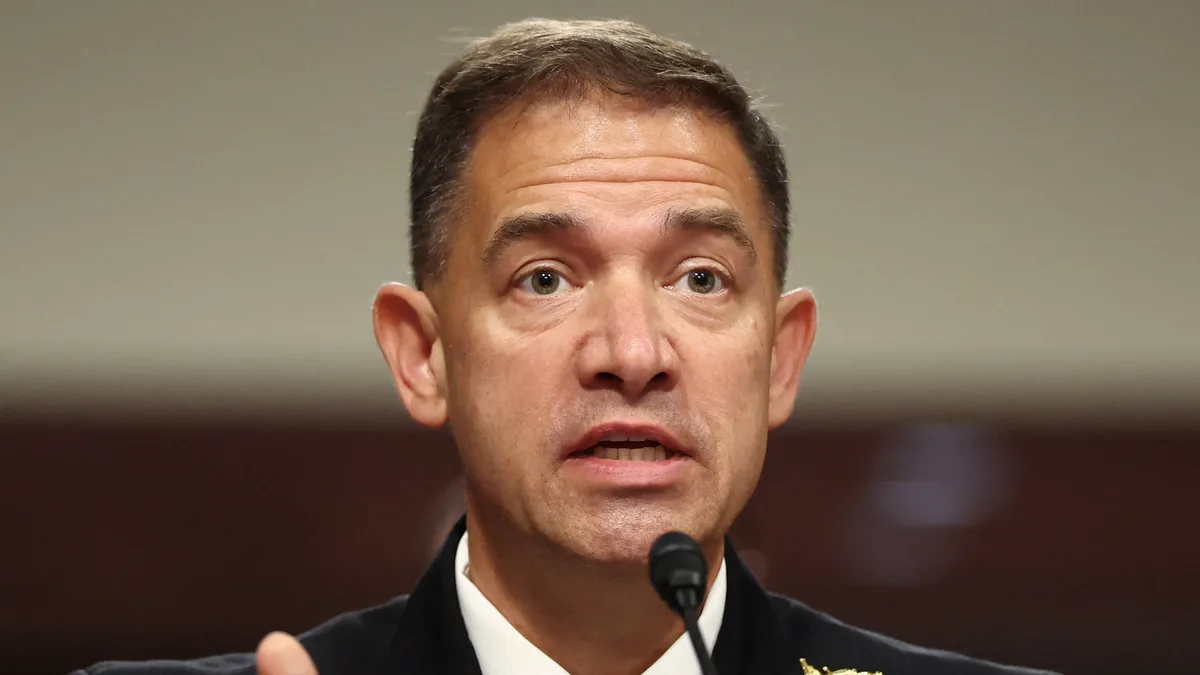
Admiral Brad Cooper, head of US Central Command, testified before the Senate Armed Services Committee on May 14 that US and Israeli strikes have severely degraded Iran's military capabilities [1]. He confirmed that the attacks have “virtually eliminated” Iran’s increased ballistic missile production capacity, which had surged in late 2025 [1]. "Starting in about November and December, you started to see an increase in Iran's capability and intent to produce more ballistics... That capability has been virtually eliminated," Cooper said [1].
Before the conflict escalated earlier this year, Iran possessed uranium enriched up to 60%, a level with no civilian applications and indicative of nuclear weapons intent [1]. The war has extended the time Iran would need to develop a nuclear weapon, according to Cooper’s testimony [1].
The strikes and war have also limited Iran’s ability to support its regional proxy groups. "As we sit here today, they are unable to resource and supply Hezbollah, Hamas or the Houthis," Cooper stated [1].
Iran’s navy suffered extensive damage that will take a full generation to rebuild, while ballistic missile and drone programs will require years to restore [1]. The proxy group restraint further curtails Iran’s regional influence.
A two-week ceasefire brokered by Pakistan began on April 8, 2026, but peace talks held in Islamabad from April 11 to 12 failed to end hostilities [1]. Since then, the US and Iran have exchanged proposals aimed at restarting direct talks to resolve the war [1].
Cooper’s testimony highlights the impact of US and Israeli military actions on Iran’s capabilities. The next scheduled development in diplomacy will depend on progress toward a second round of direct talks between the US and Iran.