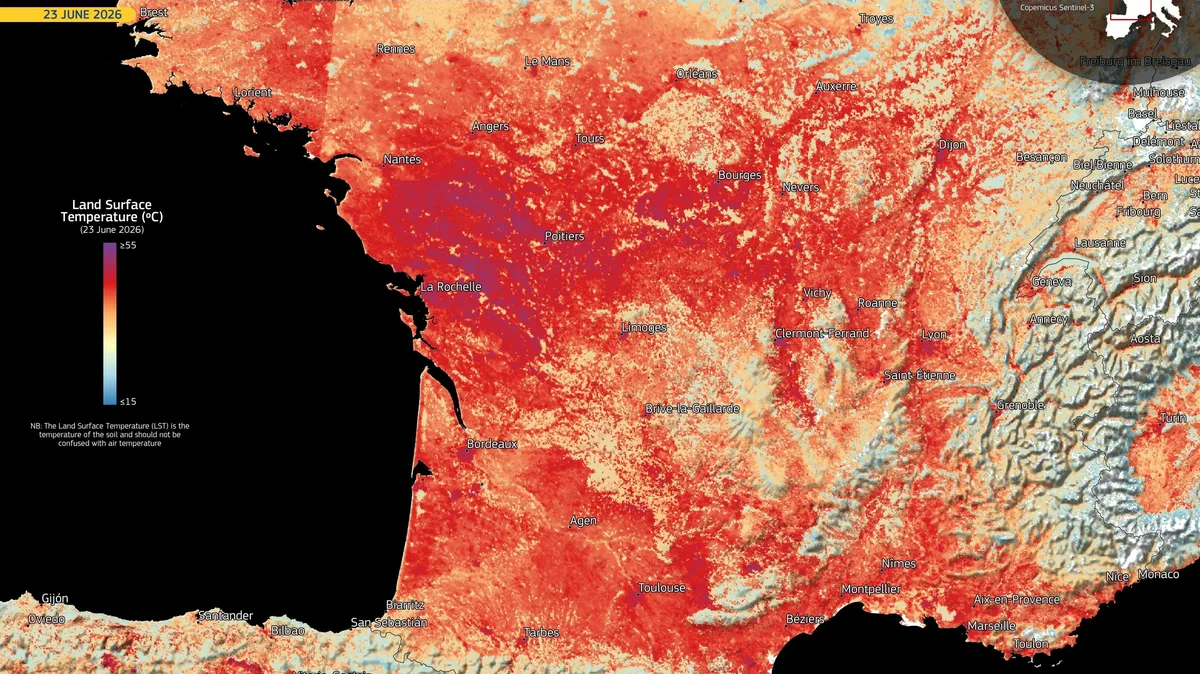
France issued red heatwave alerts for around half of its 96 regions, covering 49 to 58 areas including Paris, as of late June 2026. About 63 million people in France are affected by the alerts, which mark the most severe warning level for extreme heat [1, 2, 3, 4, 5]. Temperatures in Bordeaux reached 43 to 44.3 degrees Celsius, while Paris faced forecasts up to 41C, breaking national records [2, 3, 5]. Germany also recorded a new national high of 41.7C in late June [6, 7].
More than 1,300 excess deaths linked to the heatwave have been recorded across Europe since June 21. France alone has seen about 1,000 excess deaths since midweek attributed to the heat, including several children who died after being left in hot cars. At least 40 people have drowned in swimming incidents related to the heatwave in France since mid-June [8, 5, 9, 7]. Health Minister Stéphanie Rist warned many "fellow citizens will suffer" and urged vigilance for relatives and neighbors [2]. Paris Mayor Emmanuel Grégoire called jogging outdoors during peak heat "irresponsible," recalling seeing 100 joggers one evening [9].
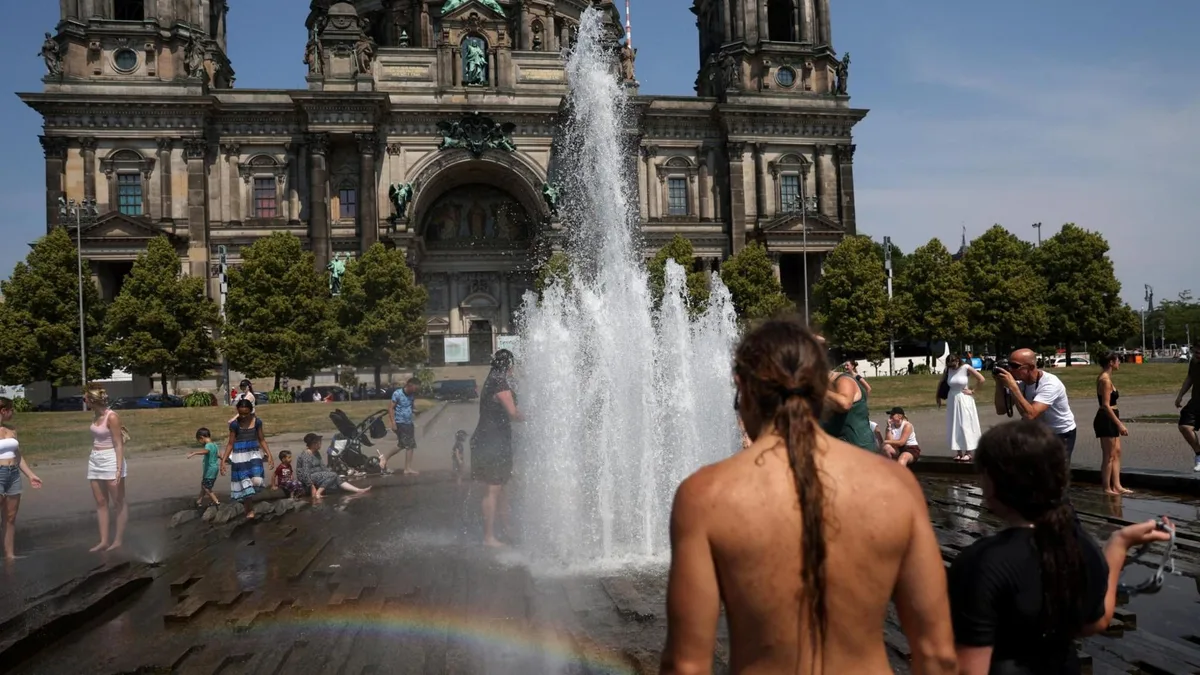
In response to the crisis, French authorities closed 845 schools and allowed early dismissal for approximately 1,800 students. Public events and train services were canceled or reduced in France and other affected countries [2, 3, 6]. European cities have set up cool-down spots, offered free cinema tickets, and turned on public fountains to help residents cope with the heat [10].
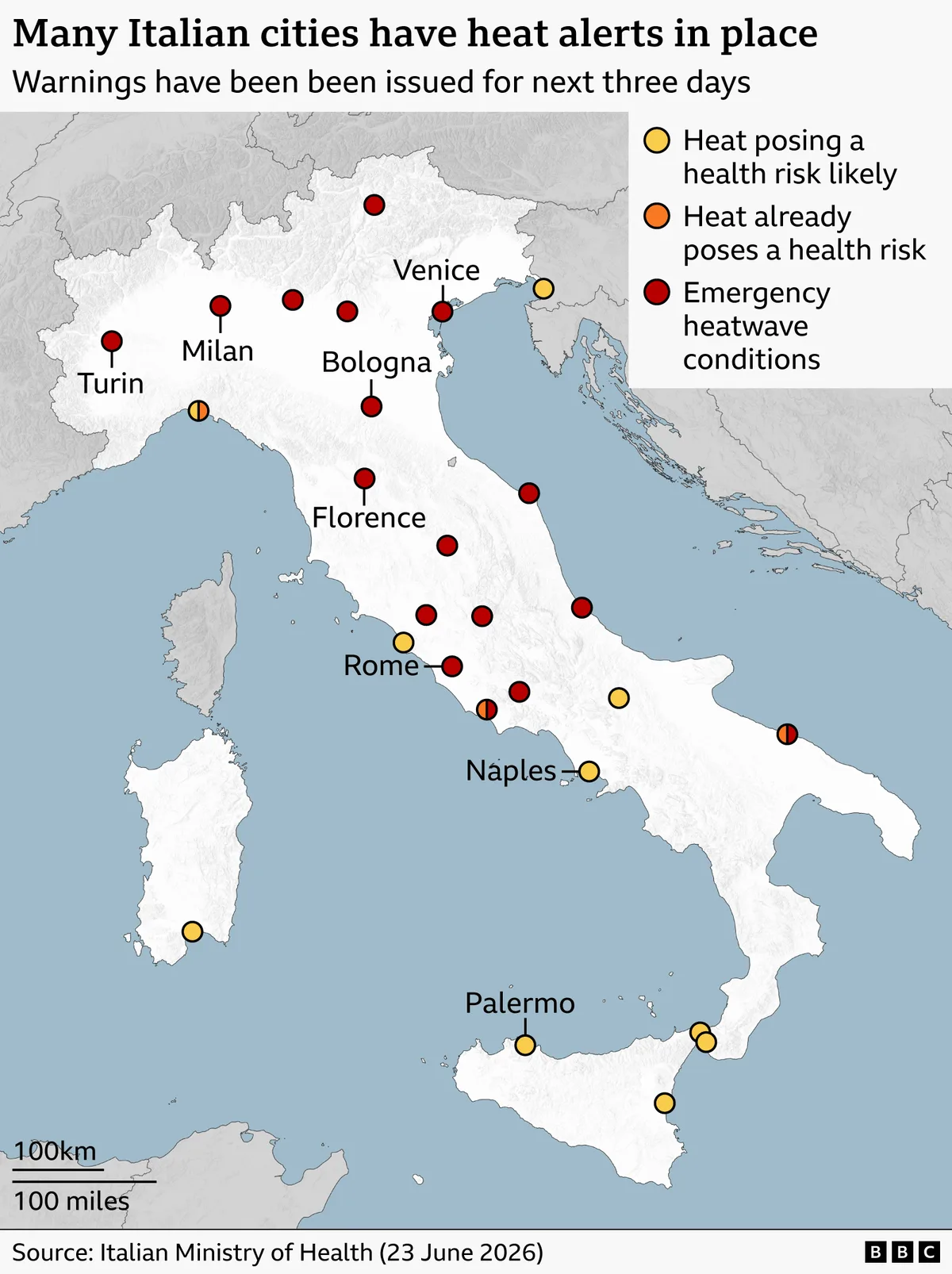
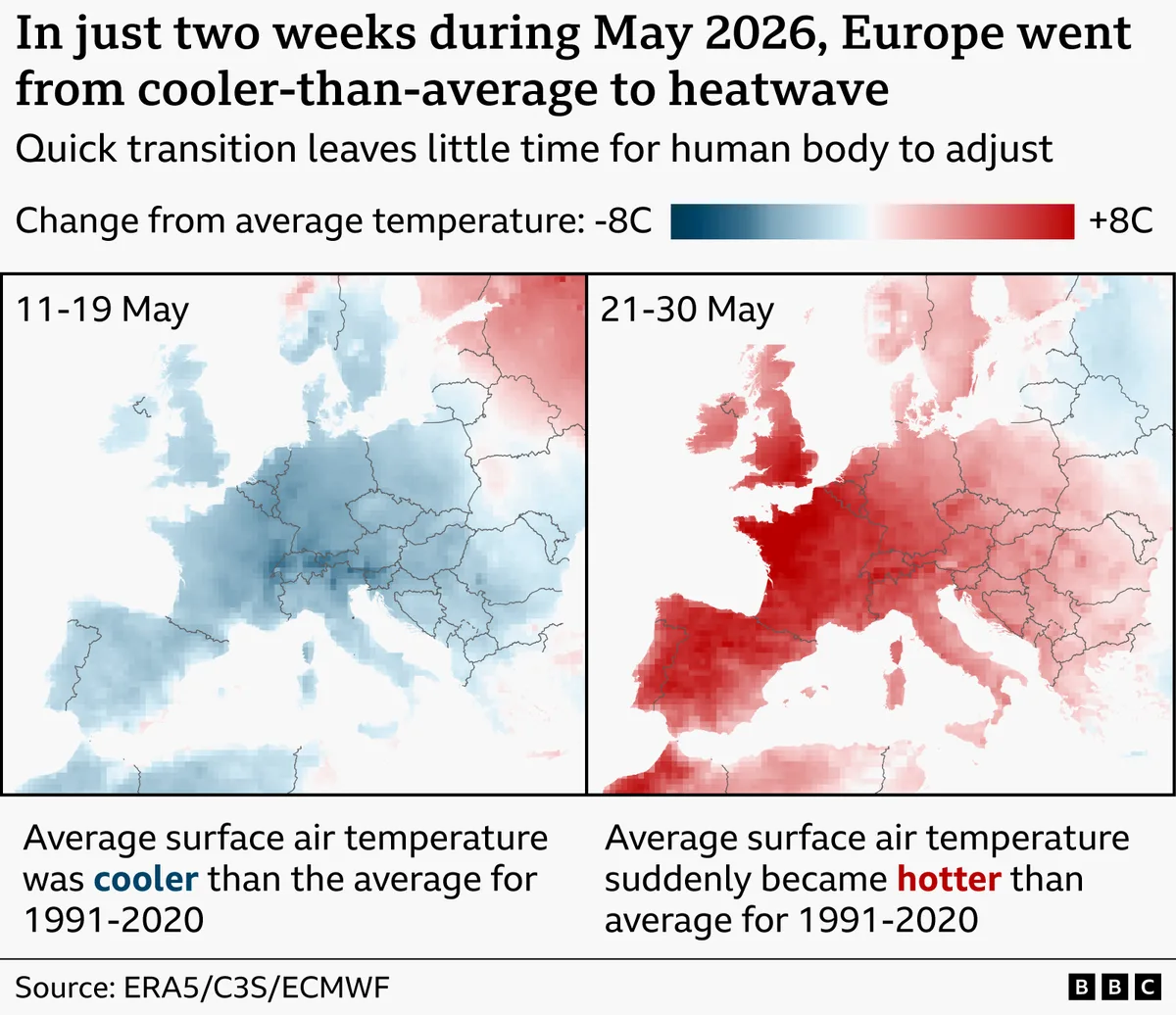
The heatwave has spread beyond France, reaching Germany, Italy, Spain, Belgium, the Netherlands, the UK, Poland, the Czech Republic, Hungary, and Switzerland, with many countries issuing alerts and breaking temperature records [3, 5, 9, 6, 7]. The World Health Organization's Tedros Adhanom Ghebreyesus called Europe "the fastest-warming continent on Earth, heating at twice the global average," and described heat stress as a "silent killer" for which many homes, workplaces, and schools are unprepared [7].
Scientists attribute the heatwave to a persistent high-pressure heat dome intensified by El Niño effects and linked to climate change. Tedros stated the phenomenon of "once-in-a-generation" heatwaves is now happening nearly every year [11, 6, 7].
The heatwave began causing deaths in France around June 18 and expanded across Europe starting June 21. By June 29, France recorded its hottest June day averages at 29.8C, with localized extremes over 44C. On June 30, the heat extended into eastern European countries including Poland and the Czech Republic [8, 5, 9, 7].
Officials continue to monitor conditions as extreme heat-endangered zones and associated risks persist across much of Europe.