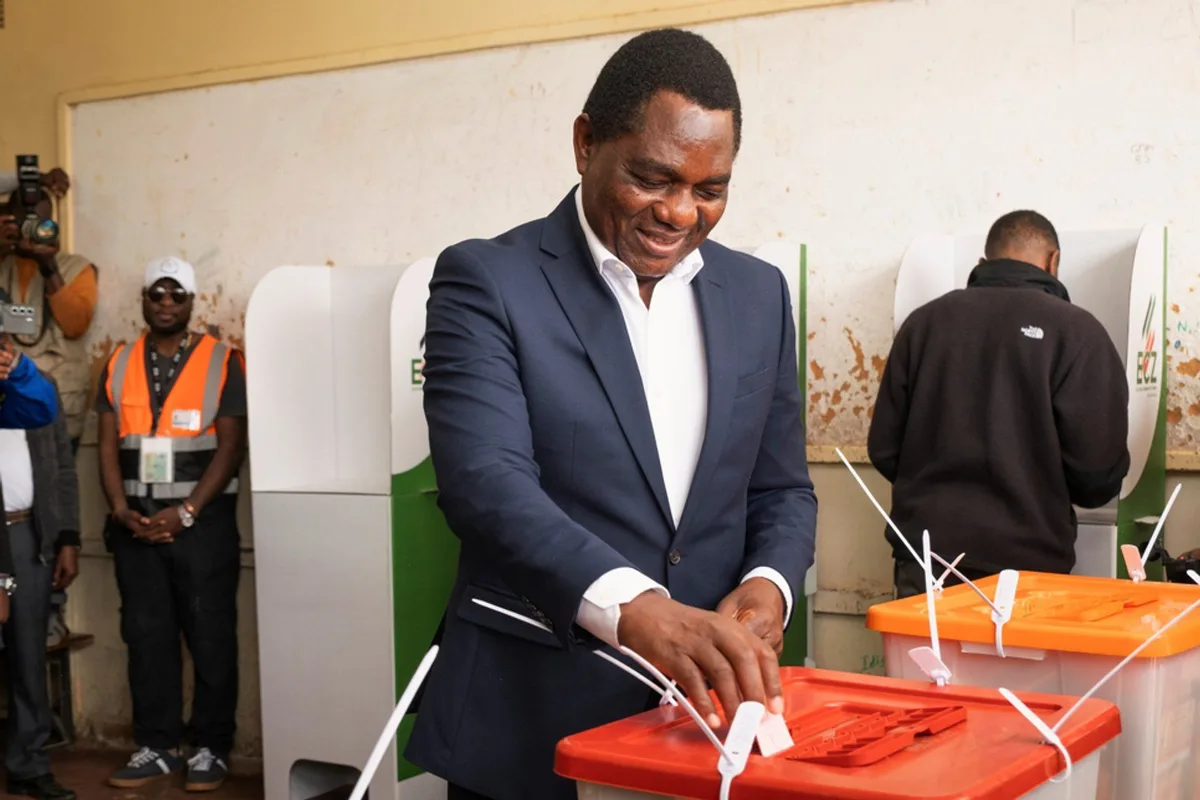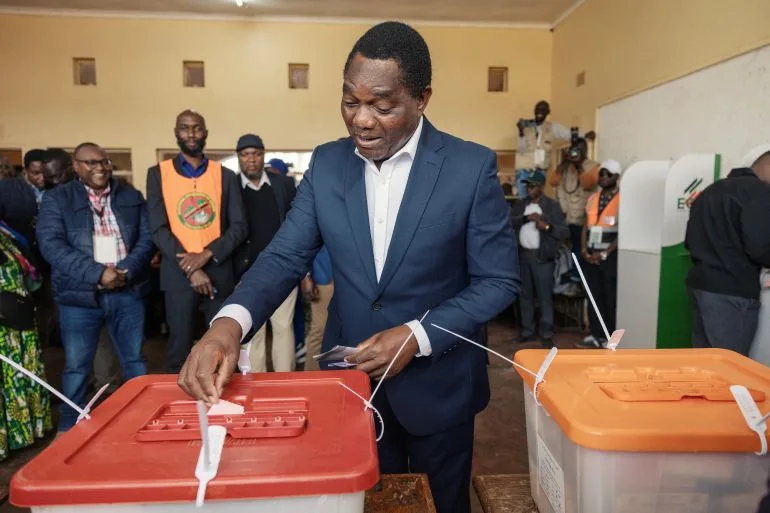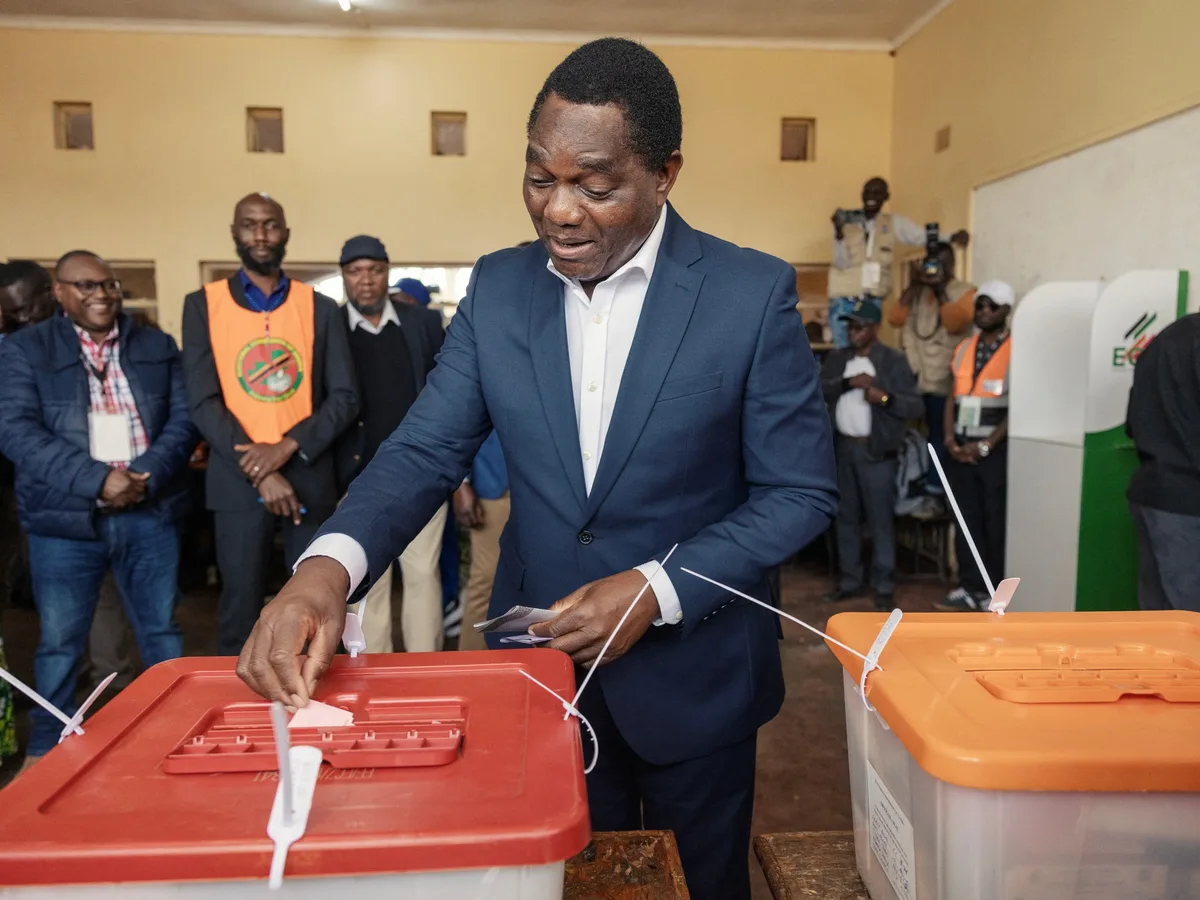
Zambian President Hakainde Hichilema secured a second term after winning about 60% of the valid votes in the presidential election held on August 13, 2026, the Electoral Commission announced early today [1, 2]. He received over 2.9 million votes, while his main challenger Brian Mundubile garnered approximately 1.8 million votes, or 38% of the total [2].
Hichilema, 64, leader of the ruling United Party for National Development (UPND), thanked voters and pledged to continue serving all citizens. "Thank you Zambia. We are truly humbled by the trust you have placed in our hands, to hold our nation's highest office and be your servant once more," he said [3, 2]. Mundubile, 55, a first-time candidate and former provincial minister, alleged vote-rigging and tampering with result documents but has not presented evidence [1, 3, 4]. Hichilema's camp called these claims lies [1, 3].
The election took place amid heightened tensions, including violence and reports of intimidation during the campaign [1, 3, 4]. On the night of the vote, law enforcement arrested 11 people, including opposition figures, after a raid involving an exchange of gunfire [1, 3, 4]. These events led the Electoral Commission to temporarily suspend vote counting for about six hours on August 14 due to violence and allegations of ballot paper theft [1, 3, 4].
International observers including the European Union voiced concern that the temporary suspension may undermine public confidence in the process [3, 4]. Oxford Economics’ Africa division said the arrests and other events raised serious doubts about the fairness of the results [3, 4].
Zambia is Africa’s second-largest copper producer, making the election of particular economic interest [5, 3]. Supporters of Hichilema celebrated in the capital Lusaka following the announcement of his victory [2]. The country had 13 total challengers vying to unseat the incumbent [3, 4]. Collins Maoma, UPND national chairperson, called on Hichilema to "continue being the good leader that you are to this country," praising the people's confidence in him [2].