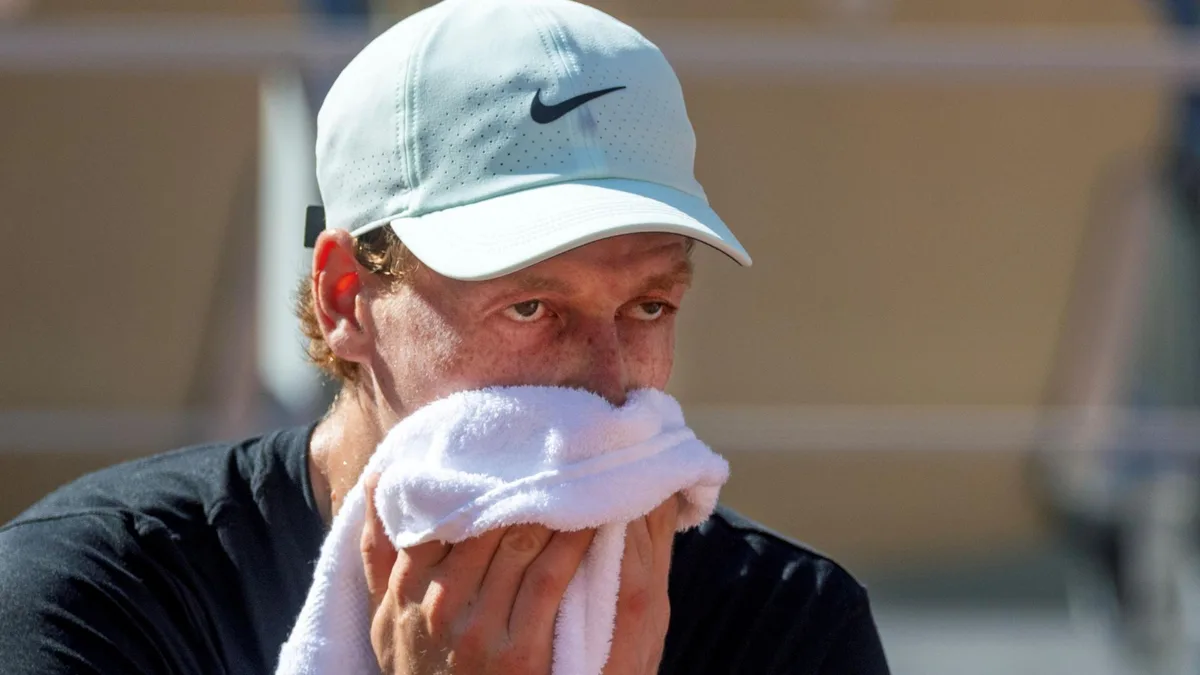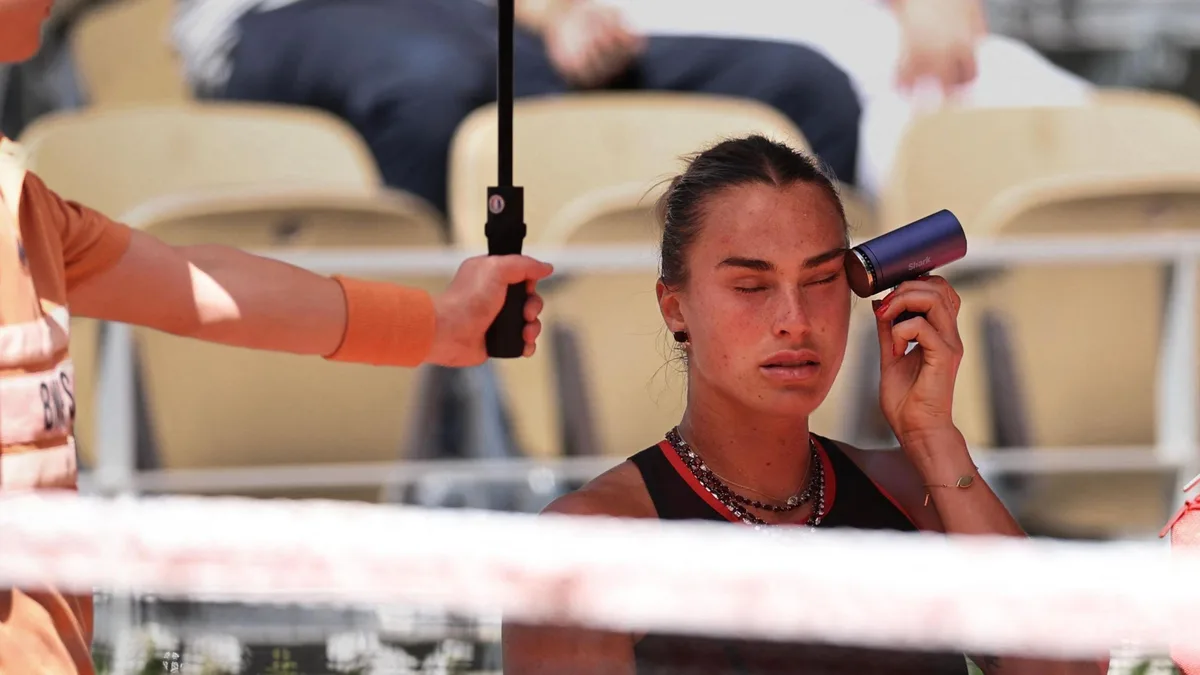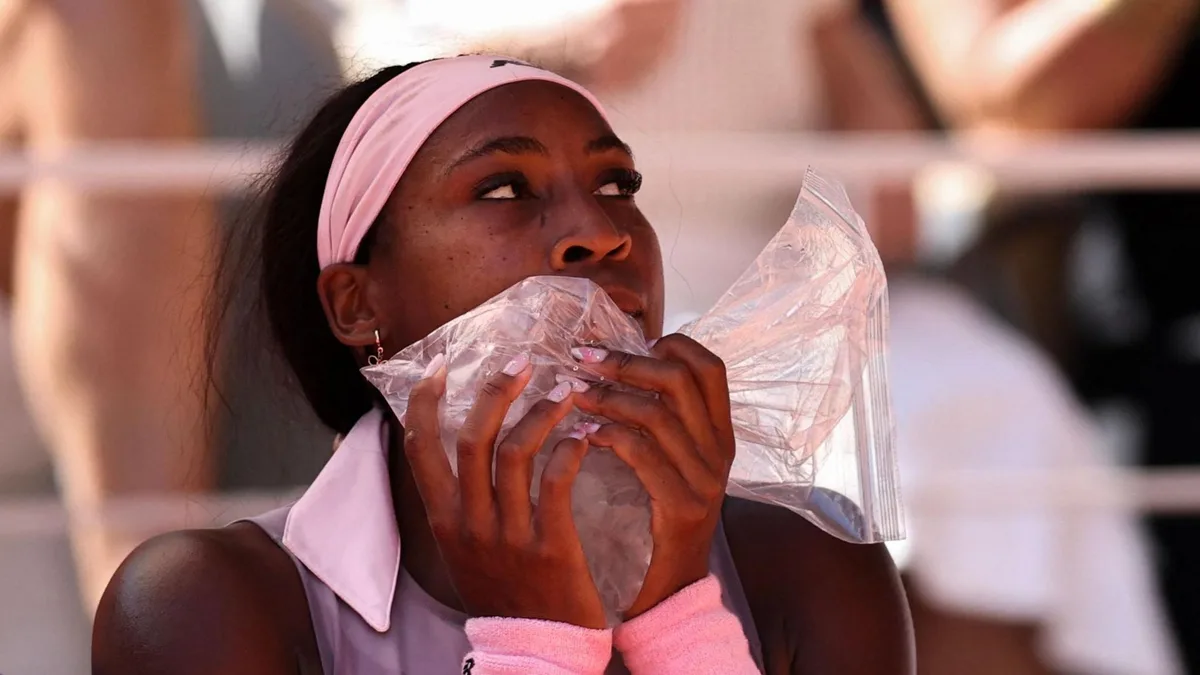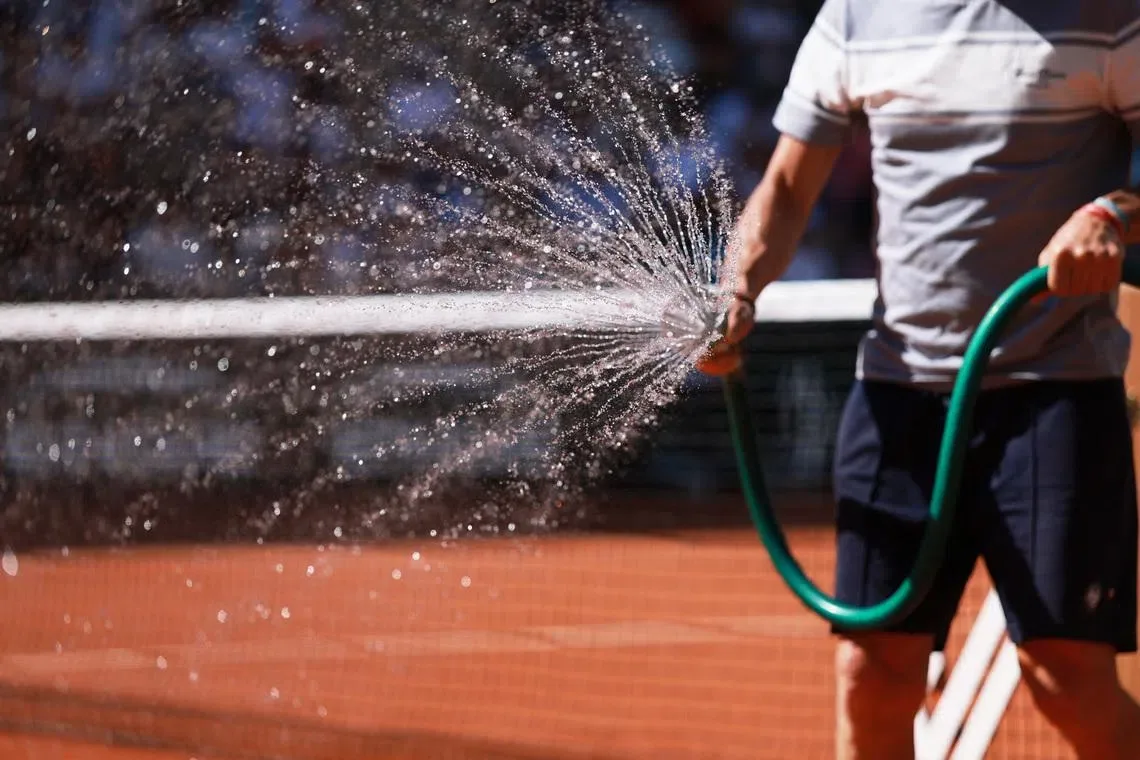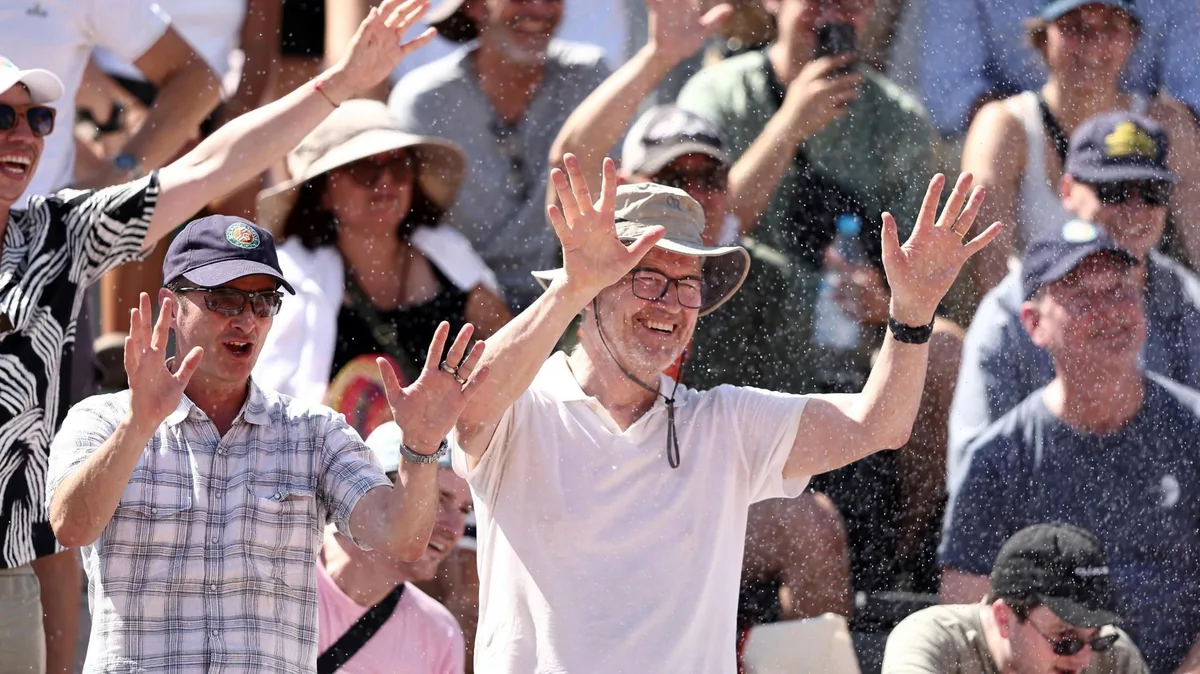
The French Open in Paris has seen unusually high temperatures reaching 33 to 34 degrees Celsius during the tournament's opening week, creating difficult conditions for players [1, 2, 3, 4, 5, 6]. A heat dome trapping warm air from northern Africa over western Europe is driving the intense heat, significantly impacting play [1].
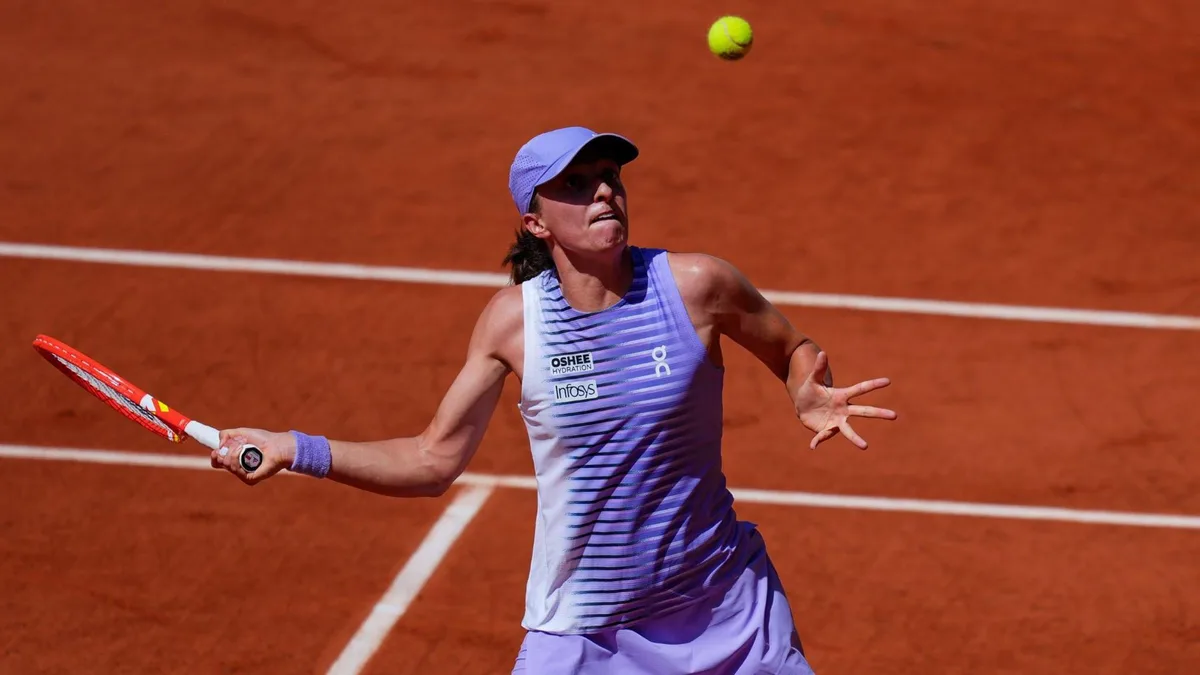
The dry, hot weather has hardened the traditionally slow clay courts, resulting in faster ball speeds and higher, livelier bounces. These conditions favor players with strong serves, aggressive returns, and heavy topspin shots [1, 2, 3, 4]. Defending champion Iga Swiatek said the ball is "bouncing off the court faster, so that gives you more advantage," though she notes controlling the faster ball is harder [1]. Aryna Sabalenka described the shift from cool to "boiling hot" as making "balls flying and everything ... much faster" [1]. Elina Svitolina called the heat "very tricky," saying players are "trying to survive ... not only playing against the opponent, but also playing against the conditions" [2].
The French Tennis Federation enforces a heat policy allowing a 10-minute break once the Wet Bulb Globe Temperature (WBGT) reaches 30.1°C before matches and stopping play if WBGT hits 32.2°C. Currently, no matches have been stopped as the WBGT on courts Chatrier and 14 has remained below those thresholds [5, 6]. Former champion Boris Becker said he supports the protections in place, calling it "good that ... the players are protected" [6].
Physical strain has affected some players and ball kids, with incidents including a ball girl nearly fainting and multiple retirements attributed to heat-related problems [6]. Players also raised safety concerns over the court environment. The French Open is the only Grand Slam that places advertising boards and rain covers close behind the baseline, creating trip hazards. Injuries and near-injuries have involved Zeynep Sonmez, Tatjana Maria, Alexander Blockx, and Katie Boulter among others [7]. Boulter said about the obstacles, "THESE THINGS HAVE TO GO. Got lucky last night but next time I might not be..." [7]. Swiatek called for changes, saying, "if these things happen, there needs to be a reaction ... I hope they’re going to put them in a different place or just put the advertising in a different way there, because it’s not safe for sure" [7].
Temperatures have steadily risen since the tournament started on May 25, when players first noted the heat, peaking on May 27 as courts hardened and faster conditions settled in [2, 3, 4, 5, 6]. On May 27, the French Tennis Federation outlined the heat protocols formally [5]. On May 29, Swiatek publicly addressed the issue of hazardous court obstacles [7].
The tournament continues with close monitoring of heat levels and safety concerns ahead, as players adapt their strategies to the challenging conditions.