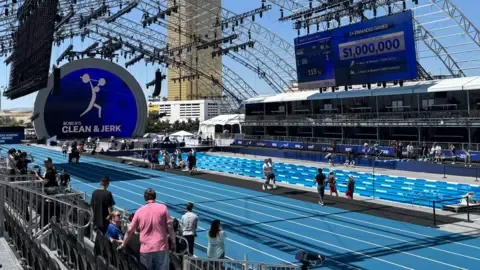
The inaugural Enhanced Games took place on Sunday, May 24, 2026, in Las Vegas at a $50 million purpose-built arena that was dismantled soon after the competition ended [1, 2, 3, 4]. Forty-two athletes competed in swimming, track and field, weightlifting, and strongman deadlift events [2, 4, 5]. Participants were allowed and encouraged to use performance-enhancing drugs banned by WADA, including testosterone, human growth hormone, anabolic steroids, EPO, and metabolic modulators like meldonium. All substances used were FDA-approved and administered under medical supervision during an International Review Board trial monitoring athlete health [1, 2, 6, 4].
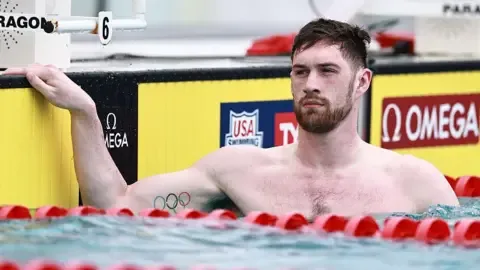
Notable competitors included Olympic and world champions such as UK swimmer Ben Proud, US sprinter Fred Kerley, Australian swimmer James Magnussen, and strongman Hafthor Bjornsson, who set a deadlift record of 510 kilograms [1, 7, 2, 6, 8]. Fred Kerley notably competed without doping substances despite being a headline sprinter for the event [4]. The Games offered prize money of $250,000 per event win and $1 million for breaking world records [7, 3, 6, 4, 5].
Greek swimmer Kristian Gkolomeev unofficially broke the 50m freestyle world record with a time of 20.81 seconds while using doping substances and a banned "supersuit". However, his and other record-breaking performances will not be recognized by official international sports bodies due to doping violations and prohibited swimwear use [3, 4, 5]. Rick Adams, the Enhanced Games' Chief Sporting Officer, said, "Whether you or others want to chronicle that in a certain fashion, we’ll leave that up to others, but there will be no doubt that 20.87 is quicker than 20.88" [4].
Organizers, founded in 2023 by Aron D'Souza and Maximilian Martin and backed by billionaire investors including Peter Thiel and Donald Trump Jr., framed the Games as a medically supervised, transparent alternative to traditional anti-doping policies. CEO Max Martin predicted, "My guess is we’ll see quite a few [world records beaten]" [1, 9, 6, 4, 8]. Co-founder Christian Angermayer described it as the start of a "global, decade-long megatrend of human enhancement and consumer biotech" [9].
WADA, World Aquatics, and World Athletics strongly condemned the event as dangerous and irresponsible. A WADA spokesperson said, "Steroids, for example, can increase the risk of heart attack, stroke and liver damage. Human growth hormone can trigger diabetes, heart problems and abnormal growth in organs and bones" [7, 9, 6]. They warned athletes risk bans from other major international competitions [7, 6].
Athletes reported significant physical transformations and improved biometrics from the doping regimens during the pre-Games medical trial held in Abu Dhabi from January to May 2026 [2, 6, 8]. Fred Kerley noted the Olympic 100m sprint record of 9.58 seconds "would be destroyed" with the enhanced drugs [3].
The next Enhanced Games date has not been announced, but athlete Kristian Gkolomeev said, "I'm going to continue next year. Maybe I'll break it again" [3].