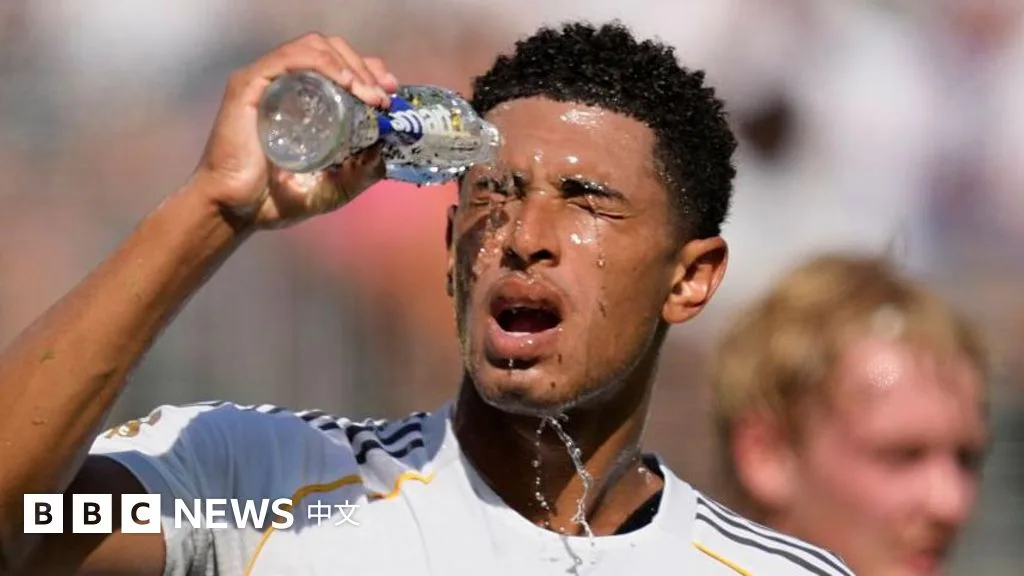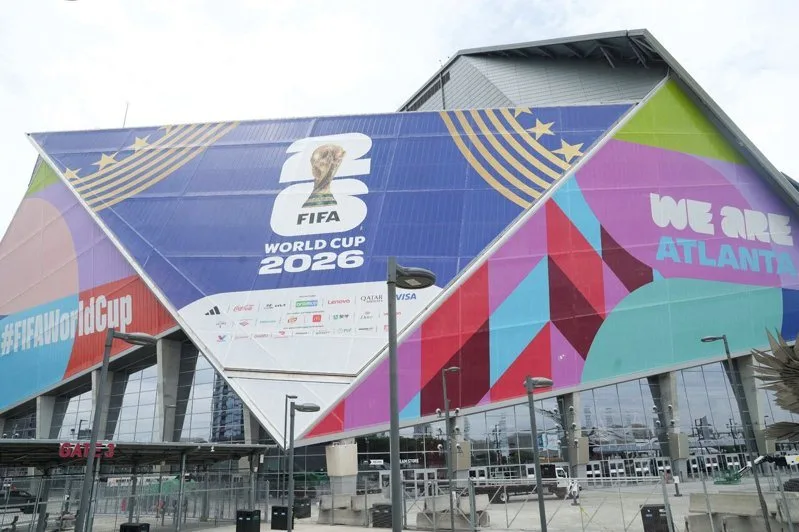
The 2026 FIFA World Cup will be held in 16 cities across the USA, Canada, and Mexico from June to July 2026 [1, 2, 3, 4, 5, 6, 7]. Approximately 25% of the matches are expected to be played under hazardous high heat conditions, with Wet Bulb Globe Temperature (WBGT) potentially exceeding 28°C, a threshold considered risky for player safety [1, 2, 6].
Most matches will take place outdoors, exposing players and fans to extreme heat, high humidity, frequent thunderstorms, and possible interruptions caused by lightning [3, 4, 5, 7]. The North American summer often sees temperatures above 30°C, sometimes nearing 40°C in some venues, combined with wildfires that impair air quality and increase health risks [1, 3, 4, 5, 6, 7]. Lightning detected within 13 to 16 kilometers requires at least a 30-minute suspension of play for safety; six matches were delayed for such reasons during the 2025 FIFA Club World Cup [3, 4, 5, 7].
Currently, FIFA mandates two 3-minute cooling breaks per match regardless of weather and provides climate-controlled seating for coaches and substitutes during outdoor games [1, 6, 8]. However, experts have criticized these protocols as inadequate. Andrew Simms, Director of the New Weather Institute, said, "Player safety is an immediate and urgent issue as conditions can quickly spiral out of control when the body overheats. We are concerned FIFA is too lax about player health and safety." Douglas Casa, a University of Connecticut professor, warned, "Cooling breaks per half absolutely need to be longer than three minutes—at least five minutes, preferably six. We hope this open letter convinces FIFA to update their heat guidelines before the World Cup" [1].
Experts also recommend match postponements or rescheduling when WBGT exceeds 28°C. Currently, FIFA uses a graded heat risk response and monitors weather in real-time using WBGT and heat indices, aiming to adjust schedules and apply protective measures as needed [1, 6, 8]. However, they lack explicit mandated rules for postponing matches due to extreme heat [1, 6].
Several stadiums in Atlanta, Dallas, Houston, Los Angeles, and Vancouver have retractable roofs or air conditioning to mitigate heat and rain exposure, though most venues remain open-air [3, 4, 5, 7]. FIFA has adjusted some game times to avoid the hottest periods and prioritize venues with retractable roofs during extreme heat episodes [1, 6]. Spectators are allowed to bring unopened bottled water, and venues provide shade, misting systems, cooled buses, and increased water access during heat events [1, 6].
Beyond weather risks, the DR Congo national team faces travel challenges due to an Ebola outbreak. Players must complete a 21-day isolation period before entering the US to participate in the tournament [8, 7]. White House World Cup Task Force Executive Director Andrew Giuliani said, "We have clearly told DR Congo that their players must maintain a full 21-day isolation bubble to enter the US before June 11. We want to ensure no risk reaches US borders." [7]
Dr. Chris Mullington of Imperial College London noted that while players are elite athletes capable of tolerating heat, fans, especially those with illnesses, face greater health risks in extreme heat. He added that many fans may drink alcohol under hot, humid conditions, increasing danger [2, 3]. Chelsea coach Enzo Maresca called weather-related match delays "a joke" that disrupts player focus and questions some US cities' suitability as hosts [3].
The tournament's opening match is scheduled for June 11, 2026, in Mexico between Mexico and South Africa [5]. As the World Cup approaches, FIFA continues to monitor weather conditions and adjust safety protocols to protect players, officials, fans, and staff [1, 8, 6].