Apple introduced customizable equalizer (EQ) controls for AirPods at its WWDC 2026 event on June 9. The feature will arrive with the iOS 27 update expected this fall alongside new iPhone and possibly AirPods models [1, 2, 3].
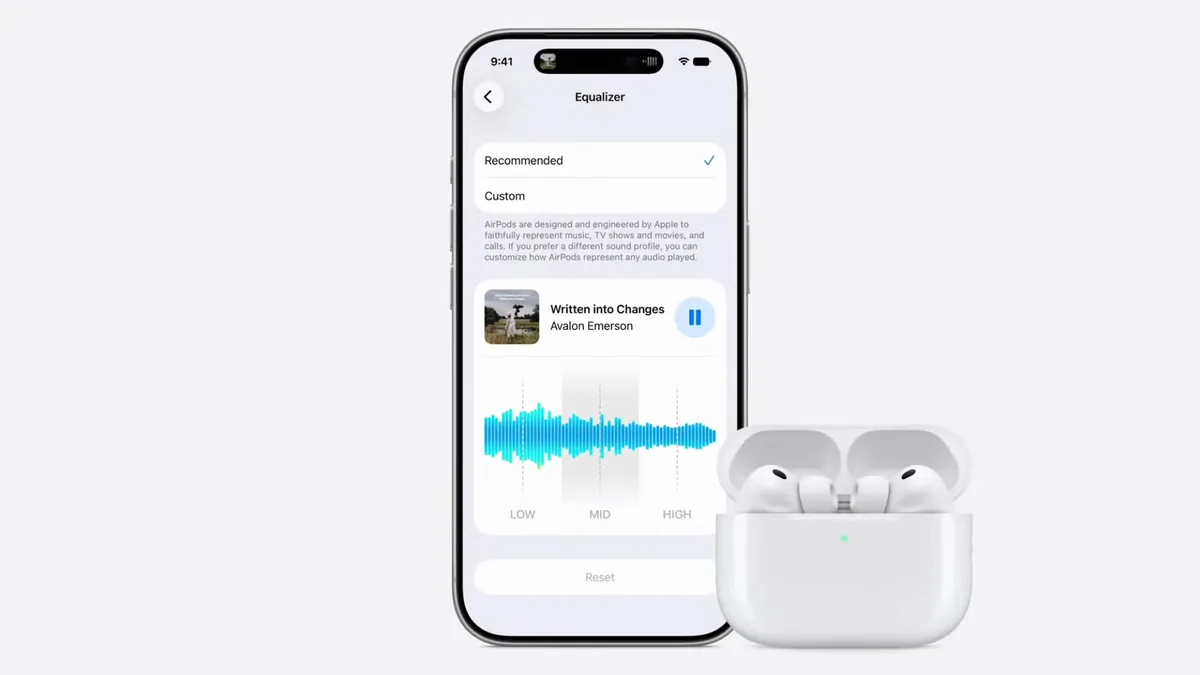
Currently, AirPods use an Adaptive EQ that automatically adjusts audio levels. The new feature adds manual control, allowing users to adjust low, mid, and high frequency ranges themselves [1, 2]. The EQ controls will be integrated directly within the AirPods settings menu through an easy interface that shows a frequency graph of the sound spectrum [1, 3].
Users will be able to create a single custom EQ profile alongside Apple’s recommended preset. However, multiple custom profiles cannot be created or switched between [1]. The updated EQ applies globally to all audio output on AirPods, including Apple Music, Netflix, YouTube, phone calls, and more [3].
Apple described the EQ update as a major user-facing audio upgrade that breaks from previous limitations of fixed EQ presets and non-customizable sound output [3]. Outside of the EQ addition, iOS 27 will also focus on system performance, AI integration, and user experience improvements [3].
It remains unclear which AirPods models will support the new customizable EQ feature [2]. The company has not yet detailed compatibility or whether older models will receive the update.
iOS 27, including the new AirPods EQ controls, is expected to launch in fall 2026, coinciding with new product releases from Apple [2, 3].