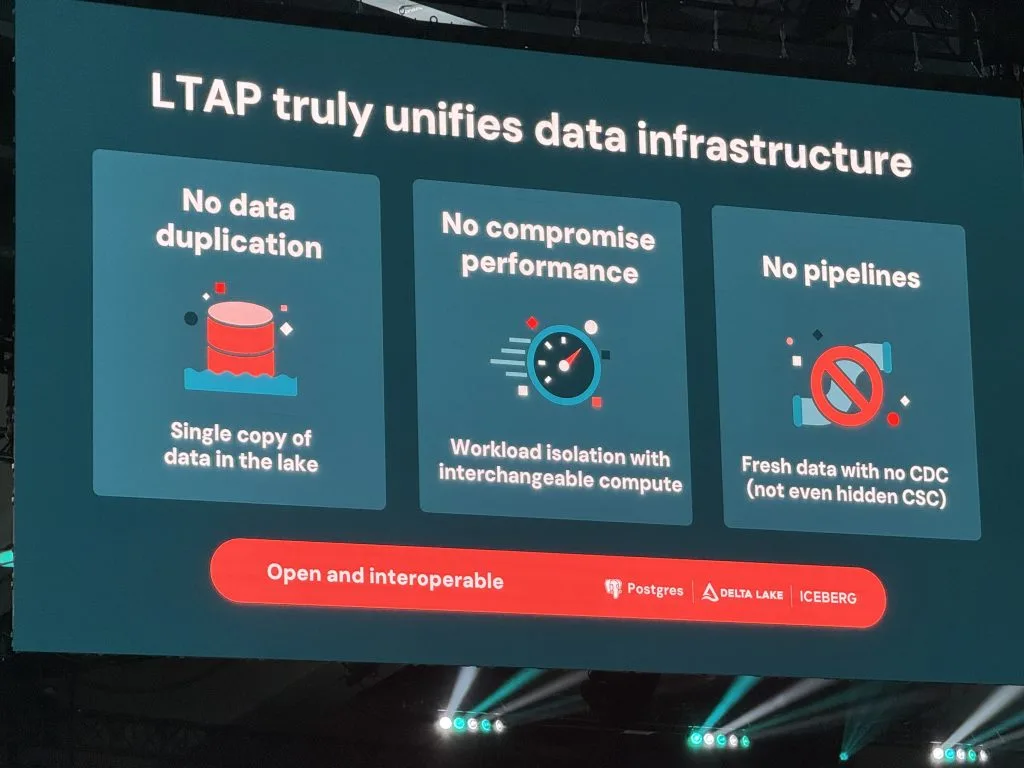
Databricks announced the launch of LTAP (Lake Transactional/Analytical Processing), a new data architecture that unifies online transactional processing (OLTP) and online analytical processing (OLAP) on a single data copy stored in a data lake, eliminating the need for ETL, replicas, and data pipelines [1, 2]. The announcement was made public by early September 2026 following a June reveal at the Data + AI Summit [1].
The LTAP architecture is powered by Lakebase, described as serverless Postgres running on open object storage. Lakebase currently supports 12 million database launches per day and serves thousands of customers on the Databricks platform, demonstrating significant scale and adoption prior to LTAP's full release [1].
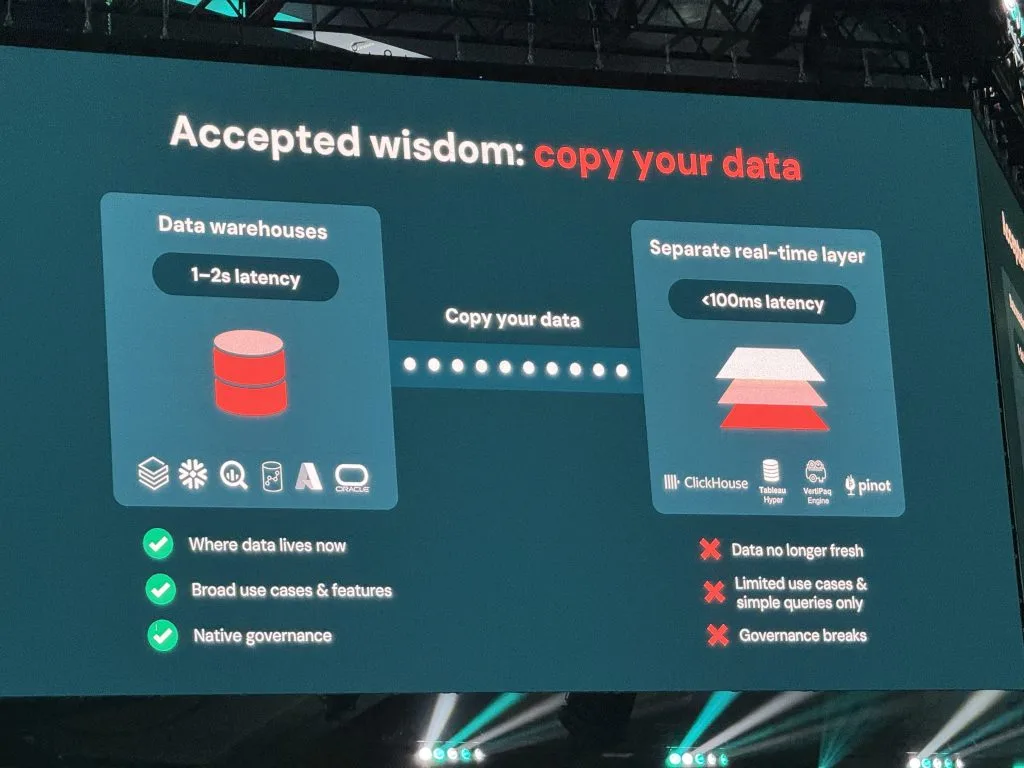
Databricks developed LTAP after acquiring the serverless Postgres startup Neon and Mooncake Labs in 2025 to bolster its technical foundation [2]. Unlike previous HTAP (Hybrid Transactional/Analytical Processing) approaches that compromised performance or created costly proprietary lock-in, LTAP merges transactional and analytical data at the storage layer, rather than forcing a single query engine or relying on hidden change data capture pipelines [1, 2].
Ali Ghodsi, co-founder and CEO of Databricks, said, "For decades, complicated data infrastructure was a tax that teams were forced to pay. Then agents arrived. In a matter of months, organizations effectively doubled their workforce, just not with humans. Agents write code, make calls, and run loops at a pace human teams never could. The infrastructure that powered the last era of computing is now the bottleneck that no one can afford. LTAP removes it." He added, "LTAP is a breakthrough the industry has been working on for 40 years. We think we finally pulled it off" [2].
LTAP is designed to support AI agent-powered applications that need to read, reason, and act on data in real time, addressing modern demands for fast and unified data access [1, 2].
The key innovation lies in eliminating the complexity of managing separate transactional and analytical pipelines, enabling faster decision-making without the overhead of data duplication or synchronization.
Databricks plans to continue expanding LTAP capabilities as it integrates the technology across its platform, with ongoing developments expected to be announced later this year.