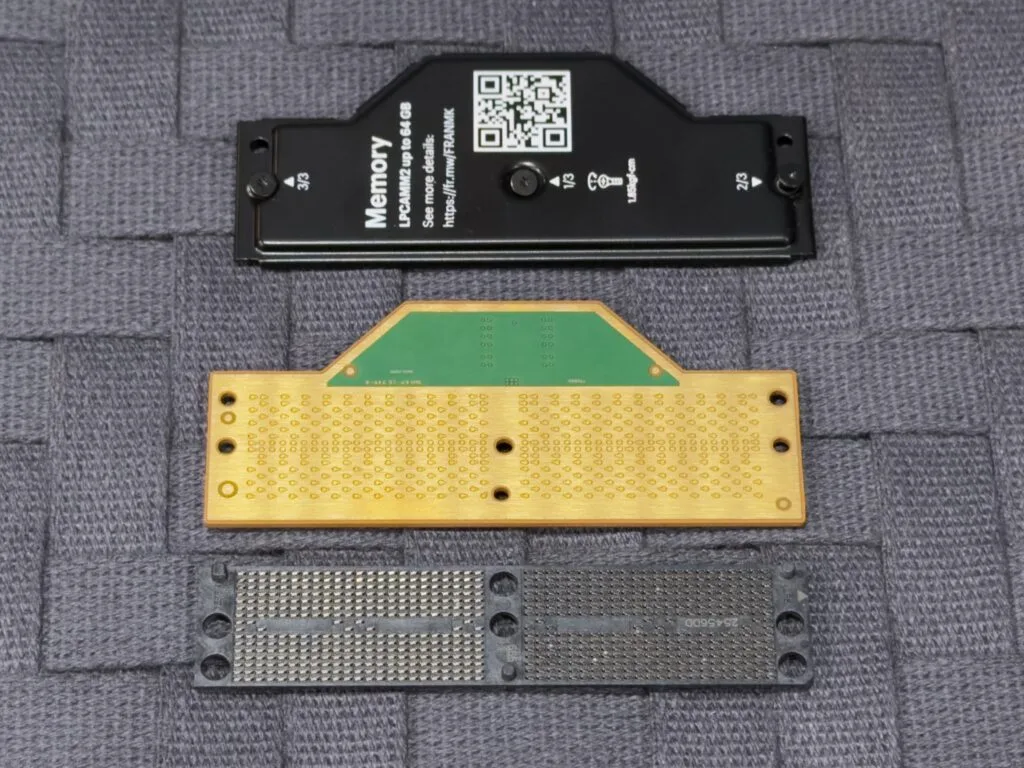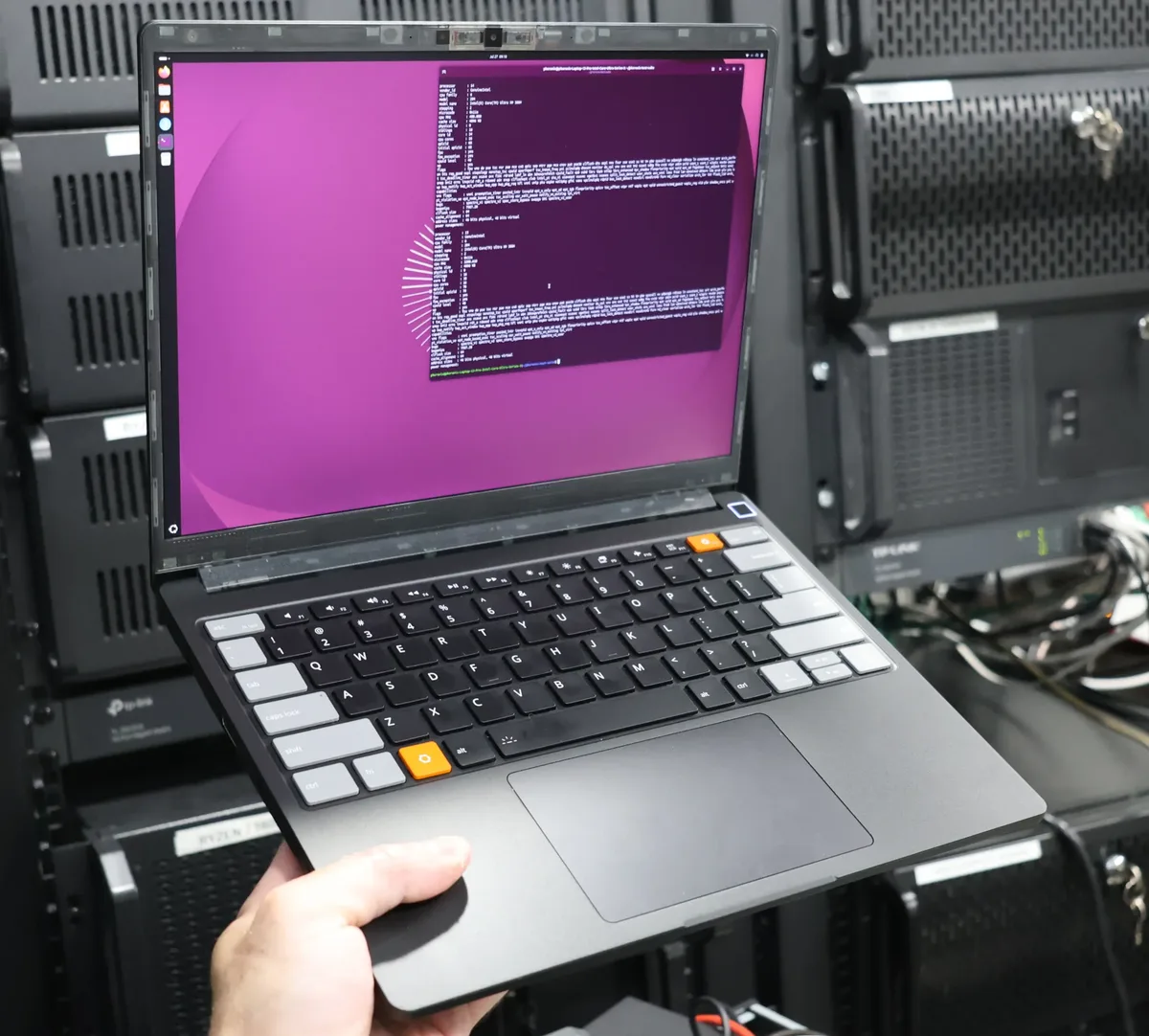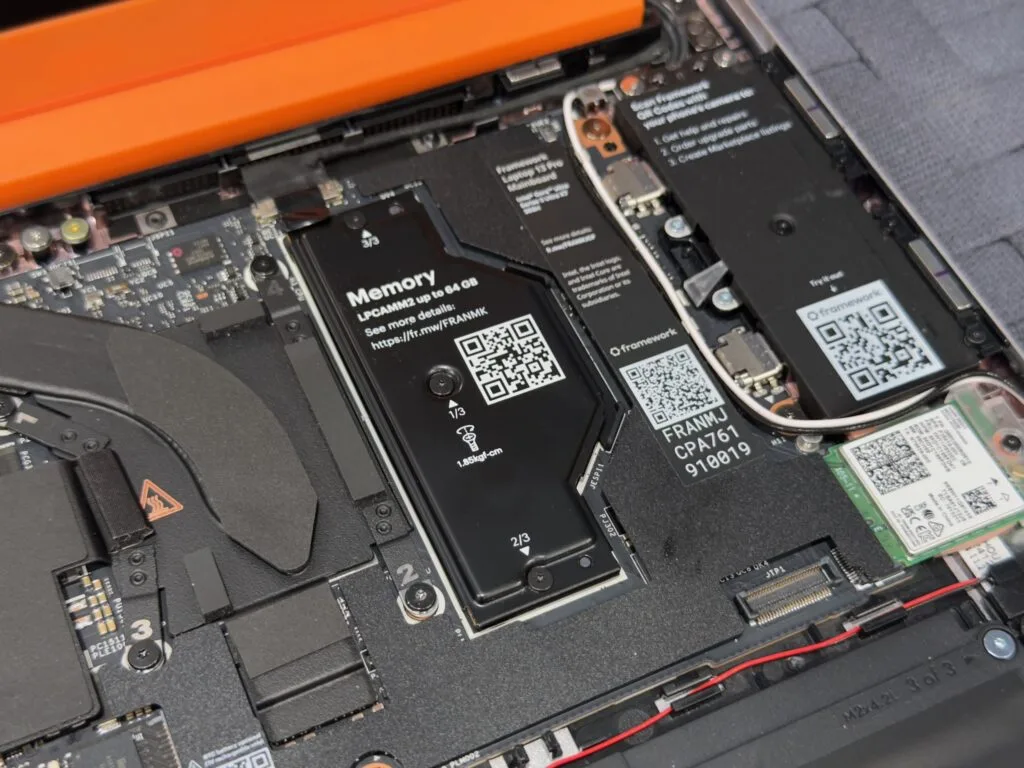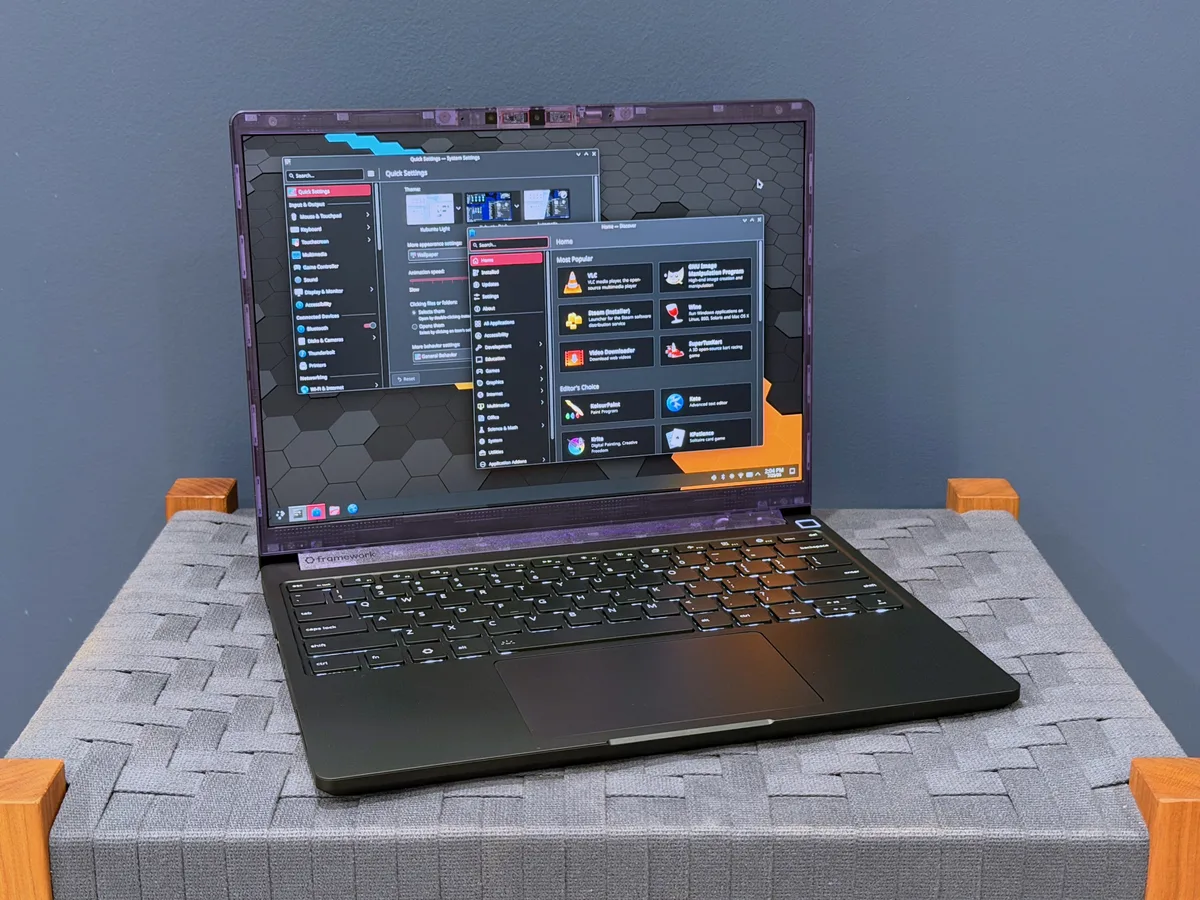
Framework launched the Laptop 13 Pro in April 2026, a ground-up redesign emphasizing upgradeability, a premium CNC aluminum chassis, and improved battery life with a 74Wh cell [1, 2, 3]. The laptop uses Intel Core Ultra Series 3 Panther Lake processors, designed for efficient performance and lower power consumption [1, 4]. It supports new LPCAMM2 memory at speeds of 7467 MT/s, available in 16GB, 32GB, and 64GB options [1].
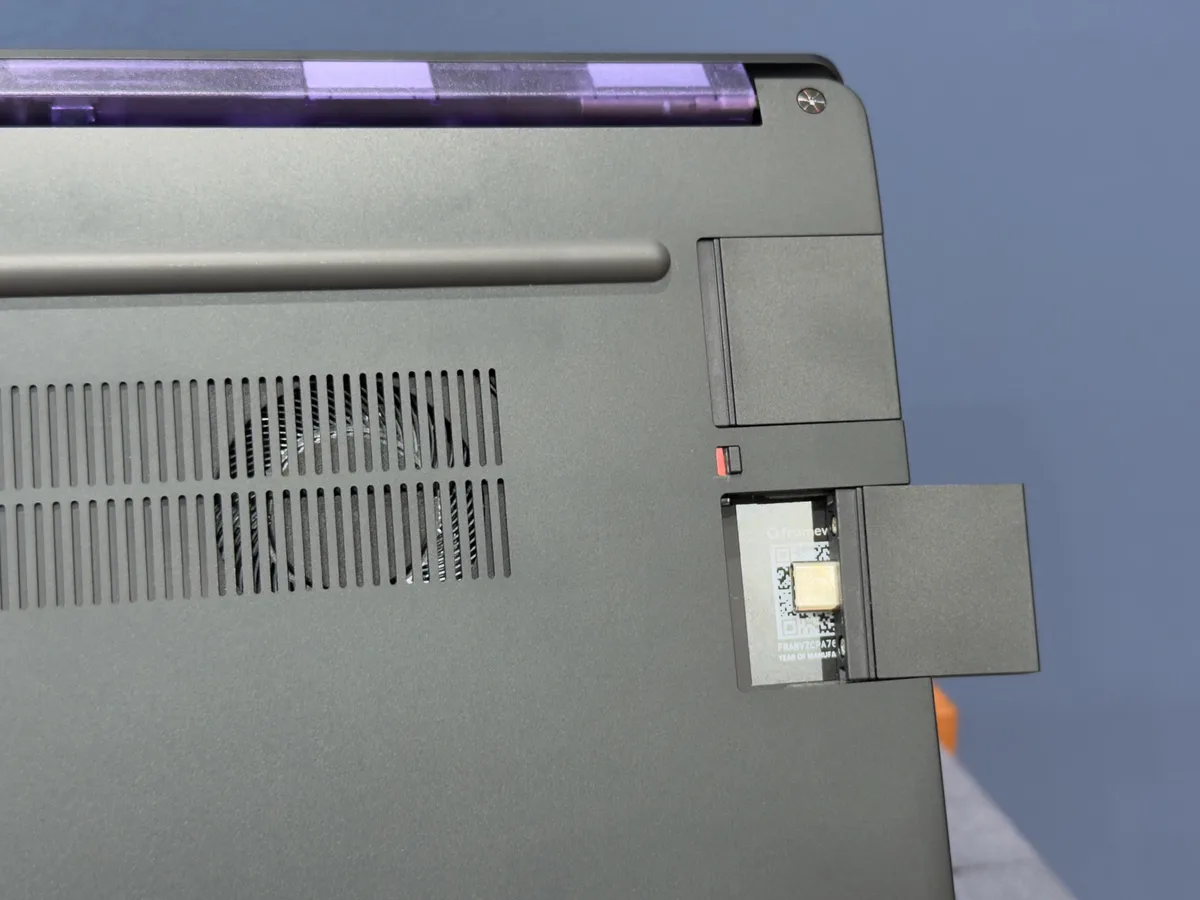
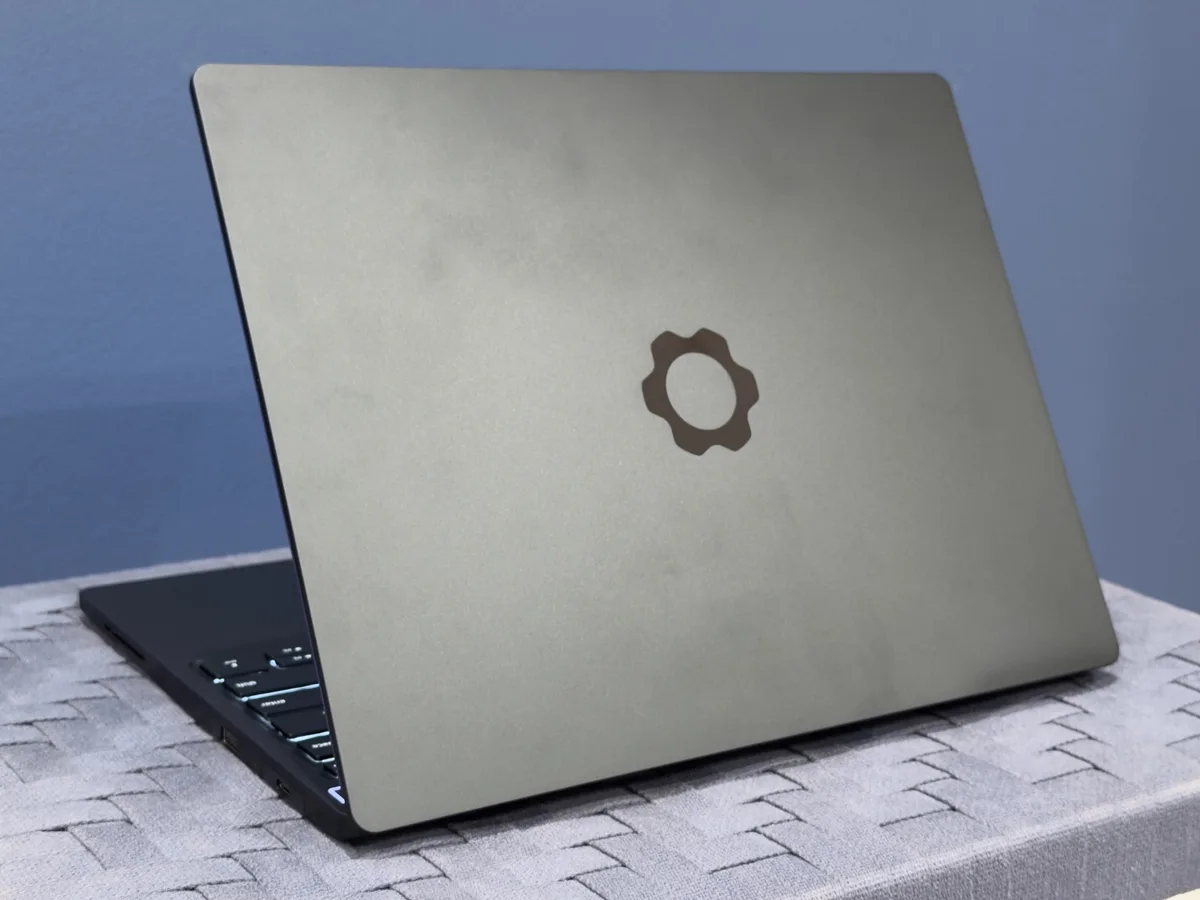
The chassis is machined from 6063 aluminum and weighs about 1.4 kilograms. It features a dark gray, graphite anodized finish without any bluish tint [1, 2, 3]. Framework refined the design with cleaner edges, rounded rubber feet, and a near seamless input cover and bottom case, greatly improving fit and finish [2, 3]. The keyboard and touchpad received praise as excellent input devices [4, 3].
Framework retains backward compatibility for many components, allowing owners of previous Framework Laptop 13 models to upgrade parts like the display, mainboard, and chassis separately, maintaining modularity and flexibility [1, 2, 4].
Battery life saw a significant boost thanks to the larger 74Wh battery and a power-optimized touchscreen panel, marking a notable improvement over earlier Framework laptops [1, 2, 4]. However, the new display received mixed reactions. While better than past Framework models, some reviewers found it slightly ghosty and not quite on par with premium OLED or Retina-class panels [4].
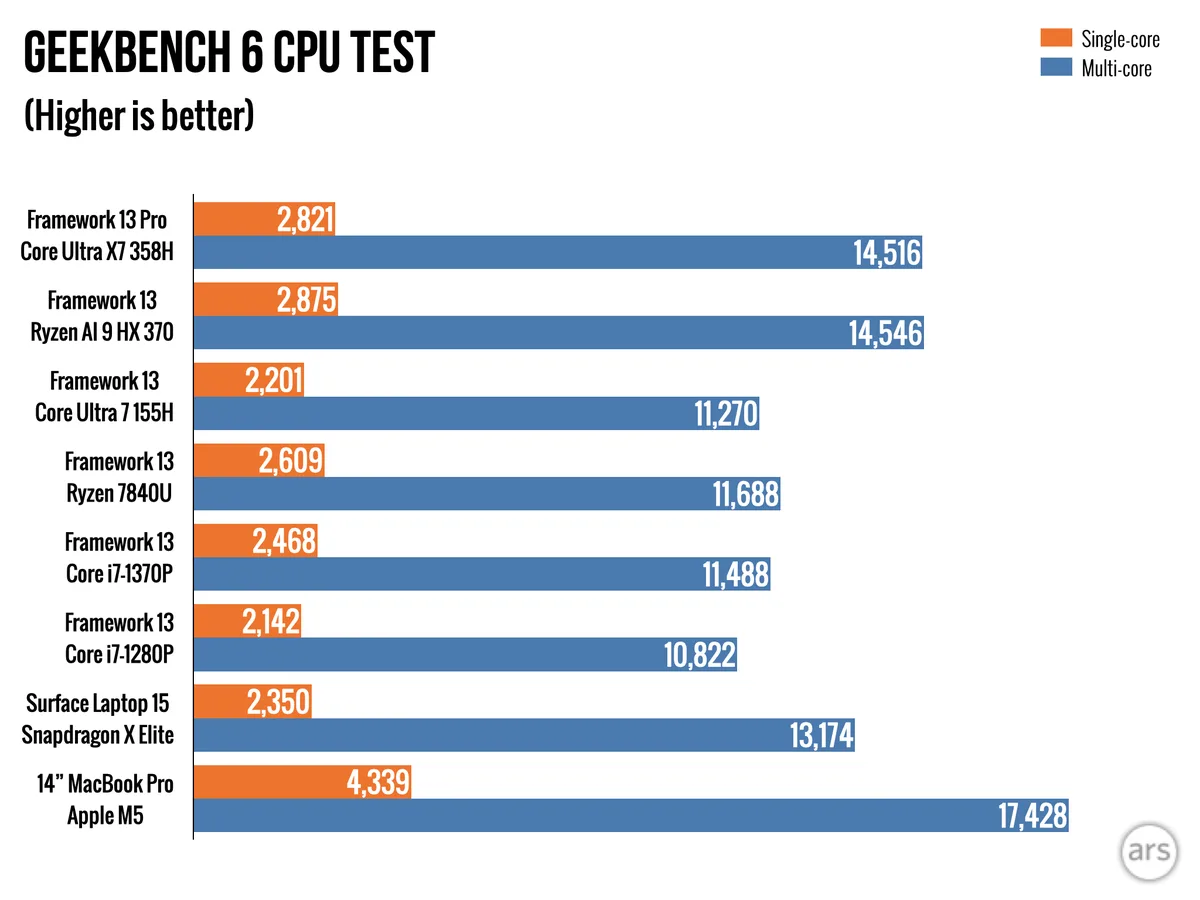
The Laptop 13 Pro commands a premium price, with no models below $1,500 and select configurations nearing $3,000 due to upgraded RAM and components [2, 4, 3]. Framework CEO Nirav Patel said, "The benchmark for us is the MacBook Pro," signaling the company's intent to challenge high-end professional laptops [3].
Reviews published in July 2026 highlighted the improved battery life, premium build quality, high price point, and strong upgradeability as defining features of the Framework Laptop 13 Pro [2, 4, 3].