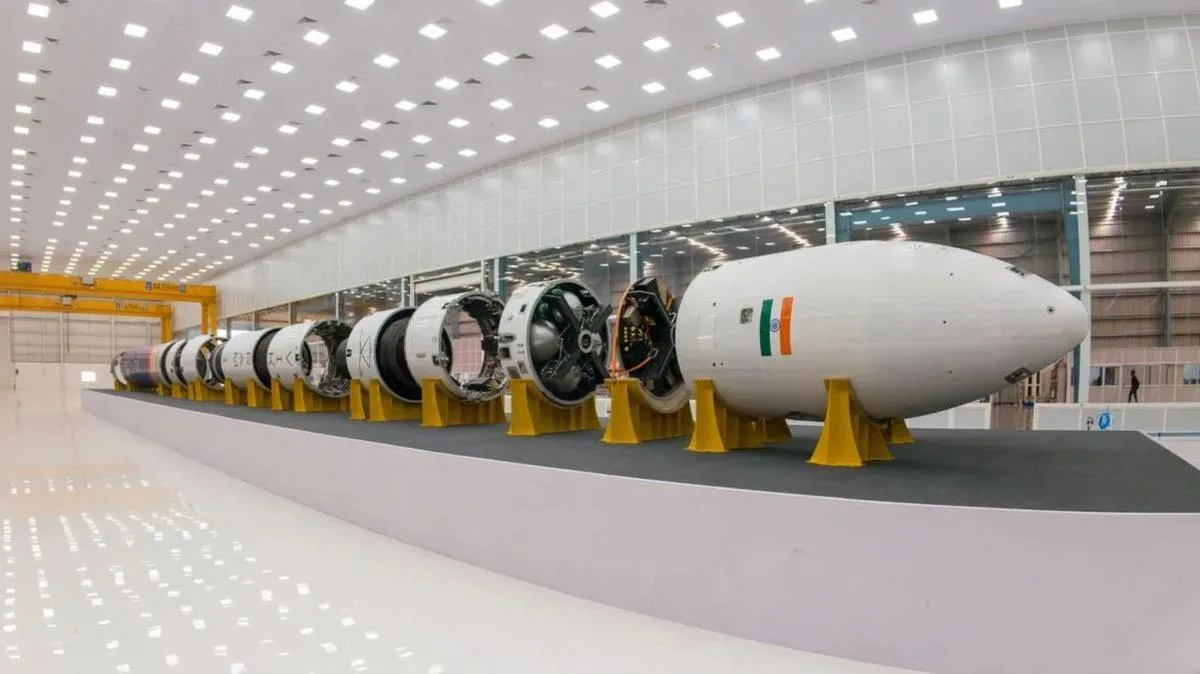
India's Skyroot Aerospace launched Vikram-1, the country's first privately developed orbital rocket, on July 18 from the Satish Dhawan Space Centre in Sriharikota, Andhra Pradesh [1, 2, 3]. The rocket lifted off at 06:35 UTC (11:05-11:30 AM local time) and successfully placed payloads into a 450 km low Earth orbit about 15 minutes later [1, 2, 4].
Vikram-1 is a three-stage rocket standing approximately 22 meters tall — about the height of a seven-story building — capable of carrying payloads weighing up to 350 kilograms (771 lbs) into orbit [1, 2, 3]. It uses three solid-fuel stages plus a liquid-fuel orbital adjustment module powered by a 3D-printed engine, a first for India [2, 5].
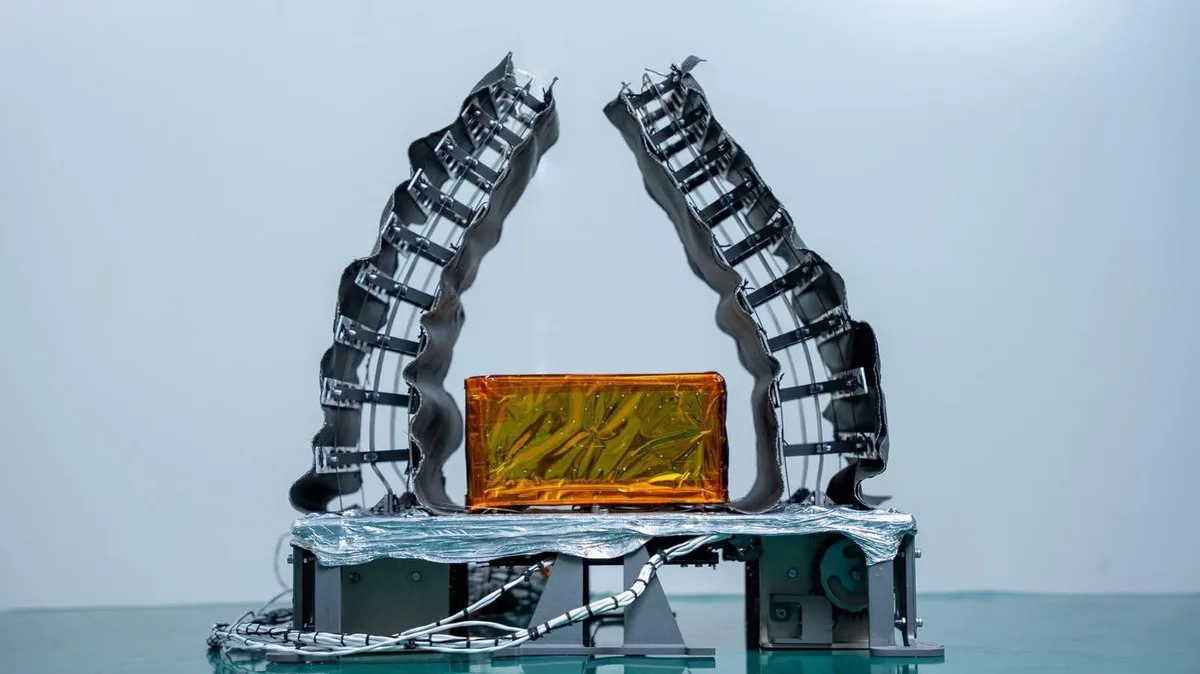
The mission, named "Mission Aagaman" (meaning arrival), tested propulsion, avionics, telemetry, guidance, navigation, and control systems to pave the way for future commercial launches [1, 2, 4]. Six payloads were carried aboard, including scientific instruments like robotic arms for space debris removal, Earth observation cameras, technology demonstration satellites, and symbolic items like a lab-grown diamond and an 18-karat gold rocket honoring Indian aerospace pioneers [1, 3, 4, 6].
Founded in 2018, Skyroot Aerospace is part of India's emerging space startup sector. The company became India's first space tech unicorn earlier in 2026 with a valuation exceeding $1 billion [1, 2, 6]. With Vikram-1's success, India joins the US and China as the only countries with private companies capable of orbital launches [1, 2, 4].
Prime Minister Narendra Modi called the launch "a defining moment in India's space journey" and praised the private sector's role in opening new frontiers and accelerating innovation. Modi said the achievement "will encourage countless youngsters to dream bigger and innovate fearlessly" [3]. Pawan Goenka, chairman of the Indian National Space Promotion and Authorisation Centre, said the success went "way beyond expectation for the very first orbital launch ever taken by an Indian private company" [3]. Former ISRO chairman K. Sivan noted the rocket's complexity and said it "will inspire many people" [7].
This mission follows Skyroot's earlier sub-orbital launch in 2022 with the Vikram-S rocket, which reached space but did not achieve orbit [2, 6]. India's space economy has grown rapidly since opening to private players in 2020 and is currently valued at roughly $8.4 billion with over 400 startups [3, 8]. India aims to significantly expand its share of the global space sector by 2033 [4].
Skyroot plans more commercial orbital launches building on the Vikram-1 technology, using data gathered during Mission Aagaman and the success of its 3D-printed engines and multi-stage design [2, 5].