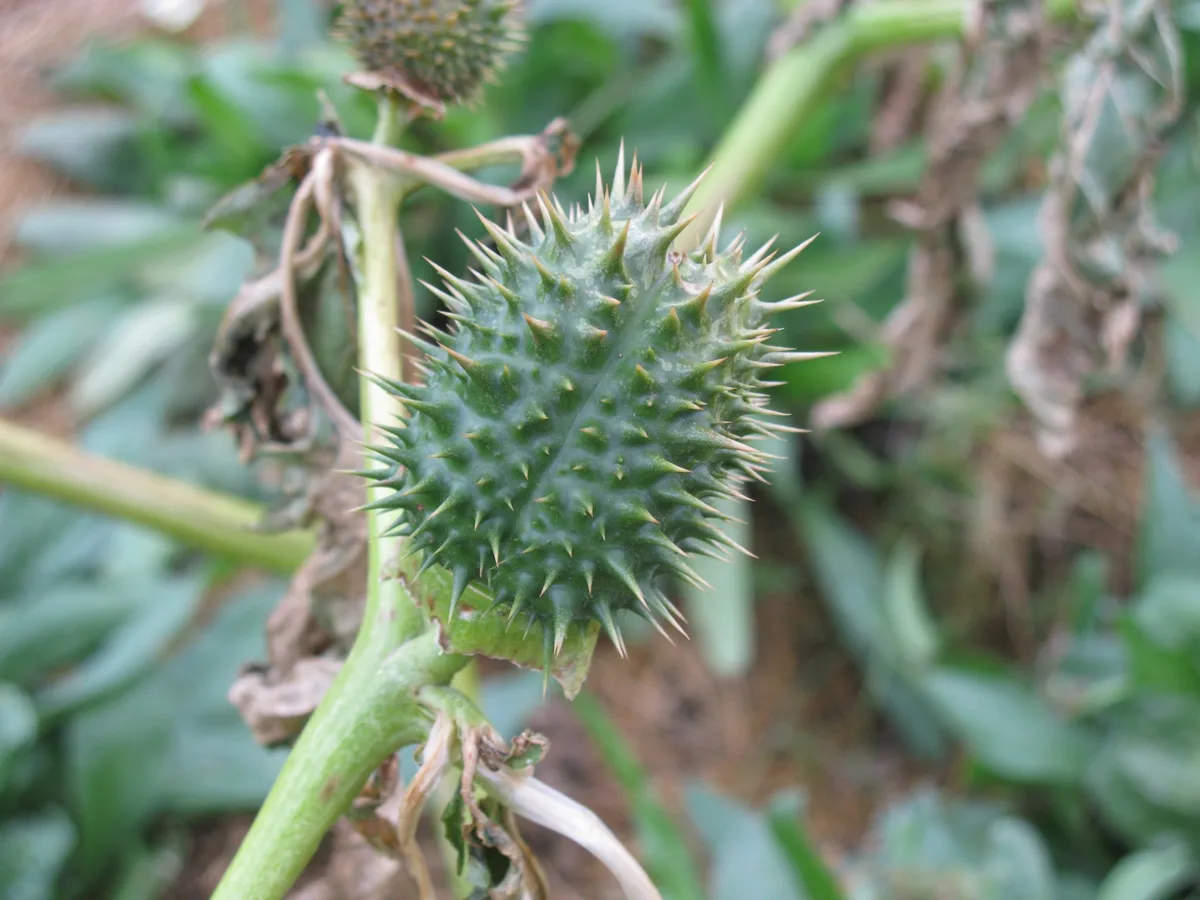
Iraq’s Ministry of the Interior issued a warning on May 28 about an invasion of datura plants, also known as jimsonweed, thorn apple or devil’s trumpet, threatening crops across the country [1, 2]. The plant’s expansion poses serious risks due to its highly toxic chemical compounds, which harm humans, animals, and plants alike [1, 2].
Datura is recognized by its distinctive white or purple trumpet-shaped flowers, green prickly fruit, and large fragrant leaves that emit a pungent odor [1, 2]. Though poisonous, it contains pharmaceutical alkaloids such as atropine, hyoscyamine, and scopolamine. These compounds have medicinal uses in carefully controlled doses, including treatment for motion sickness, pupil dilation, and anticonvulsant therapy [1, 2].
The plant has a long history of medicinal use, dating back about 500 years among Indigenous peoples in Central America before European contact, said Khalid Mohammed Omer, chemistry professor at the University of Sulaimani [1]. It was introduced to Europe in the late 15th century and has since spread worldwide, now aggressively invading Iraqi farmland [1, 2].
Datura typically grows sparsely in desert regions and can be cultivated for medicinal purposes. However, its growth in Iraq appears to have spun out of control, leading to concerns among farmers over crop contamination [1, 2]. Scientists are baffled how datura is thriving in climates very different from its native habitat, as invasive plants usually remain limited to similar environments [1, 2].
A research team at the University of Seville analyzed over 124,000 global datura sightings to better understand its worldwide spread patterns [1, 2]. Their findings highlight the plant’s ability to rapidly colonize new regions, including Iraq.
Authorities continue to monitor the situation closely and advise farmers to take precautions in identifying and removing datura plants to protect crops and livestock. Further updates from Iraq’s Ministry of the Interior are expected as efforts to control the invasion advance.
![Datura plant is commonly known as jimsonweed, thornsapple or devil's trumpet. This particular variant is known as Datura stramonium. [File: Sara DeAngelis Wikimedia Commons]](/uploads/2026/05/29/3a5dca5cfea21b70a0899aa4.webp)
![The Datura plant is known for its white or purple trumpet-shaped flowers, green prickly fruits, and large leaves with a pungent odor.[File: Flobbadob Wikimedia Commons]](/uploads/2026/05/29/f9f0e277598c20ffd951eae7.webp)
![A Spanish study finds that "Datura" still possesses the potential for further geographic expansion [File: Harry Rose Wikimedia Commons]](/uploads/2026/05/29/dfd92abb8a231cf66f4a045f.webp)