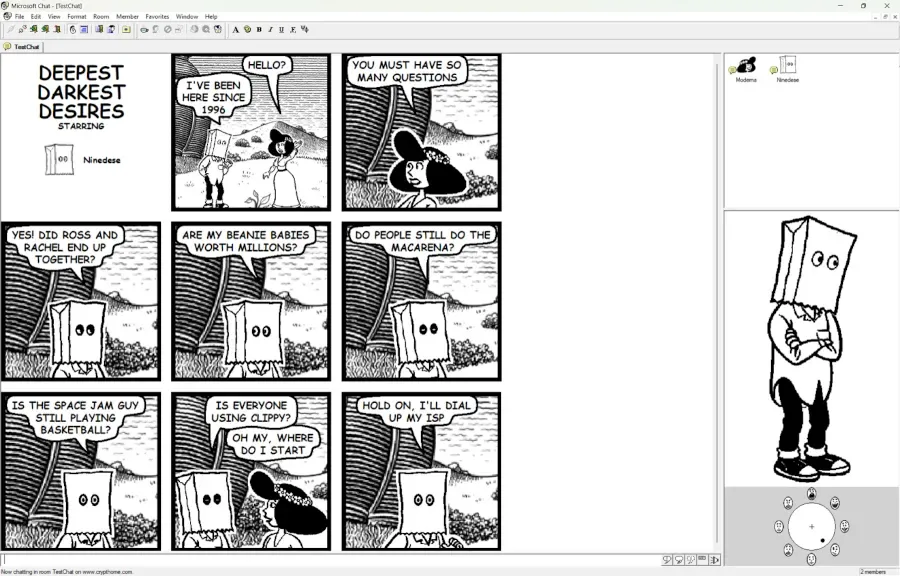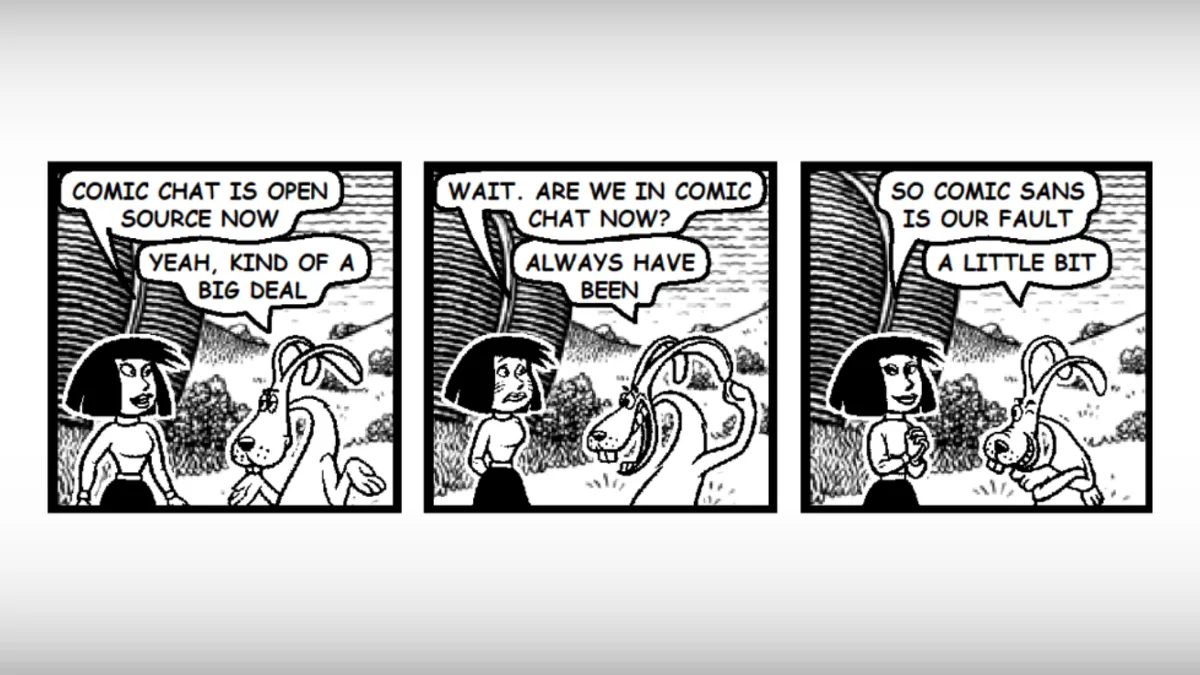
Microsoft open-sourced Comic Chat, its 1996 IRC client that rendered chat conversations as comic strips with illustrated characters, speech bubbles, and gestures, in July 2026 [1, 2, 3]. The source code was made available on GitHub under the MIT license, including original snapshots and examples modernized with AI to build and run Comic Chat on contemporary Windows systems using updated Visual Studio tools [2, 3].
Comic Chat was released bundled with Internet Explorer 3 in 1996 and later included with Windows 98 and MSN [1, 4, 3]. It originated as an ambitious experiment by Microsoft Research to use conversational cues to select avatars’ poses and expressions, influencing future online communication design [1, 4].
The client also showcased the Comic Sans font, designed by Vincent Connare in 1994 with its informal, hand-lettered style suited for comic panels [1, 2, 4]. Comic Sans became widely recognized and is still one of the most popular fonts today.
Microsoft discontinued Comic Chat in the early 2000s as newer chat technologies emerged [2, 3]. Robert Standefer and Scott Hanselman noted the software "emerged during a period when the internet was still discovering what it wanted to become. Many rules had not yet been written, which gave developers permission to try bold concepts that might seem unusual even today" [4].
Microsoft said releasing Comic Chat as open-source code preserves an important piece of software history and offers the community a chance to explore and build on it [2]. The open-source release marks the first public availability of the full codebase nearly 30 years after the client’s debut.
Developers and enthusiasts can now access Comic Chat’s historic code, study its innovative approach to illustrated chat, and potentially update or extend the client to run on modern Windows environments. The project's GitHub remains the definitive resource for source materials and modernization examples as of mid-2026 [1, 2, 3].