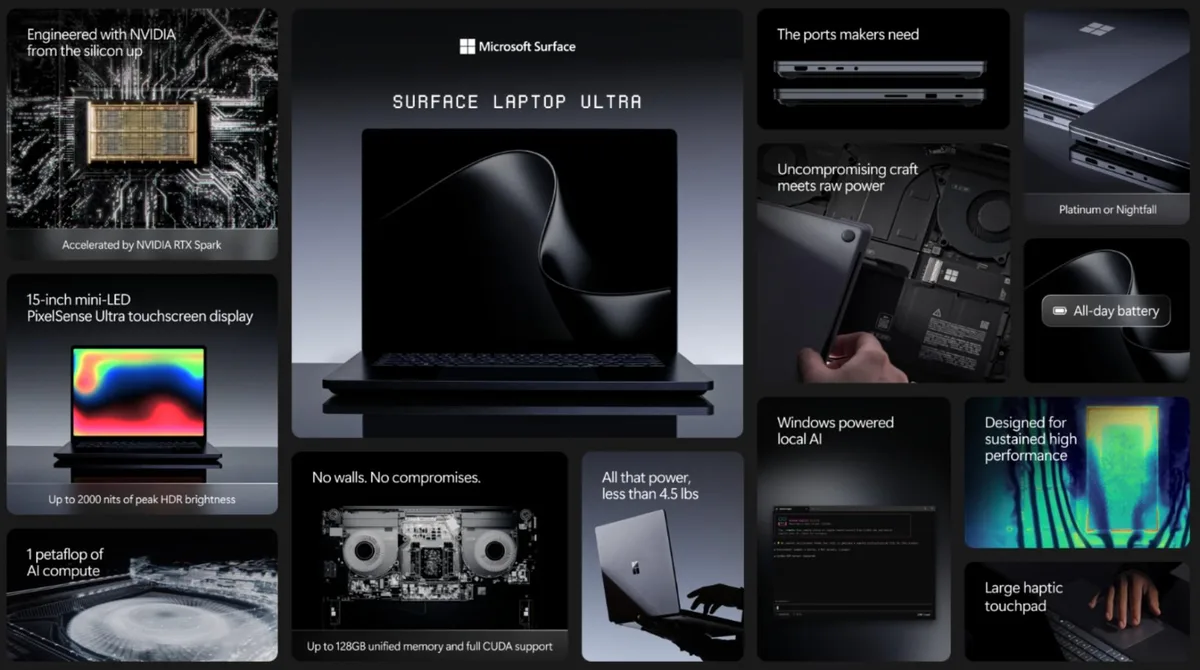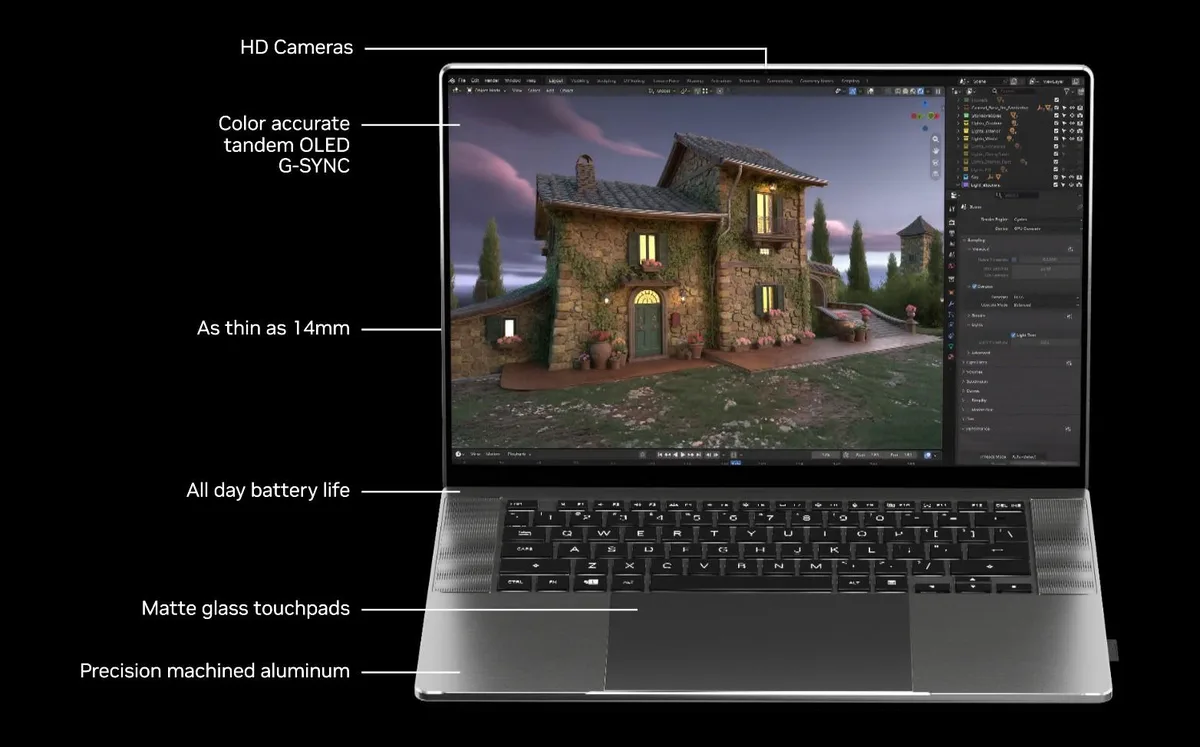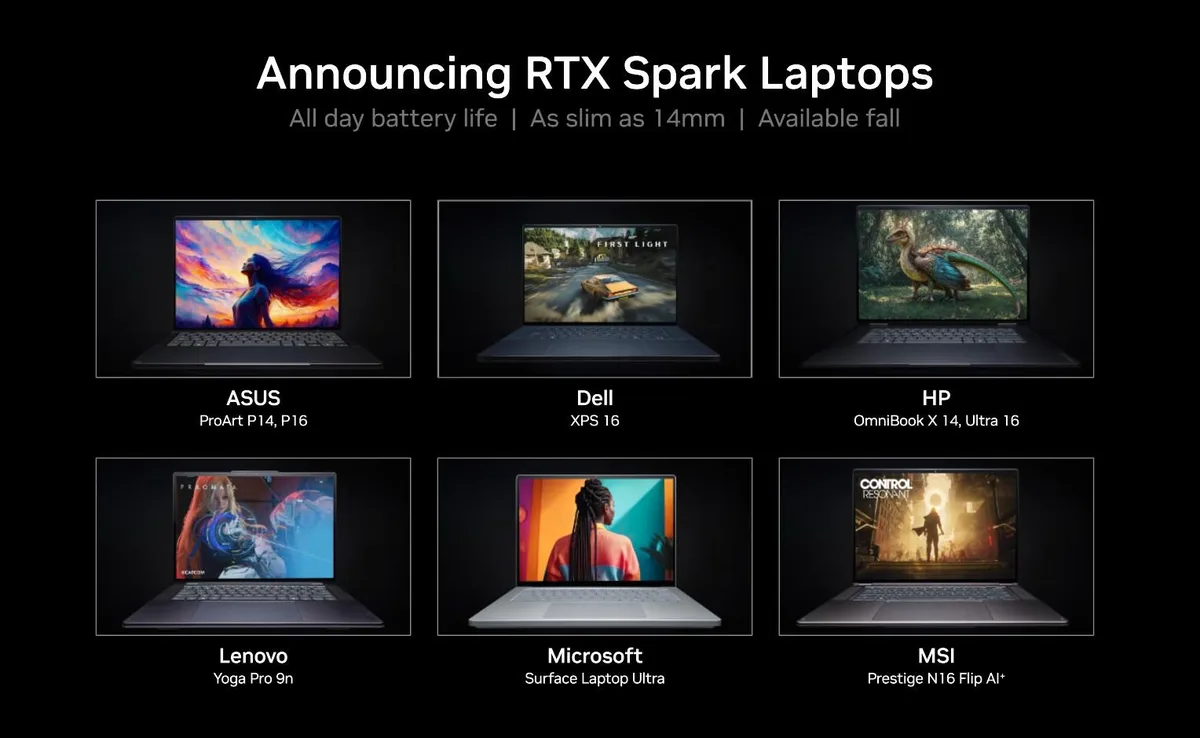
Nvidia announced the RTX Spark, a new Arm-based PC chip family designed for thin-and-light Windows laptops and mini-PCs. The flagship chip offers up to 20 CPU cores, between 6,144 and 6,188 GPU CUDA cores, and up to 128 GB of LPDDR5x unified memory, targeting high performance and efficiency in portable devices [1, 2, 3].
The RTX Spark is based on the same silicon as Nvidia’s DGX Spark personal AI supercomputer but retooled for consumer hardware [1]. Nvidia claims the chip is the most efficient PC chip ever built. Mark Aevermann, senior director of product management at Nvidia, said, “This is the most efficient PC chip ever built” and noted that gaming battery life will depend on usage, like all laptops, with maximum load limiting runtime to under an hour [1, 2].
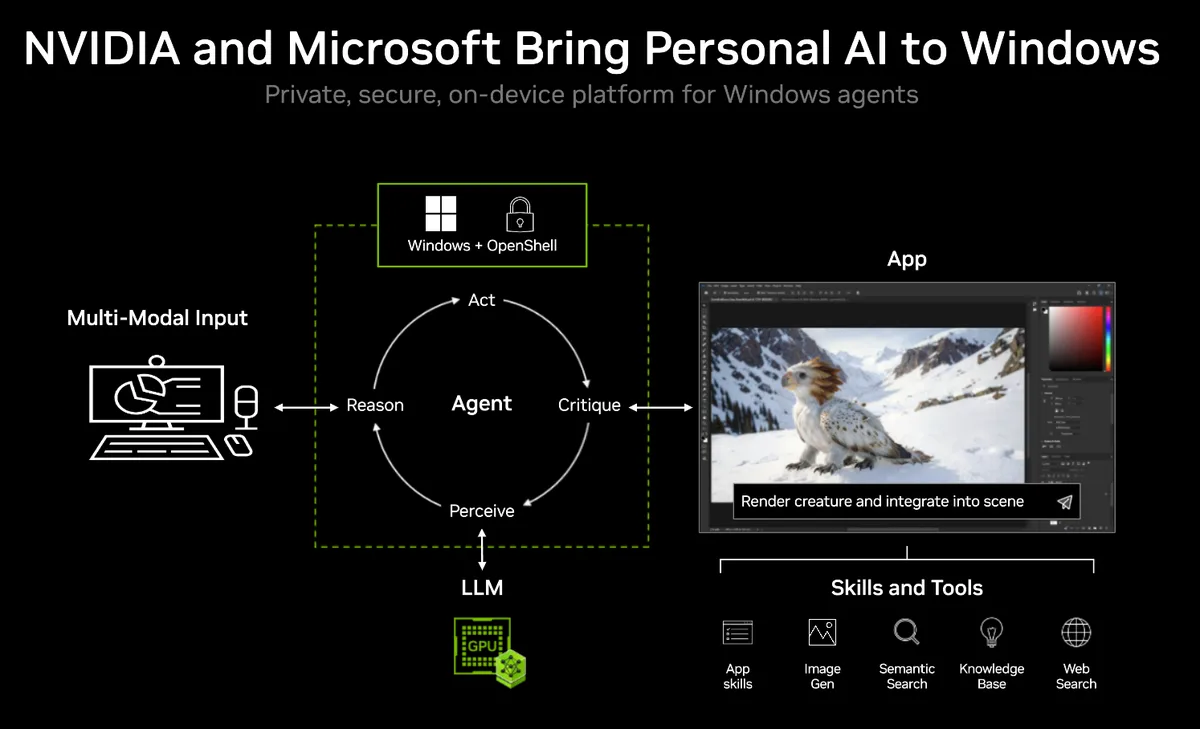
The chip runs Windows on an ARM architecture, using Microsoft’s Prism emulation layer to support legacy x86 Windows applications [1, 3]. Nvidia and Microsoft are collaborating on security and runtime features to enable large AI agents to run safely on RTX Spark devices [1]. The chip can handle AI workloads such as rendering large 3D scenes, editing 12K video, and running AI agents with up to 120 billion parameters [1, 3].
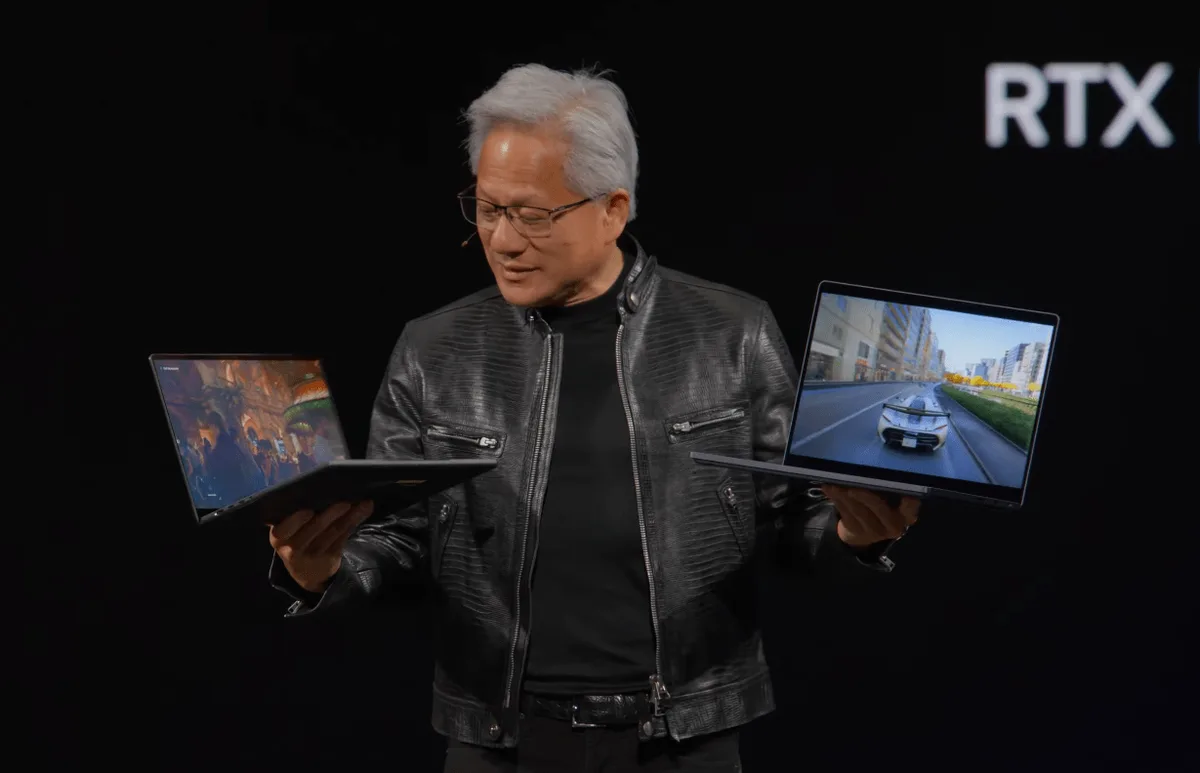
Nvidia CEO Jensen Huang said, “The good news is that this PC is 100% awesome at everything everybody expect the PC to do. And it can do more.” The company views the RTX Spark as key to a new personal computing model where AI is the user interface, while still running standard Windows environments [1, 3].
Looking ahead, Nvidia plans to expand the RTX Spark family with future chips codenamed Vera Rubin in 2028 and Rosa Feynman in 2030 [3]. Nvidia demonstrated the chip’s gaming and AI capabilities in June 2026 at Computex [1, 2, 3]. The official launch and delivery for consumer laptops and mini-PCs is planned for fall 2026 [1].