A solid rock fossil with the swirls and shape of a seashell was found at the base of a cliff in Saudi Arabia’s Alghat desert on August 16, 2026, roughly 500 kilometers from the nearest coastline at Dammam [1, 2]. The fully rock fossil is unusual given its desert location but bears distinct shell-like morphology [1, 2].
The presence of carbonate rocks, marine fossils, coral fossils, and sedimentary structures around Alghat indicates that parts of the Arabian Peninsula were submerged under water during the late Jurassic period, about 150 million years ago [1, 2]. This fossil likely dates back to that era.
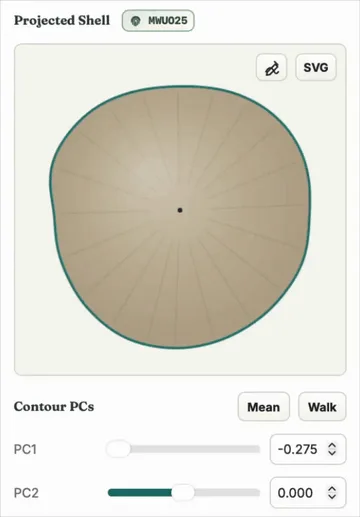
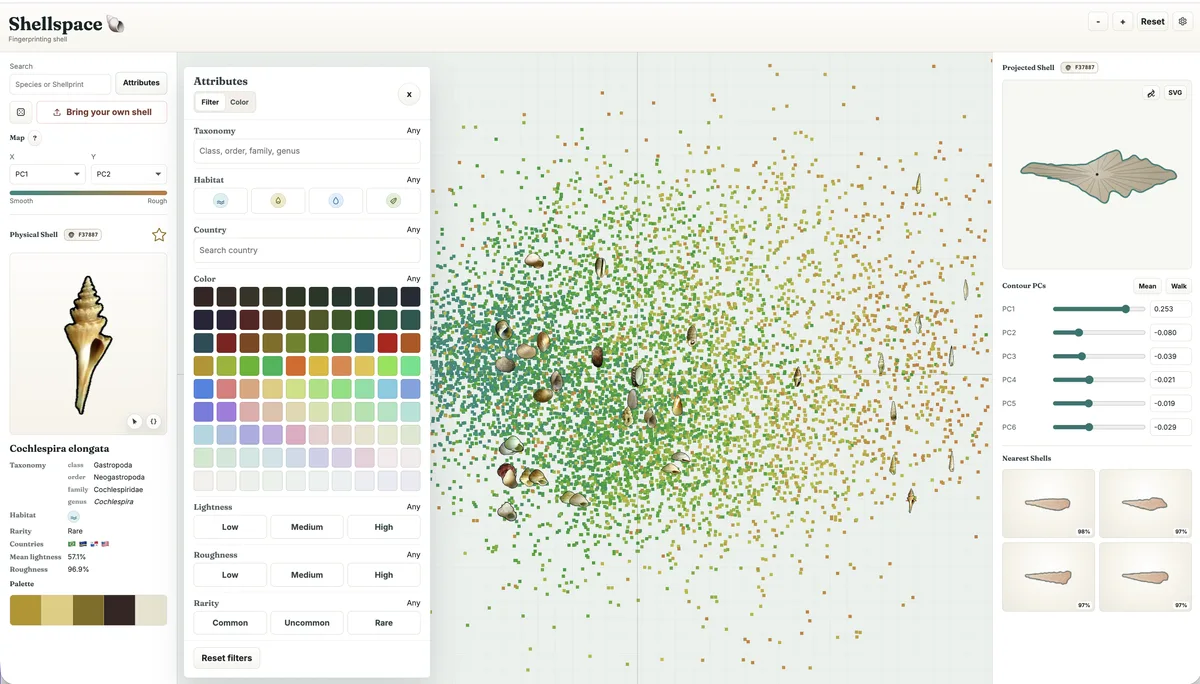
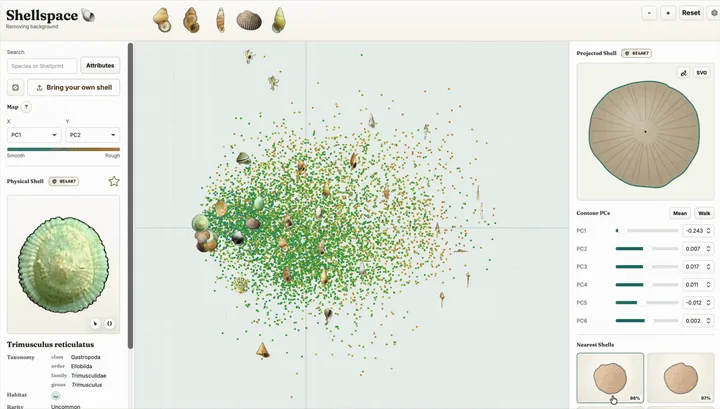
The finder plans to analyze the fossil’s morphology using mathematical methods. This involves representing shell shapes, defining distance metrics, and mapping the shape space using a large dataset of 7,894 species and 59,244 shell images compiled by Zhang et al. The goal is to better understand the fossil’s lineage through detailed shape comparisons [1, 2].
However, experts note that morphology-based analysis alone is imperfect because different species can exhibit similar shell shapes despite unrelated lineages, complicating lineage inferences [1, 2].
Further studies and possibly additional fossil finds will be required to confirm the fossil’s origin. The ongoing morphological analysis using the extensive dataset is the next step in understanding this rare seashell-like fossil found far inland in the Arabian desert.