YouTube announced on May 27, 2026, that it will begin automatically detecting videos containing significant photorealistic AI-generated content and apply a visible label to alert viewers [1, 2, 3, 4, 5, 6, 7, 8, 9, 10, 11]. This reverses the company’s earlier 2024 policy that relied solely on creators to self-disclose any AI use in their videos [1, 2, 3, 4, 5, 9, 11].
Under the new system, if creators fail to disclose AI use but YouTube’s detection system identifies considerable photorealistic AI, the AI label will be applied automatically [1, 2, 3, 4, 5, 6, 7, 8, 9, 10, 11]. Creators who believe their videos were mislabeled can appeal and update their disclosures through YouTube Studio, except in cases where videos use YouTube’s own AI tools or carry C2PA metadata confirming fully AI-generated content, where the label remains permanent [2, 3, 4, 5, 7, 8, 10, 11].
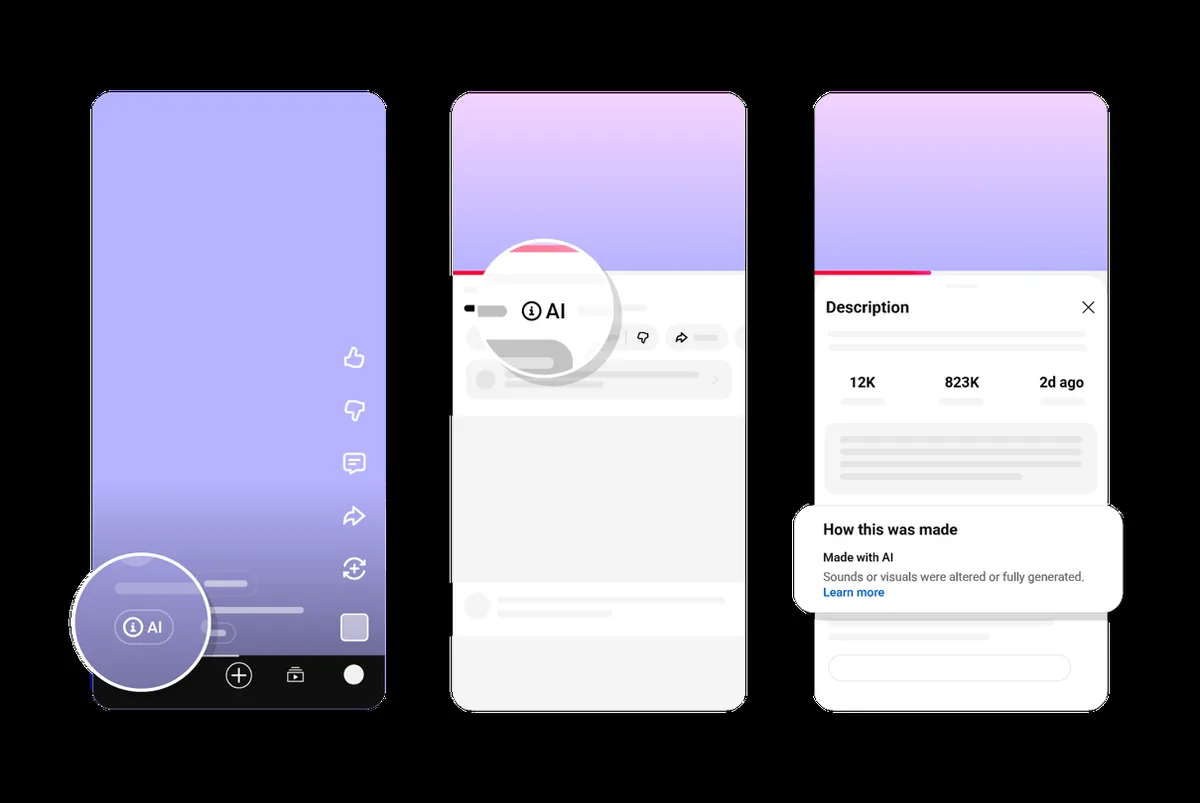
YouTube is relocating the AI label to a more prominent spot: below the video player and above the description on long-form videos, and as an overlay for YouTube Shorts [2, 3, 5, 6, 7, 8, 9, 10, 11]. The label reads "photorealistic and meaningfully AI altered or generated content." Less photorealistic or animated AI content will be noted in the expanded video description [3, 6, 7, 8].
YouTube described the goal as giving "viewers the context they need at a glance," with Rene Ritchie, YouTube head of editorial and creator liaison, saying, "If it looks real but was made with AI, viewers will know immediately" [2, 7]. The company also stressed the AI label will not affect video recommendations or monetization eligibility, emphasizing, "A disclosure label alone does not change how a video is recommended or whether it’s eligible to earn money" [1, 2, 3, 4, 7].
The automatic detection system relies on unspecified internal signals alongside explicit indicators such as C2PA metadata and watermarks from YouTube’s AI tools like Veo and Dream Screen [1, 2, 4, 5, 10, 11]. YouTube began rolling out these changes in May 2026 [2, 3, 5, 6, 7, 9, 10, 11].
Other platforms, including Spotify, have also started introducing automatic flags for AI-generated content [1, 11].