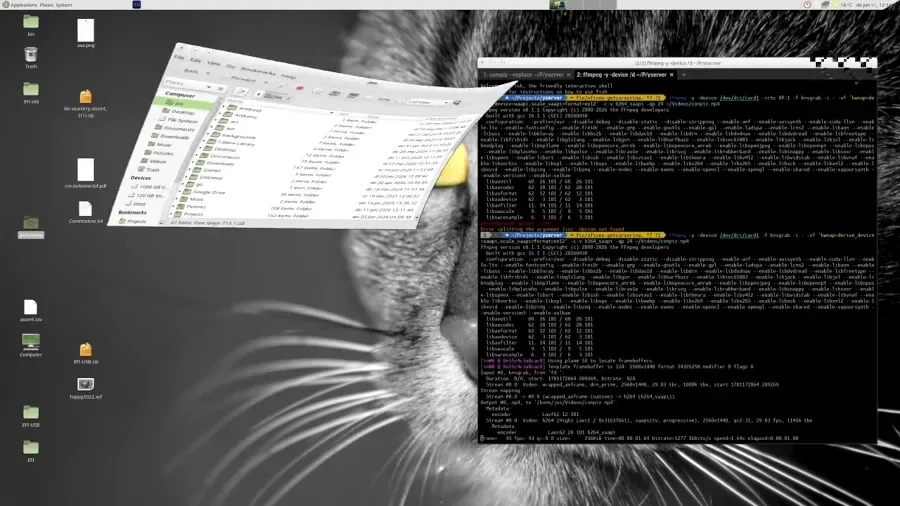
YSERVER is a modern X11 server developed from scratch in Rust to support major Linux desktop environments such as MATE, Xfce, and Cinnamon [1, 2]. Unlike traditional X.Org Server clones, YSERVER focuses on practical, modern functionality and omits legacy features like multiple screens, non-TrueColor visuals, indirect GLX, the DDX driver ABI, and support for endian-swapped clients [1, 2].
The server supports many prominent X11 extensions, including RandR for dynamic screen resizing, DRI3 for direct rendering, GLX for OpenGL integration, and extensions like MIT-SHM, Composite, BIG-REQUESTS, DAMAGE, DPMS, Present, RENDER, SHAPE, SYNC, and XInputExtension, among others [1, 2]. YSERVER can run the Compiz compositing window manager without issues, enabling modern graphical effects [1, 2].
Licensed under the MIT license, YSERVER is fully open-source [1]. It relies on libseat for seat management and interacts directly with atomic KMS, requiring user access to /dev/dri/ and /dev/input/ devices for hardware interaction [2].
Developers have tested YSERVER on a wide range of hardware platforms, including AMD Ryzen 9 6900HX, Intel Core i9-13900k with RX580 GPU, Intel i5-7200U, Snapdragon X1, Apple M1 and M2 chips running Asahi Linux, as well as virtualized environments using virtio-gpu [2]. However, YSERVER does not support the proprietary NVIDIA driver. The open-source Nouveau driver may work on some NVIDIA cards but has only been tested up to GTX 1050 [2].
The build process requires a recent stable Rust toolchain plus dependencies like gcc, libseat, libxshmfence, libxkbcommon, libinput, glslc, systemd-libs, and fontconfig [2]. The name "yserver" is currently a working title and may change in the future [2].