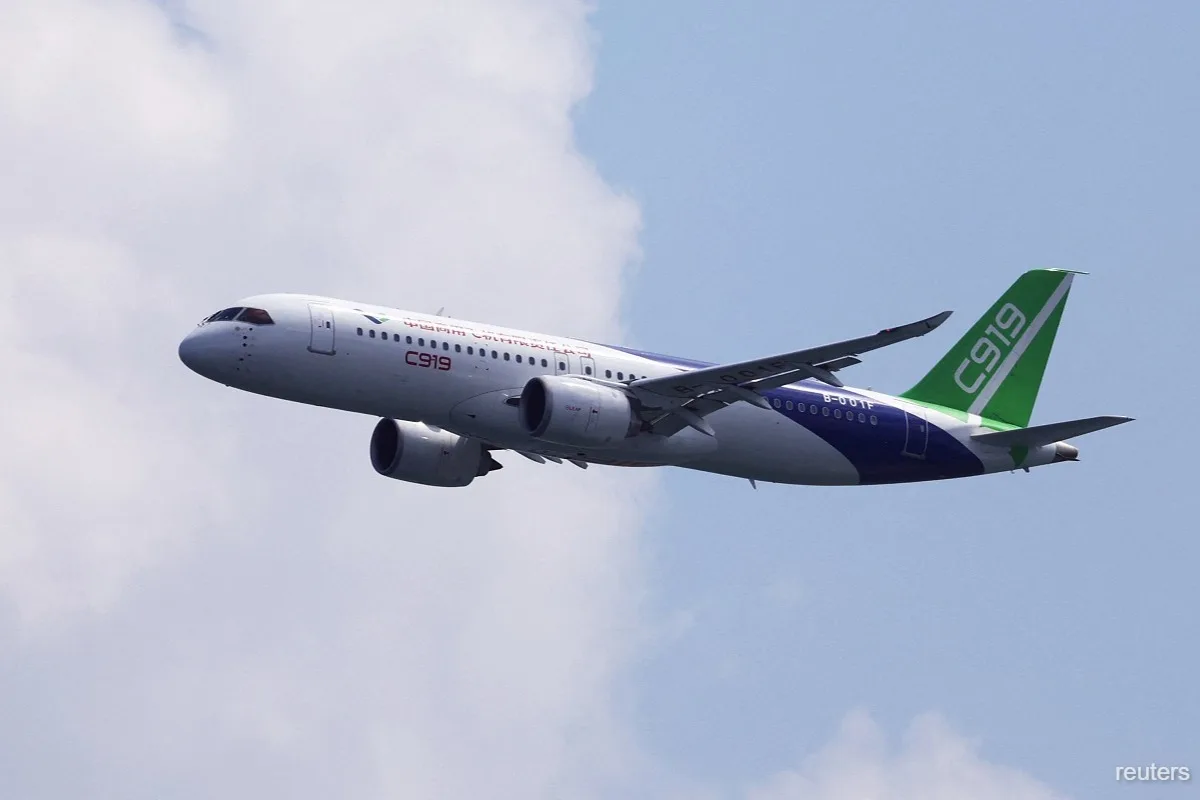
China's Civil Aviation Administration delayed final approvals for Airbus aircraft deliveries into China for several months in early 2026, impacting the company's shipment schedule [1, 2, 3]. The move came amid Beijing's dissatisfaction with the slow certification process for its domestically produced C919 single-aisle jet by Europe's aviation safety agency (EASA) [1, 3, 2].
Airbus supplied just 16 commercial planes to Chinese airlines from January through May 2026, down sharply from 47 during the same period last year. This delivery volume is the lowest for the first five months of a year since 2009, signaling a significant downturn in Airbus's key market [1, 2, 3]. Around 20 Airbus aircraft scheduled for delivery remain on hold, with Airbus CEO Guillaume Faury attributing part of the delay to an "administrative issue that’s been resolved" [1, 2, 3]. He predicted in April that deliveries would "return to normal by the end of June" [1, 2, 3].
The C919 jet is China’s homegrown competitor to the Airbus A320 and Boeing 737, designed to carry up to 192 passengers [1, 3]. Although domestically built, it depends heavily on Western engines and avionics and must secure certification from regulators outside Asia, notably from EASA in Europe [1, 2, 3]. EASA conducted an on-site inspection of the C919 in Shanghai in July 2024 and gave positive feedback on the aircraft’s safety and compliance [3]. Chinese aviation officials remain optimistic about obtaining European certification in 2025, aiming to speed the traditionally lengthy approval process for new aircraft types [3, 1, 2].
The ongoing tensions over C919 certification threaten Airbus's dominant position in China, the company's largest aviation market by fleet size. If the dispute continues or escalates, Airbus could face longer-term challenges in maintaining its market share [1, 2, 3]. Airbus forecasts demand for nearly 9,570 new aircraft deliveries to China over the next two decades, underscoring the market's strategic importance [1, 2].
Airbus and Chinese authorities are expected to resolve the delivery delays by the end of June, with the situation closely watched as C919 certification efforts advance.