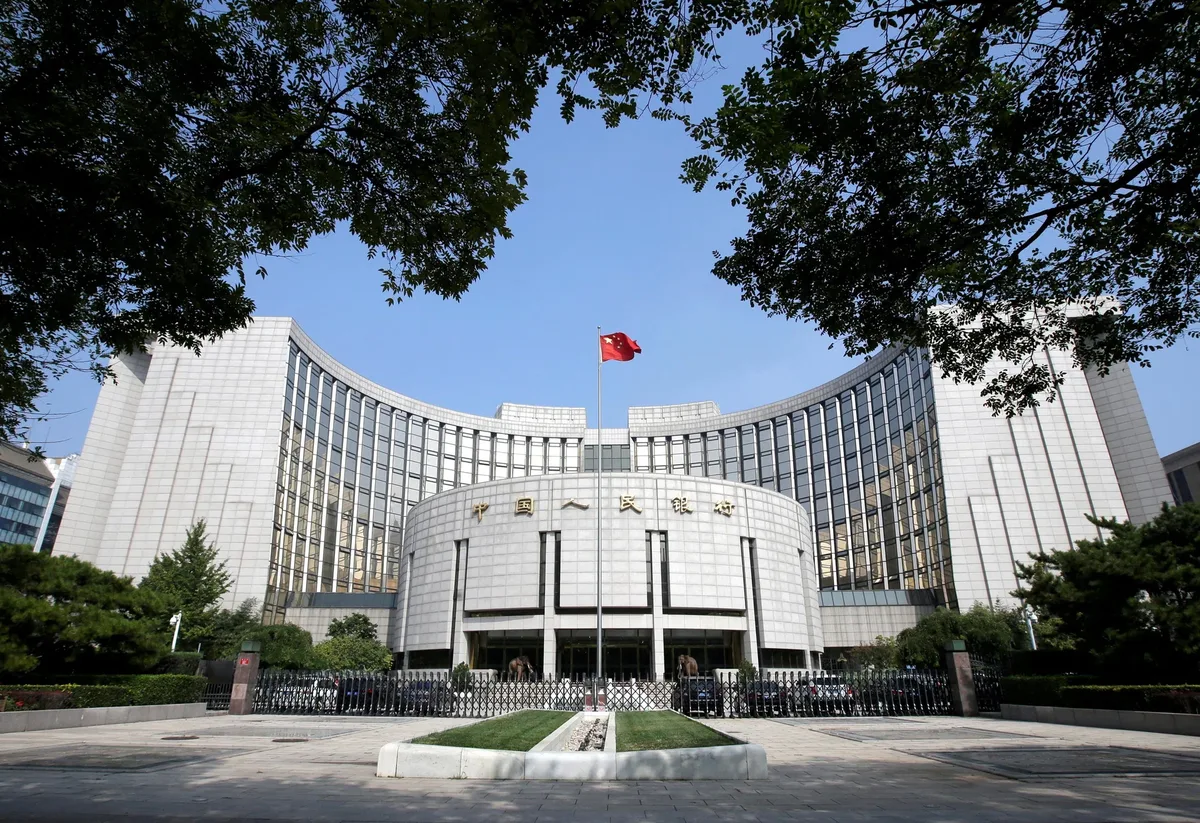
China's 1-year loan prime rate (LPR) remained at 3.00% in July 2026, unchanged from June. The 5-year and above LPR also held steady at 3.50%, marking the 14th consecutive month without adjustment to benchmark lending rates by the People's Bank of China (PBOC) [1, 2, 3, 4, 5, 6].
The PBOC and policymakers have maintained an appropriately loose monetary policy, focusing on targeted structural tools rather than broad rate cuts to support domestic consumption and the real economy [2, 5, 6]. Economic data shows China’s growth slowed to the weakest pace in over three years during the second quarter of 2026, reflecting a structural mismatch between strong supply and weak demand [2, 3]. Market participants surveyed by Reuters unanimously predicted no change to either the 1-year or 5-year LPR for July [2, 3].
On July 20, 2026, the central bank officially announced the decision to keep both rates steady, emphasizing a cautious stance in response to economic challenges [2, 3, 5, 6]. Currency markets saw the onshore (CNY) and offshore (CNH) renminbi exchange rates reverse recent declines and appreciate slightly on the same day, although the official midpoint rate was lowered marginally for a second consecutive day [5]. The Finance Ministry noted recent declines in treasury cash deposit rates, indicating ample liquidity in the banking system and aligning with the unchanged LPR to avoid squeezing bank profits amid external uncertainties [6].
Economists highlight the cautious outlook. Kelvin Lam, senior China economist at Pantheon Macroeconomics, said, "All eyes are now on the end-July economy-focused Politburo meeting. We will be looking for signs that policymakers recognise the importance of stabilising household balance sheets, potentially preparing a more comprehensive plan to stabilise the property sector and break the negative feedback loop between falling asset prices and weakening consumer confidence" [2]. Lynn Song, chief economist for Greater China at ING, said, "On the monetary side, low but positive inflation shouldn’t impede further People’s Bank of China easing if it is deemed necessary. Policymakers have made efforts to maintain ample liquidity, and we expect there is a solid chance we will see a rate cut within the quarter" [2].
Germany Chancellor Olaf Scholz commented on China’s currency policy, stating, "If the Chinese government insists the renminbi is not undervalued, it should allow free trading and let the market decide the price" [5].
The next key event is the end-July Politburo meeting, where policymakers may signal further economic measures or reforms to stabilize growth and support the financial sector [2].