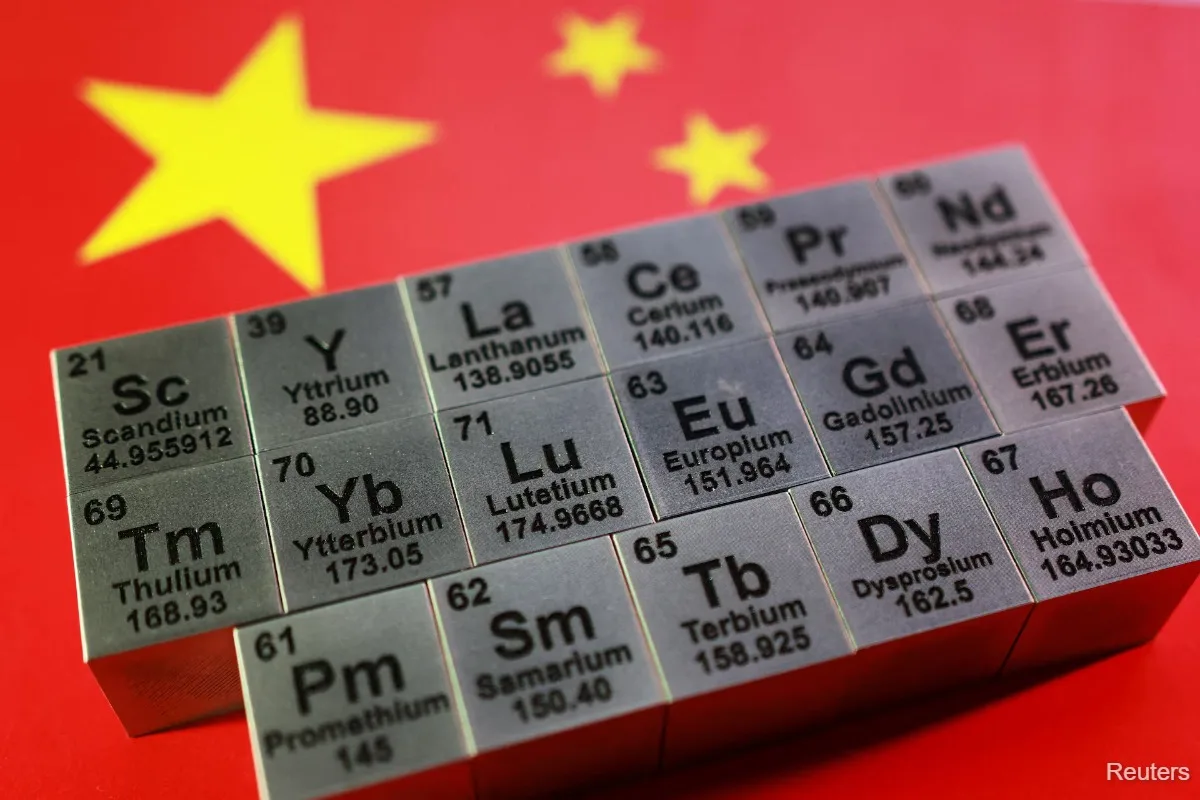
China has halted exports of key heavy rare earth minerals including dysprosium, terbium, yttrium oxide, and gallium to Japan since December 2025, allowing only limited shipments of yttrium to continue [1, 2, 3, 4, 5]. The export restrictions appear linked to diplomatic tensions triggered by a Taiwan dispute that began in November 2025 [1, 3, 4, 5].
China publicly tightened export controls on rare earths to Japan in January 2026 and enforced further restrictions twice in February 2026. These measures targeted major Japanese industrial sectors, including Mitsubishi Heavy Industries’ shipbuilding and aero engine divisions [1, 3, 4, 5].
Japan is the largest producer of rare earth magnets outside China but remains heavily dependent on China for heavy rare earth imports used in magnet manufacturing, aerospace, defense, and gallium critical for chip production [1, 2, 3, 4, 5]. In response, Japanese magnet maker Shin-Etsu halted accepting new orders for dysprosium-containing magnets, though the company declined to comment [1, 3, 4, 5].
The Japanese government is mitigating impacts by releasing stockpiled supplies, though it has not disclosed specifics. A ministry official said, "Japan is taking measures such as releasing stockpiled supplies where necessary although it does not disclose details" [1]. David Merriman, research director at Project Blue, noted that "Japan companies are better insulated from the pressure campaign after a similar slowdown in Chinese exports of rare earth minerals in 2010 prompted the building of stockpiles" [1].
Chinese exports of rare earth permanent magnets to Japan fell sharply by 17.3% in March 2026 but partially recovered in April with a 2.5% increase, still well below pre-restriction levels [6]. Japan ranked ninth among buyers of Chinese permanent magnets in April, behind Germany, South Korea, and the United States [6].
Japan has invested in alternative rare earth suppliers like Australia’s Lynas Rare Earths and is developing projects in Australia and France to reduce dependency [3, 4, 5]. Lynas produced 8 tons of dysprosium and terbium in the first quarter of 2026, compared with about 14 tons per month previously shipped from China to Japan in 2024 [3, 4, 5].
Japanese companies such as TDK and Mitsubishi Motors say they do not expect significant impacts and are diversifying supply sources. A TDK spokesperson said, "The company currently expects no major impacts and is actively diversifying supply sources" [3]. Mitsubishi Motors secured rare earth supplies through mid-2026 [3, 4, 5].
On May 23, 2026, Japan’s Trade Minister Ryosei Akazawa visited China for meetings, marking the first senior official visit since the dispute escalated [1, 3, 4, 5].