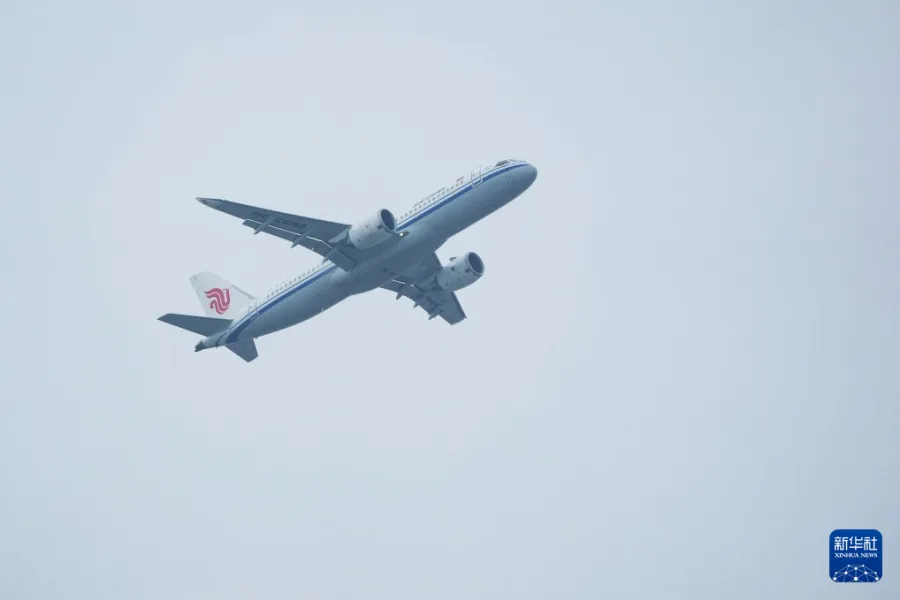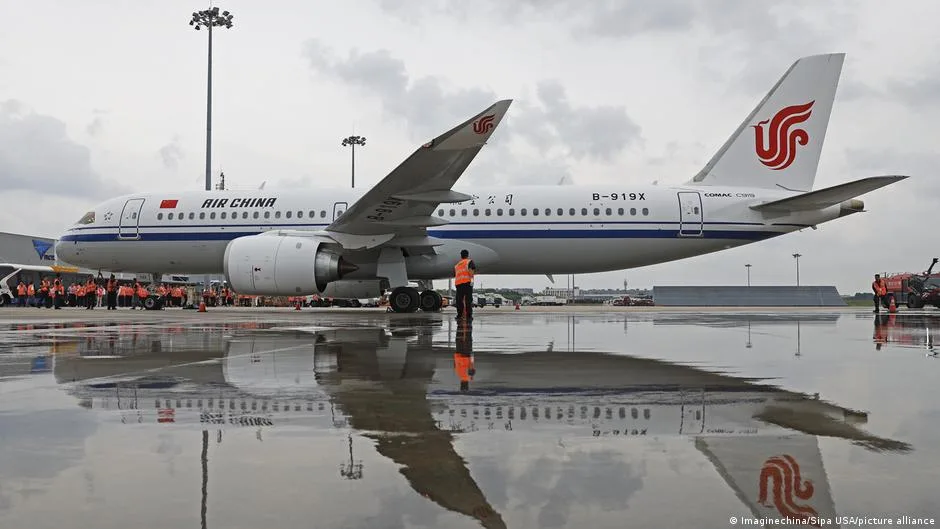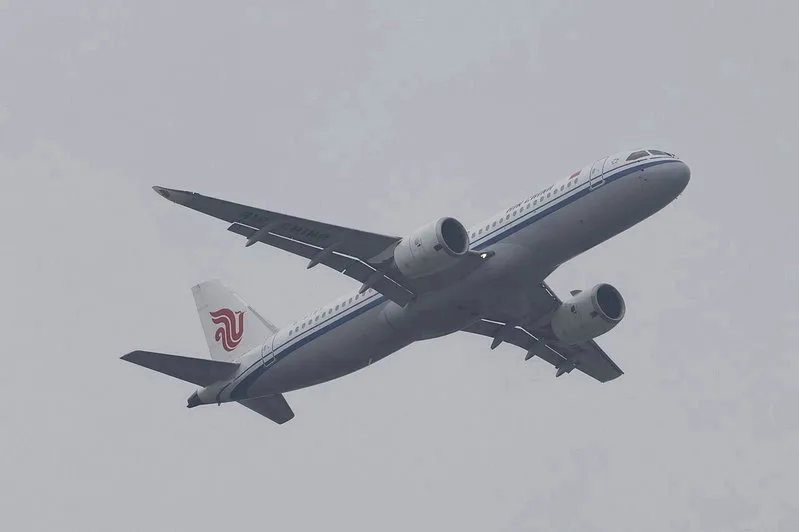
The Chinese-built C919 aircraft operated by Air China completed its first international commercial flight on August 12, 2026, flying from Beijing Capital International Airport to Ulaanbaatar Airport in Mongolia [1, 2, 3, 4, 5, 6, 7]. This flight opened the C919's first international route since its commercial debut, marking a major milestone for the domestically manufactured plane [1, 4, 5, 6].
The route between Beijing and Ulaanbaatar will run daily round trips with flight numbers CA723 for the outbound leg and CA724 for the return, establishing a regular international service for the aircraft [4, 5]. The C919 has been in commercial operation since May 2023, primarily on domestic routes including Beijing–Shanghai, Hong Kong, Guangzhou, Harbin, and Chongqing [1, 2, 3, 6, 7]. As of August 10, 2026, the aircraft has transported approximately 7.5 million passengers on 57 routes connecting 25 cities within China [1].
Manufactured by the state-owned China Commercial Aircraft Corporation (COMAC), the C919 is the first large jetliner developed in China independently with proprietary intellectual property [1, 2, 3, 4, 6, 7]. The plane uses components sourced from multiple countries, including the United States, reflecting a reliance on Western technology [2, 3, 6, 7]. Experts note that while the maiden international flight is a public relations achievement, the C919 still faces notable technological and production challenges compared with Boeing and Airbus models [6]. Scott Kennedy, senior adviser at the Center for Strategic and International Studies, described the flight as "basically a PR event" [6].
COMAC struggled with production bottlenecks in 2025, delivering just 15 aircraft against a target of 75 [6]. The smaller Chinese regional jet C909, which has already operated international flights to Ulaanbaatar, has provided some operational experience [4, 5, 6, 7]. The C919 aims to compete against Boeing 737 and Airbus A320 narrow-body jets in the global market [2, 3, 6, 7].
Obtaining full certification from the European Aviation Safety Agency (EASA) remains crucial for the C919’s expansion into Europe and over 90 other countries. The certification process is expected to take between three and six years, with completion projected between 2028 and 2031 [1].
The maiden international flight signals a new phase in expanding C919’s commercial operations abroad, with the Beijing-Ulaanbaatar daily service set to continue and possibly pave the way for further global routes [1, 4, 5].