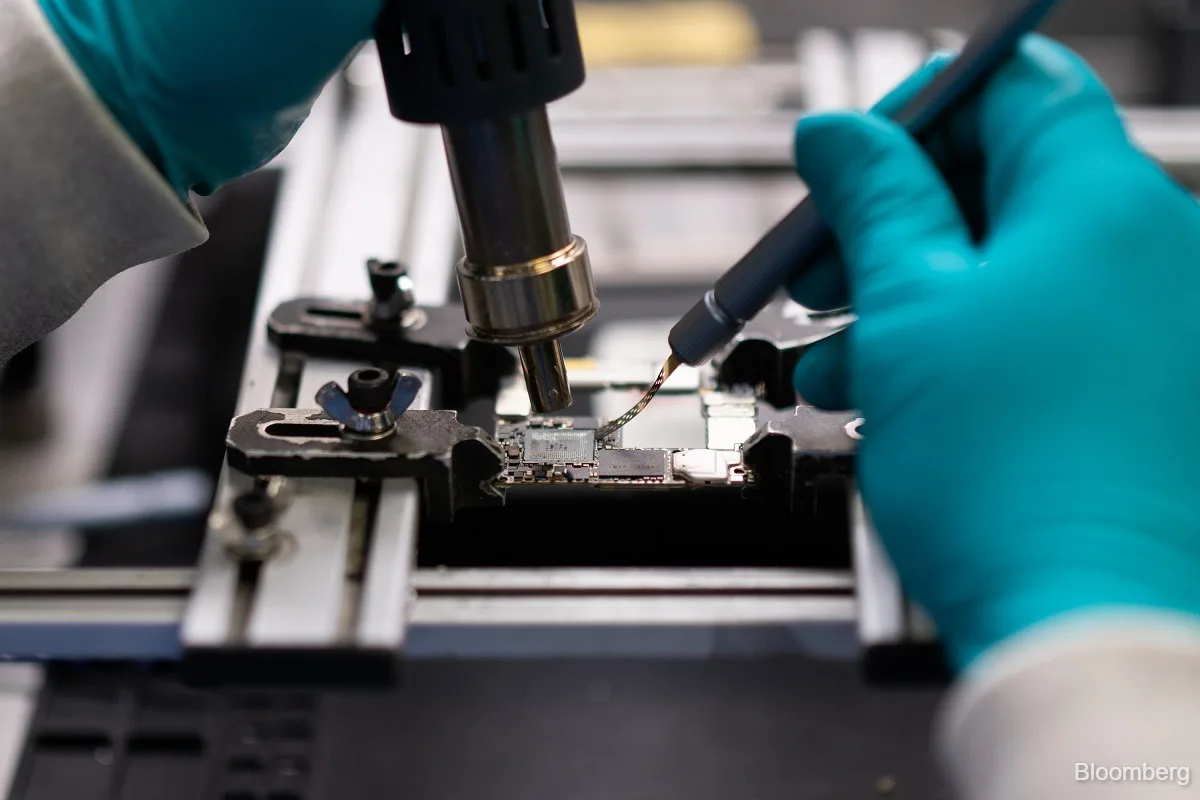
An EU-funded report released on July 2, 2026, warns that Europe's chip industry faces a bleak future due to China's export controls on critical minerals and risks linked to conflict in the Taiwan Strait, threatening the continent’s chip supply chain [1, 2, 3].
The report highlights Europe's heavy dependence on US technology, such as chip design software and manufacturing equipment, which makes its chip sector vulnerable to US export restrictions. US Congress is considering legislation to empower Washington to impose export controls not only on China but also on allied countries and companies, raising concern in Europe [1, 2, 3].
Joris Teer, policy analyst at the EU Institute for Security Studies, said the dependence on Washington has become a greater concern under the second Trump administration than Beijing, although China remains the biggest threat to European chip supply security [1, 2, 3].
The report also points to structural weaknesses within Europe including high energy prices, a lack of private capital investment, and decreasing competitiveness in industries that use chips downstream, further undermining the industry’s prospects [1, 2, 3].
ASML, the EU’s leader in chipmaking equipment, represents both a key asset and a potential risk depending on US export policy towards sales to China [1, 2, 3]. Laith Altimime, head of SEMI Europe, emphasized the necessity of reliable supply chains and stable access to critical raw materials to maintain Europe’s competitiveness in the global chip ecosystem [1, 3].
In response, the European Commission proposed the Chips Act 2.0 in June 2026 to incentivize domestic chip manufacturing. The EU has also joined the US-led "Pax Silica" initiative aimed at securing semiconductor supply chains [1, 2, 3].
The EU faces a complex challenge balancing technology dependencies, geopolitical tensions, and economic weaknesses in the critical semiconductor sector. The outcome of US export control legislation and implementation of the Chips Act 2.0 will influence Europe’s chip industry trajectory in the coming years.