Global oil inventories declined by about 129 million barrels in March 2026 and 117 million barrels in April as supply disruptions from the Middle East conflict intensified, the International Energy Agency (IEA) said on Thursday [1, 2, 3, 4, 5]. The IEA estimated that oil stocks were drawn down at roughly 4 million barrels per day during these two months [1, 3, 4].
The disruption stems from the effective closure of the Strait of Hormuz following renewed conflict in the region. Since airstrikes launched by the US and Israel on Iran at the end of February, an ongoing blockade has severely limited Gulf oil exports, causing production losses that amount to about 12.8 million barrels daily or more than 1 billion barrels cumulatively [1, 2, 3, 6, 7].
Saudi Aramco’s CEO Amin Nasser warned on May 11 that global fuel inventories are nearing a critical low. He estimated the supply shortfall worldwide has reached roughly 1 billion barrels due to the crisis [8, 6, 7]. Nasser said, "Even if the Strait of Hormuz reopens today, the market will need months to rebalance; if reopening is delayed by weeks, normalization will extend into 2027" [6].
Saudi Arabia has sought to offset some of the losses by increasing flow through its east-west pipeline, which currently operates at its maximum 7 million barrels per day capacity to bypass the Strait [6, 7].
Major economies including the US, Japan, and Germany have released emergency oil reserves to stabilize markets amid surging prices and fears of fuel shortages, particularly affecting aviation [1, 2, 3, 4, 9, 5]. Meanwhile, global oil demand projections for the second quarter have been lowered by 2.4 million barrels per day due to high prices and supply concerns [1, 2].
India’s government, led by Prime Minister Modi, has started fuel-saving actions such as reducing the size of the prime minister’s motorcade in response to rising fuel costs [9]. Air India announced plans to suspend or cut several international flights between June and August due to soaring aviation fuel costs and limited airspace access [9].
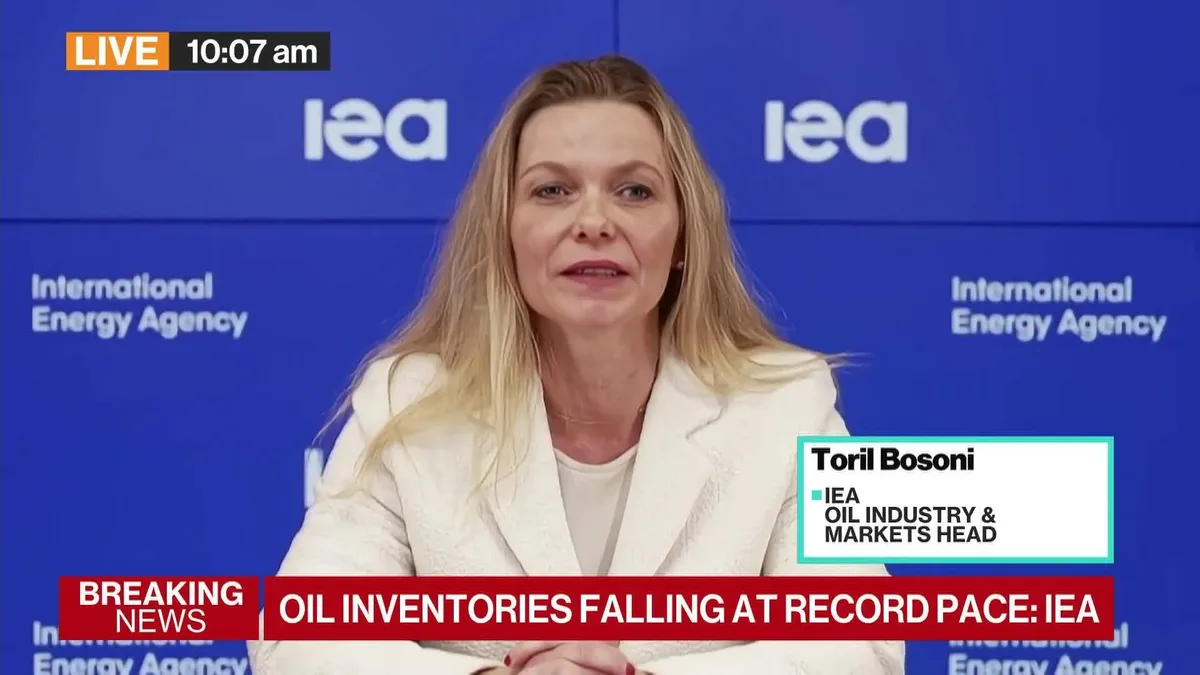
IEA Head of Oil Industry and Markets Toril Bosoni said, "Inventories are falling around the world at a record pace, and will continue to drop for months as the Middle East conflict continues" [10]. Their May report warned that stock draws and price volatility could persist until at least October 2026, even if the conflict ends sooner [1, 2, 4, 9, 5].
The IEA’s latest monthly report on May 13 stressed that "with supply disruptions ongoing, inventory buffers are rapidly shrinking, likely signaling further oil price spikes ahead" [10, 4]. The market will remain under pressure as summer demand peaks with tight supply conditions expected to last through the fall [1, 4].