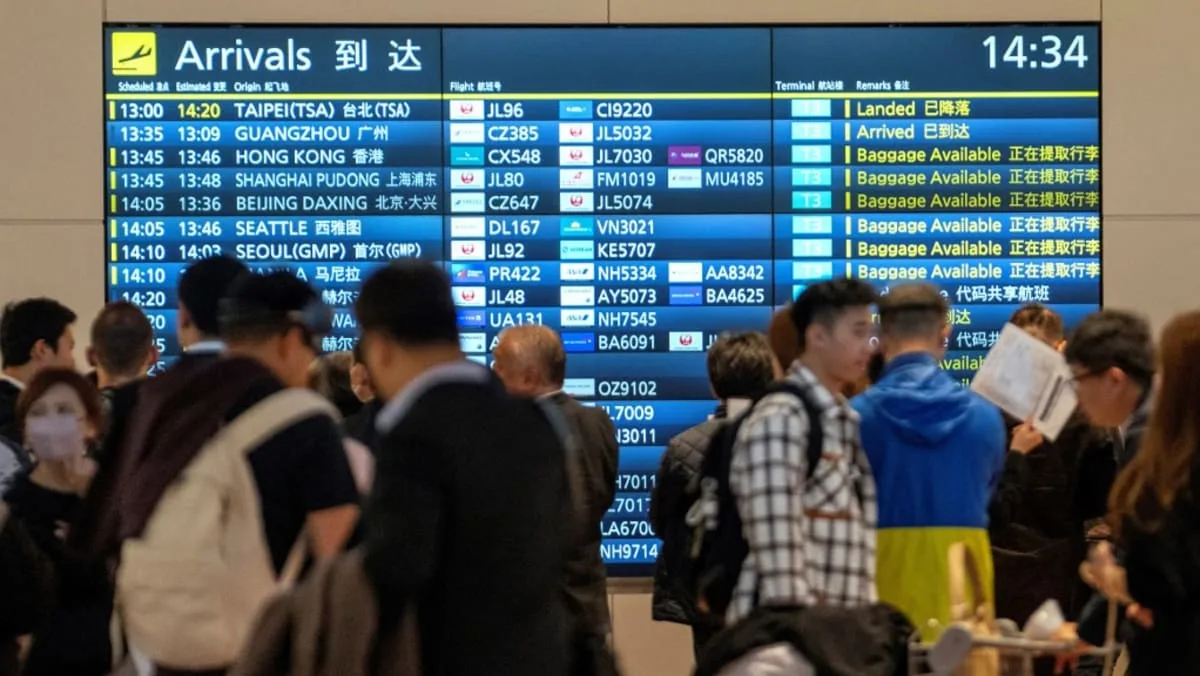
Japan implemented a fivefold increase in visa application fees and tripled its international departure tax on July 1, 2026 [1, 2, 3, 4]. Single-entry visas rose from 3,000 yen to 15,000 yen, and multiple-entry visas went from 6,000 yen to 30,000 yen, marking the first adjustment since 1978 [2, 4, 5]. The departure tax increased from 1,000 yen to 3,000 yen per traveler, applying to all leaving Japan, including Japanese nationals [3, 4].
To offset the departure tax hike, the government lowered passport application fees for Japanese citizens, reducing the 10-year online passport fee from about 15,900 yen to 8,900 yen [1, 5, 6]. The visa fee increase aims to cover higher administrative costs caused by surging inbound tourism and currency fluctuations rather than manage overtourism directly, said Zilmiyah Kamble, senior lecturer in hospitality and tourism management at James Cook University. She added the impact on overtourism control will likely be modest [1, 3]. Japanese Foreign Minister Toshimitsu Motegi also said the fee changes were unlikely to affect tourism [3].
In 2025, Japan issued over 7.8 million visas, with around 73% granted to Chinese nationals [2, 6]. The country welcomed a record 42.4 million foreign visitors last year, up from 36.8 million in 2024, as the government targets 60 million annual arrivals by 2030 [2, 4, 6]. About 74 countries and regions have visa exemptions for short-term visits; however, over 120 countries including China, the Philippines, and Vietnam still require visas to enter Japan [2, 4].
Travel expert 林氏璧 noted that Taiwanese travelers are unaffected by the visa fee hike because Taiwan enjoys visa exemption for short-term visits up to 90 days, so ordinary Taiwan tourists face no extra cost due to the hike [7]. However, the higher visa fees mainly impact travelers who must apply in advance, including workers, performers, and professionals engaging in business or events in Japan [7]. 林氏璧 explained these groups will face significantly higher costs for their visa applications under the new rules.
Japan’s departure tax revenue is expected to jump from about 50 billion yen annually to around 120 billion yen after the increase [4, 5]. The new visa fees bring Japan closer to visa charges seen in the US and EU [4, 6].
The changes took effect July 1, 2026, affecting all visa-required travelers applying from that day and travelers departing Japan from then onward [1]. The passport fee reductions for Japanese citizens also started on the same date [1].