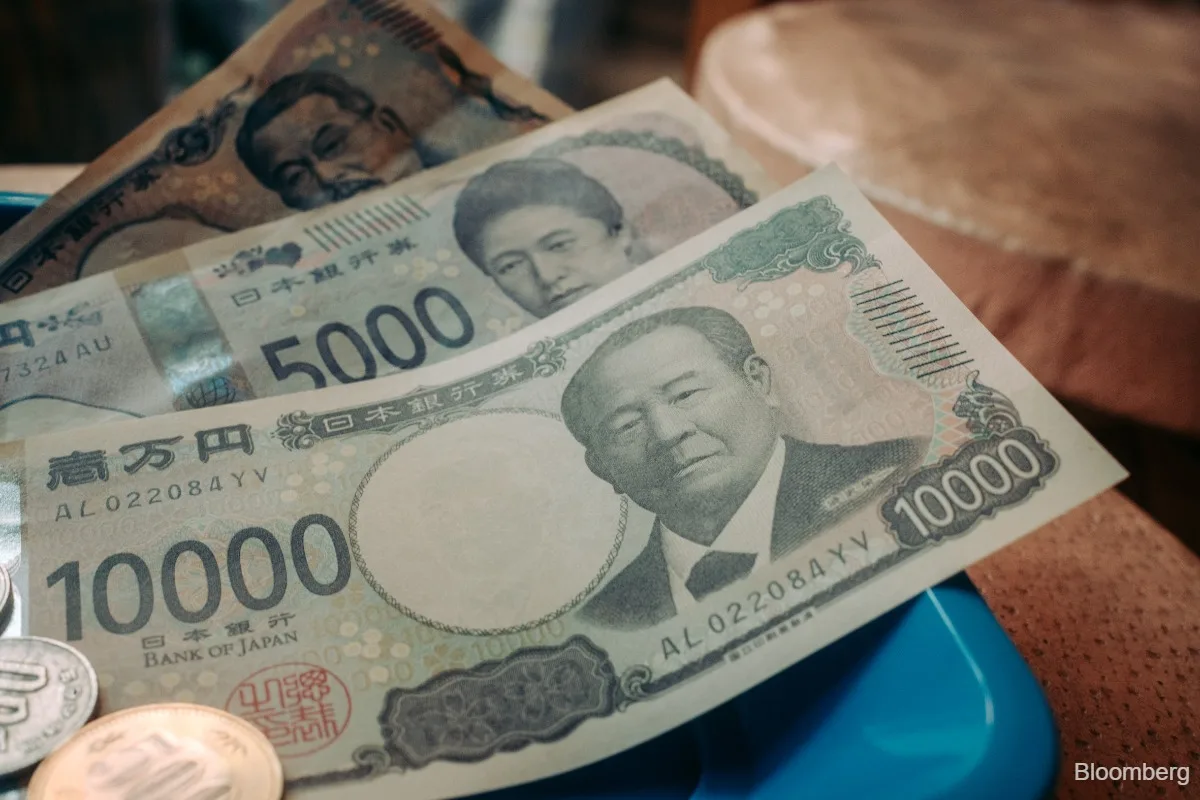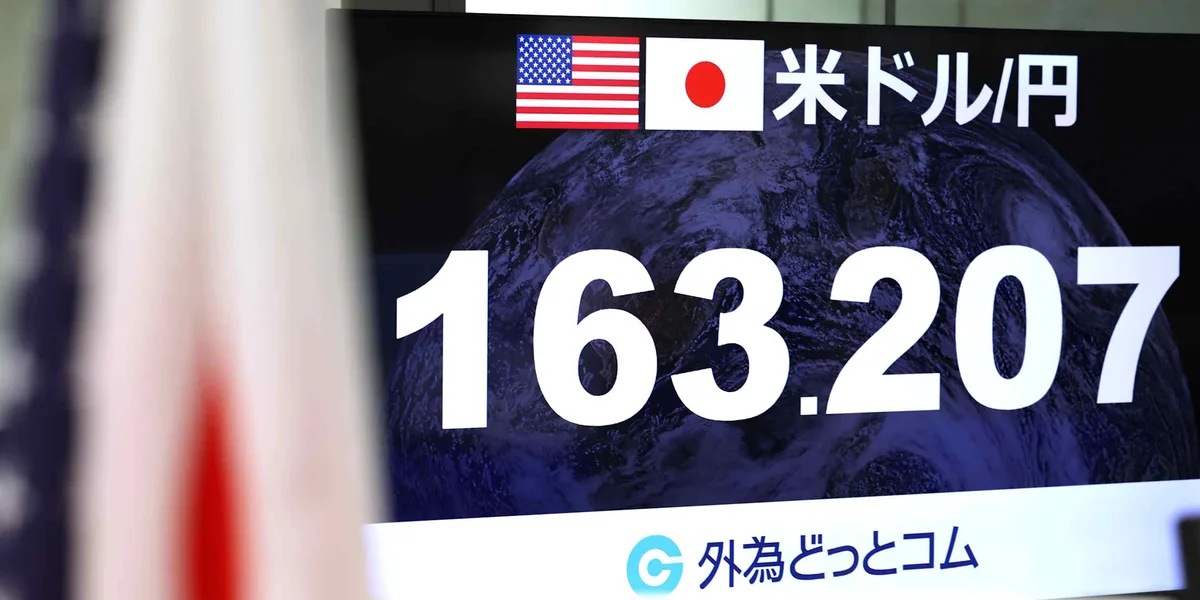
The Japanese yen depreciated beyond 163 per US dollar overnight, hitting levels not seen since 1986, and traded around 163.12-163.23 thereafter on July 22, 2026 [1, 2, 3, 4, 5, 6]. Renewed tensions between the US and Iran pushed Brent crude futures above $92 per barrel, contributing to the dollar's strength and the yen's weakness [1, 7, 8, 9, 2, 10, 6].
Japanese Finance Minister Satsuki Katayama reiterated the government's readiness to intervene in the foreign exchange market with "bold" and "decisive" action if needed. She said, "Our stance has not changed at all. If there is a need for it, we will take decisive action appropriately at any time" [1, 9, 2, 4, 5, 10].
The yen also weakened against the Singapore dollar, reaching historic highs near 126.27–126.38 per SGD [9, 4, 11, 5]. The widening interest rate gap between the US and Japan is another major factor. US rates remain around 3.50% to 3.75%, while the Bank of Japan holds its policy rate at 1% after a June 16 increase [1, 3, 11]. This gap supports the US dollar and puts pressure on the yen.
From late April to late May, Japanese authorities spent about ¥11.73 trillion (roughly $72 billion) attempting to stabilize the yen through currency interventions. Despite that, the yen continued weakening [1, 2, 3, 4]. Analysts say interventions and official warnings have had limited effect. Kyle Rodda of Capital.com said rising oil prices and US rate hikes coupled with Japan's stimulus policies are pushing the trend, which likely won't end without "a material course correction from Japanese authorities" [1]. Masato Koike, Senior Economist at Sompo Institute Plus, added a unilateral intervention may have little effect against dollar strength and a weaker yen could continue [10].
Japan’s trade deficit widened unexpectedly in June as the weak yen lifted import costs amid higher oil prices [1]. Prime Minister Sanae Takaichi’s plans for tax cuts and fiscal expansion have been seen as accepting of a weaker yen [8, 3, 5, 6].
On July 24, the yen hit a fresh 40-year low near 164 per US dollar, with Finance Minister Katayama again emphasizing intervention readiness [10]. By late July, the yen was approaching 165 per dollar despite government warnings and interventions [12].
The next key event will be ongoing monitoring by Japanese authorities for possible market intervention. Finance Minister Katayama said, "We’re prepared to respond appropriately on foreign exchange whenever necessary, and that means taking decisive action without hesitation" [10].