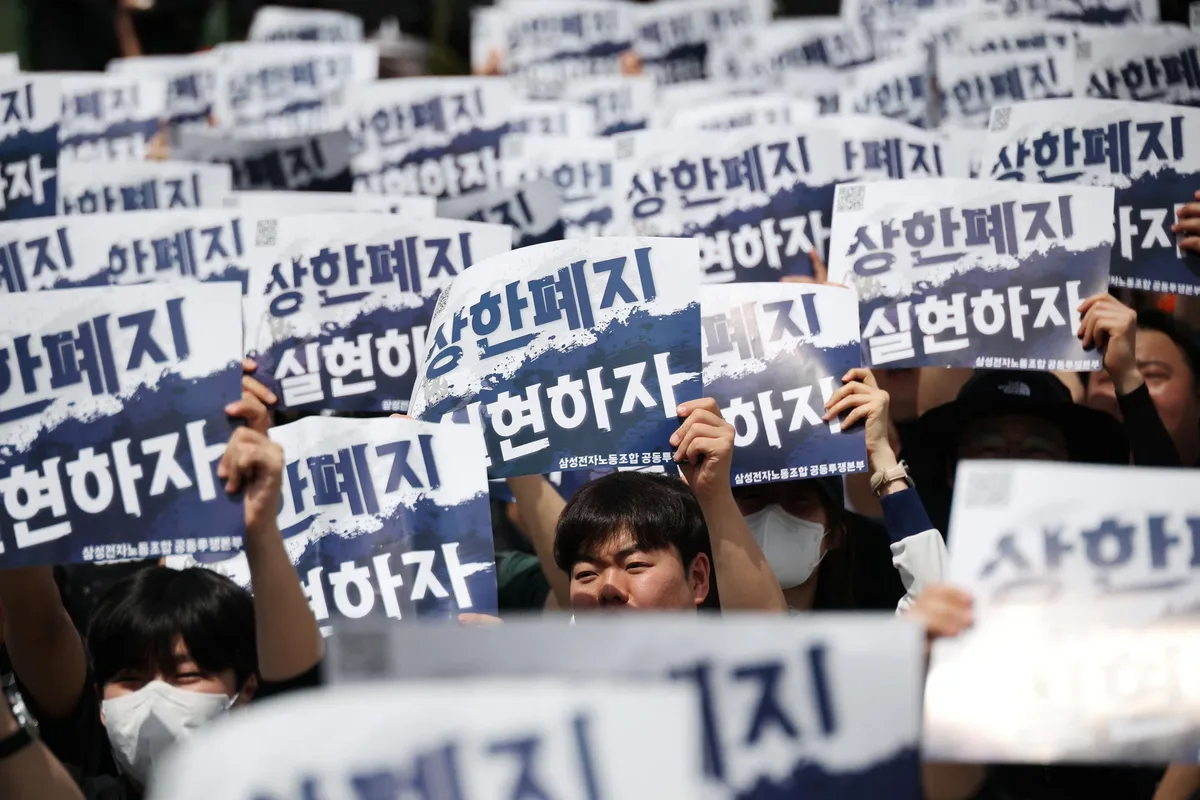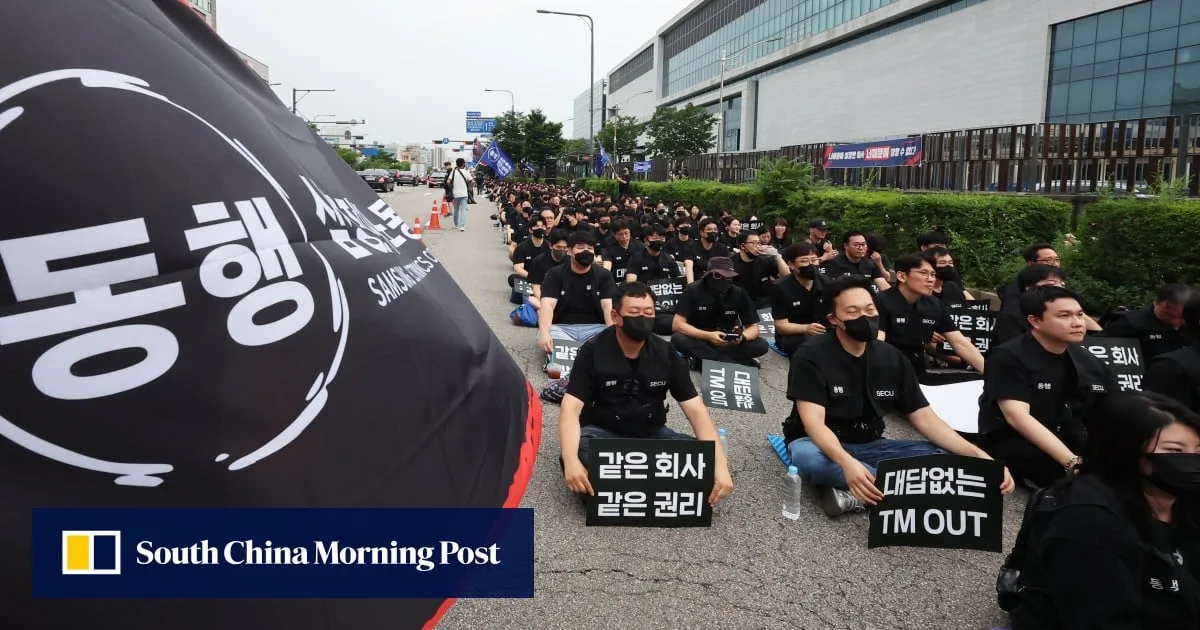
Samsung Electronics agreed in late July to award bonuses exceeding US$400,000 to some employees after protests erupted over pay, marking a rare high figure in corporate bonuses in South Korea [1, 2, 3, 4, 5]. The move has catalyzed labor unrest beyond Samsung, spreading to industries unrelated to AI and sparking demands for profit-sharing across multiple companies [2, 3, 4].
Assembly-line workers at Hyundai Motor staged a three-day partial strike in early August seeking bonuses amounting to as much as 30% of consolidated profit [1, 2, 4, 5]. They also demanded guarantees against job cuts linked to the automation efforts, notably the deployment of Atlas humanoid robots. The Hyundai union declared, “not a single robot can enter the factory without agreement,” reflecting serious resistance to workforce automation [2, 4].
Unions at HD Hyundai Heavy Industries and LG Uplus are pushing for payouts equal to at least 30% of operating profit [1, 2, 3, 4, 5]. At the same time, workers at Hanwha Aerospace and HD Hyundai Electric are calling to remove caps on bonuses entirely, signaling escalating stakes in labor negotiations [1, 2, 3, 4, 5].
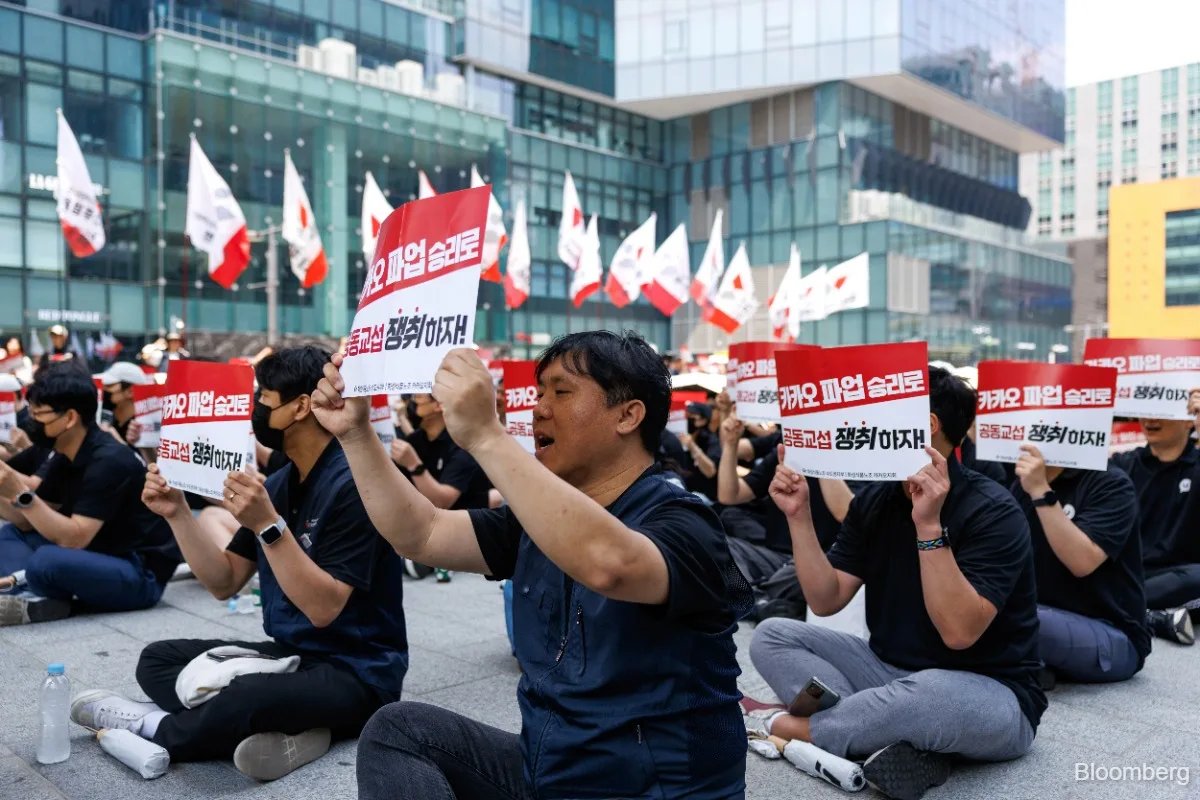
Thousands of Kakao employees went on strike for the first time last month in Seongnam, demanding up to 15% of operating profit for bonuses [2, 3, 4]. Meanwhile, the Naver union is forming a coalition with multiple affiliates to boost collective bargaining power [2, 3, 4].
The unrest originally centered on AI-related profits at Samsung and SK Hynix but is now expanding into sectors without direct AI ties [2, 3, 4]. South Korea’s historically militant unions pose investment risks amid these escalating demands and strikes [2, 4].
The next major development will be the unions’ upcoming negotiations with Hyundai Motor, where employees seek to finalize terms on bonus levels and technology use in factories amid the ongoing partial strike [1, 2, 4, 5].