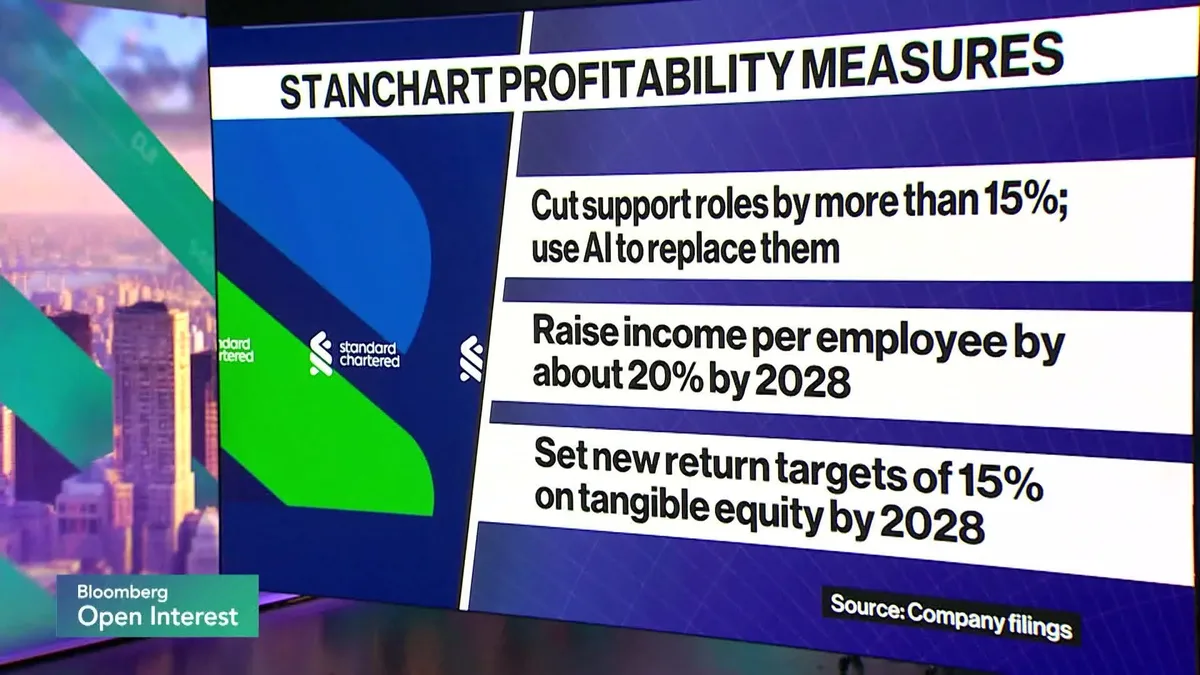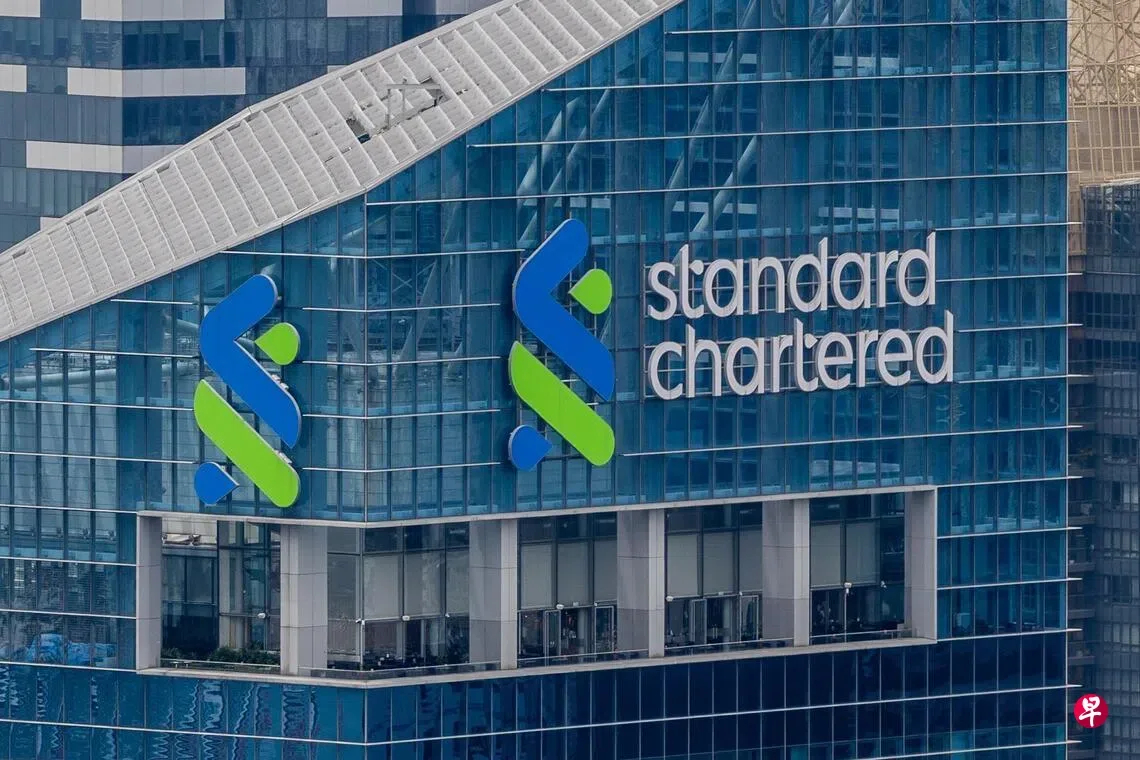
Standard Chartered unveiled plans on May 19 to eliminate over 7,000 corporate support and back-office positions globally by 2030, representing more than 15% of its support staff.
The job reductions will mainly hit back-office centers in Chennai, Bengaluru, Kuala Lumpur, and Warsaw, among other locations. The bank currently employs around 80,000 to 82,000 people worldwide, with approximately 51,000 in support roles [1, 2, 3, 4, 5].
CEO Bill Winters said the cuts are driven by automation and AI adoption aimed at replacing lower-value human labor with financial and technology investments. "It’s not cost-cutting. It’s replacing in some cases lower-value human capital with the financial capital and the investment capital we’re putting in," he stated [1, 2]. Winters added that some employees will be reskilled to adapt to new roles [1, 2].
Standard Chartered is one of the first major banks to publicly outline large AI-driven job reductions targeting back-office functions. The bank describes AI and automation as a "huge facilitator and enabler" of its ongoing core banking system automation [2, 6, 3, 5].
The bank has raised its return on tangible equity (ROTE) target to 15% by 2028, up more than 3 points from its 2025 target, and aims for 18% by 2030. It also plans to reduce its cost-to-income ratio to 57% by 2028 while increasing revenue per employee by about 20% [1, 7, 8, 9, 10].
Standard Chartered is focusing on high-profit segments including wealth management, corporate and investment banking, and financial institutions. Its wealth management revenues grew 32% in the first quarter of 2026 [1, 4].
The bank set aside $190 million in Q1 2026 as precautionary provisions related to the ongoing Middle East conflict. Geopolitical risks, particularly in Asia-Pacific markets due to the Iran conflict, may require additional loan loss provisions because of rising energy costs and slowing growth [1, 2, 4, 11].
Following the announcement on May 19, Standard Chartered’s shares rose 2.3% [1]. Winters described the bank as "extremely resilient" in facing current challenges [2].
By 2028, the bank expects to achieve its financial targets while completing the workforce transition driven by technology integration [1, 7, 8, 9].