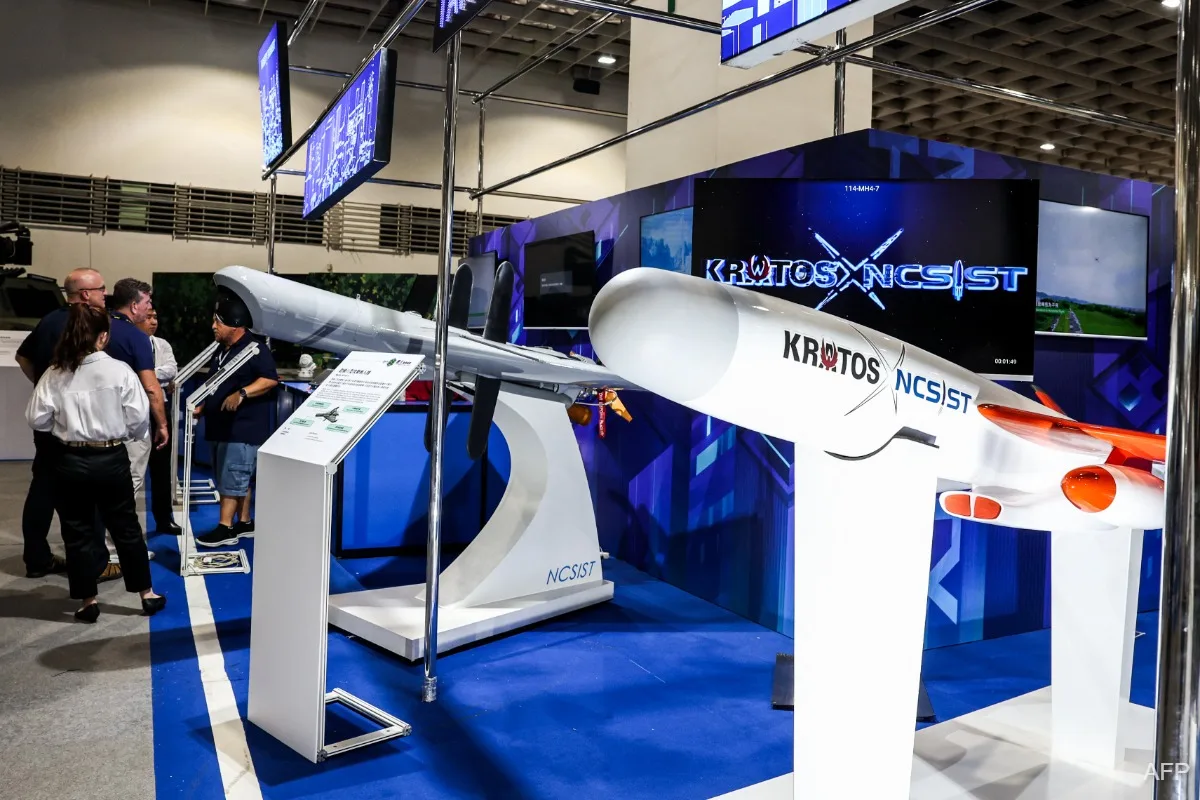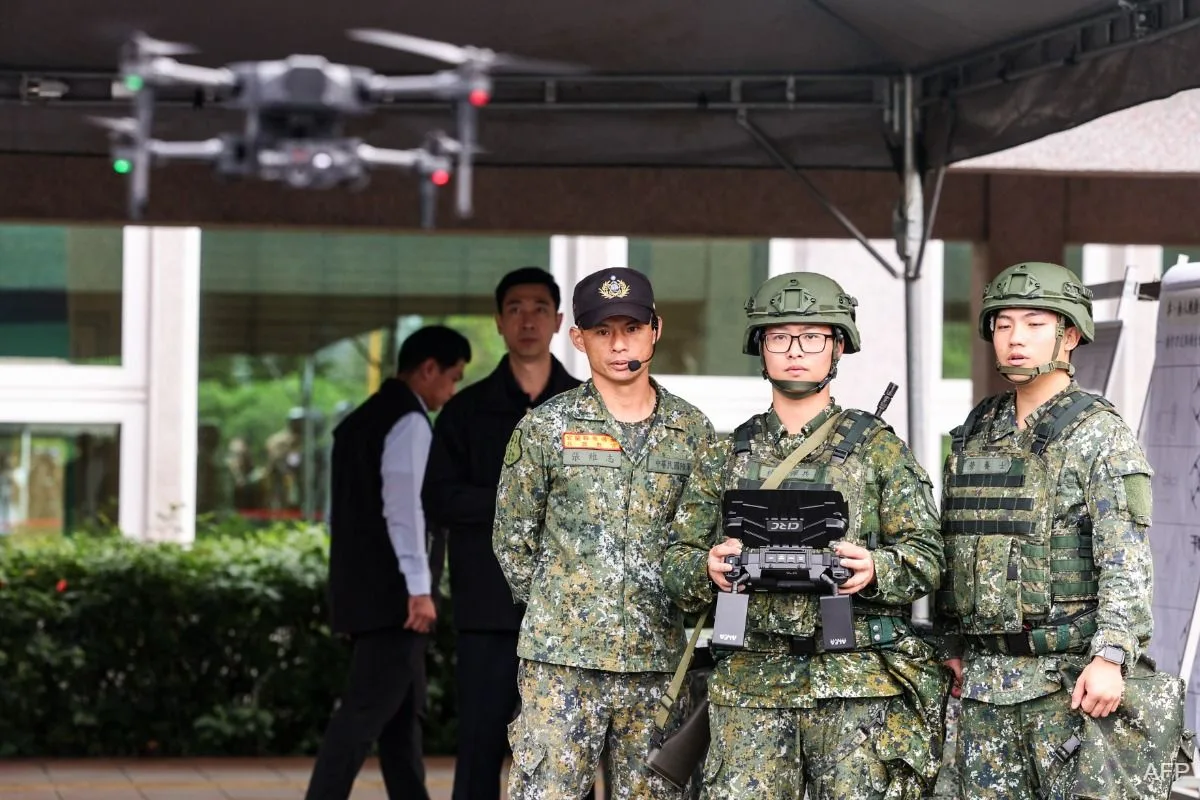
Taiwan's drone exports surged to 181,159 units in the first four months of 2026, nearly 20 times the volume shipped in the same period of 2025 and surpassing total exports for all of last year [1, 2, 3, 4, 5, 6, 7]. Most of these drones were sent to the Czech Republic and Poland, purchased or funded by charitable organizations and donated to Ukraine amid ongoing conflict [1, 2, 3, 4, 5, 6, 7].
Industry experts say Taiwan's domestic demand for drones remains too small to sustain companies. Samara Duerr, a policy analyst at DSET, said, "Domestically there's not enough demand. So it's reaching internationally to help bring scale and experience so that it has this capacity and knows how to have a surge ability later on" [1]. Max Lo, chairman of AeroSoarX, added, "If we don't have the local demand, government support or budget, how can we sustain the production line? That’s the reason I visit Ukraine, I visit Poland. I let them know, okay, we have this or that; we have production still available" [1, 7].
Taiwan aims to become the "Asian hub" for unmanned aerial vehicle manufacturing with supply chains free of Chinese materials—called "non-red" or "非紅"—to reduce geopolitical risk [1, 2, 3, 5, 7]. However, some insiders question if all exported drones are truly free of Chinese components despite official claims [5, 6, 7]. Taiwanese drones sell for up to three times the price of Chinese competitors like DJI because of smaller scale but political and supply chain advantages [1, 2, 3, 4, 5, 7].
The government views drones as part of a "drone shield" defense strategy to deter Chinese military threats. AeroSoarX Chairman Max Lo said, "We call it a 'drone shield', it will become another line of defense for Taiwan" [3]. Taiwan plans to raise monthly drone production capacity to 100,000 units by 2030, up sharply from an earlier 15,000 target for 2028 [3, 5, 7].
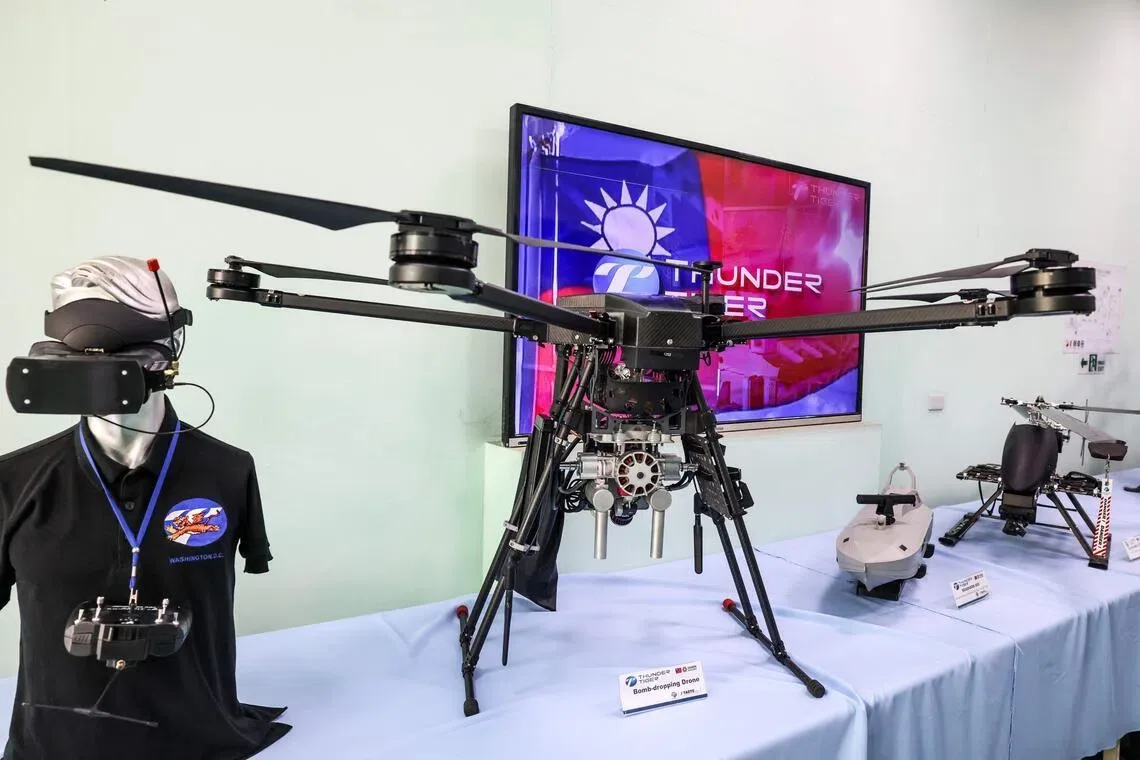
Taiwanese drone makers are expanding abroad. Thunder Tiger has a joint venture in Ohio to produce drone motors for the U.S. market, which has big potential due to security concerns about China, said Thunder Tiger General Manager Gene Su [3]. Yet Taiwanese drones and parts still lack battlefield experience and face tough competition from dominant Chinese firms [3, 5, 7]. Collin Koh, a military expert, called the competition "extremely fierce" and stressed Taiwan must find its niche [5]. Marcin Jerzewski of the European Values Center said Taiwan’s industrial capability is strong but battlefield application is key [7].
Taiwan’s drone exports in early 2026 offer vital scale and experience to prepare for rapid surge capacity if needed, according to multiple experts [1, 5]. The country will continue developing international partnerships to sustain production lines amid limited local orders and budget delays in the legislature controlled by opposition parties [1, 3, 5, 7].