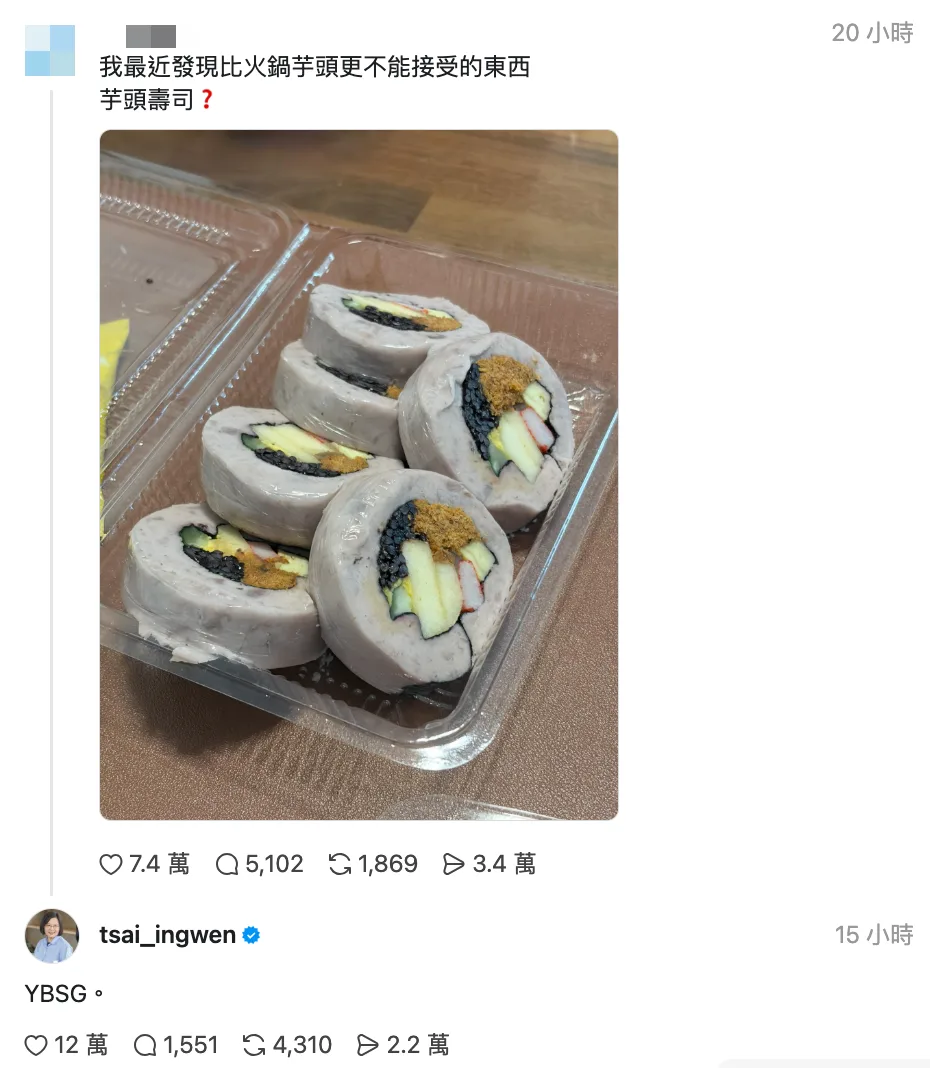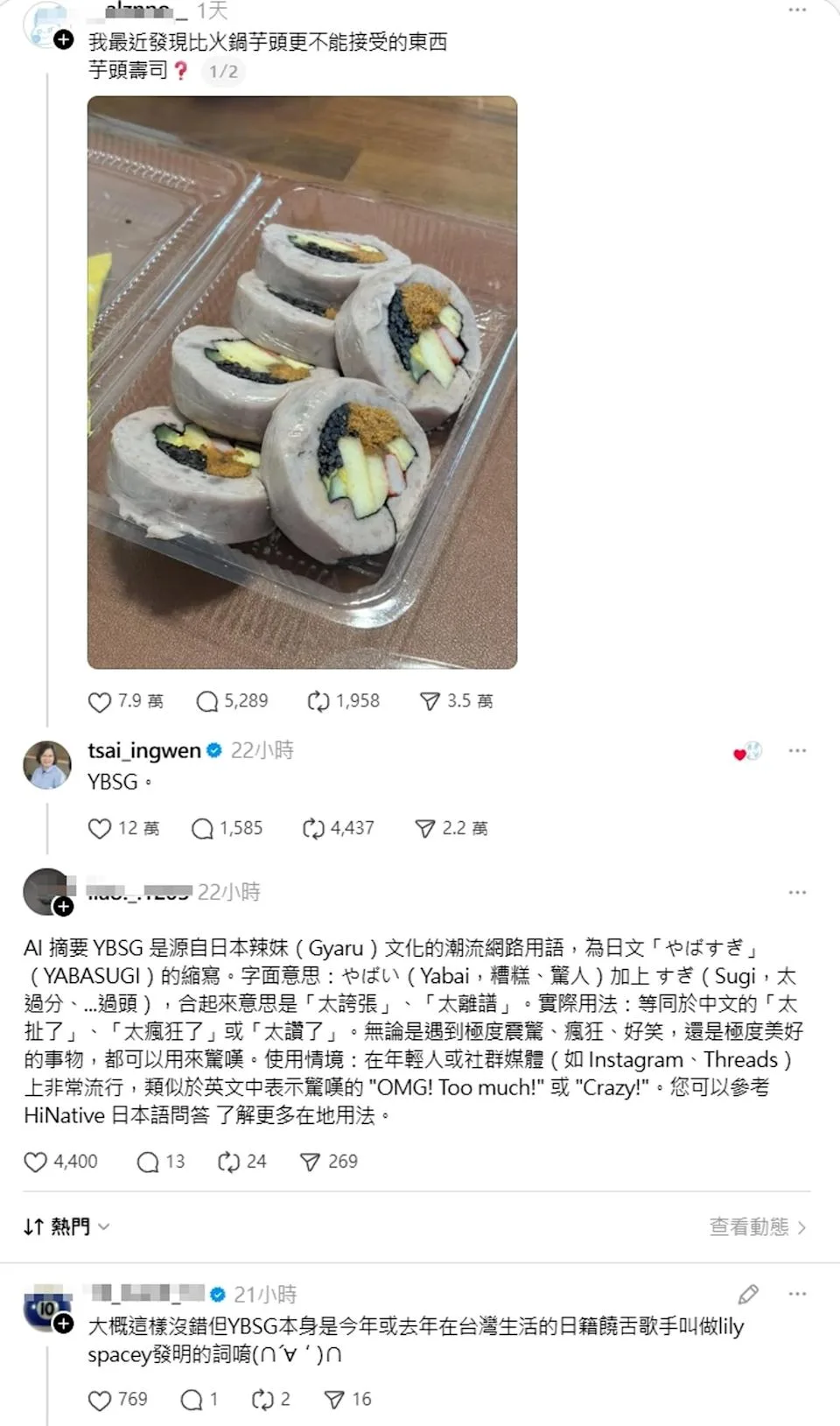
Former President Tsai Ing-wen sparked a viral sensation on June 4 by leaving a short comment "YBSG" under a netizen’s Threads post discussing "taro sushi." The post attracted widespread curiosity and online discussion in Taiwan and beyond [1, 2, 3, 4, 5, 6, 7, 8].
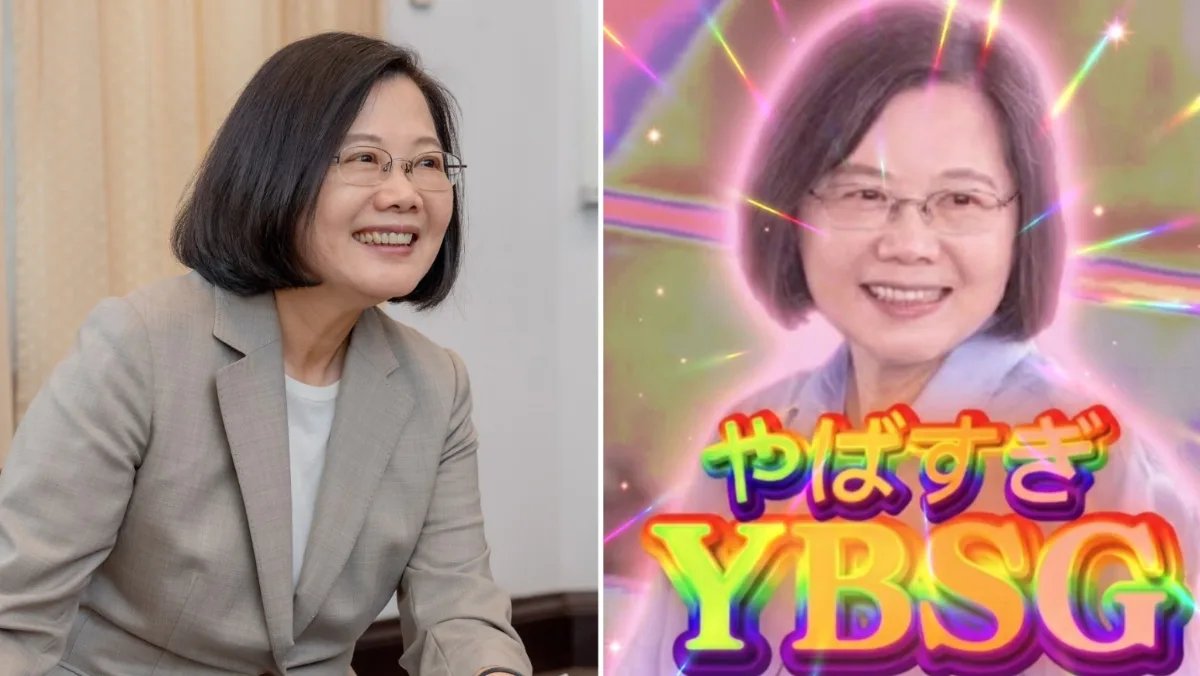
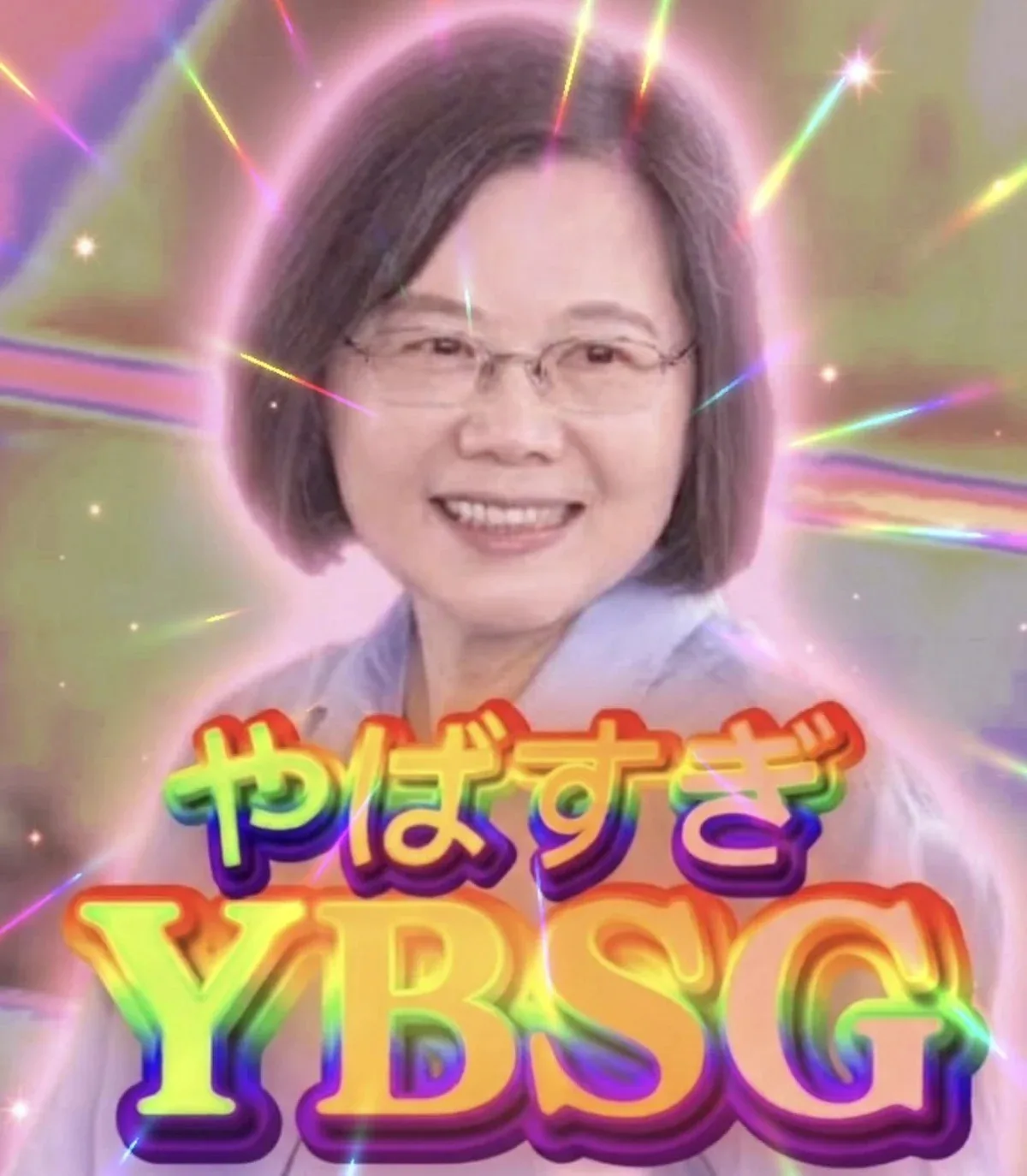
"YBSG" is an acronym derived from the Japanese term やばすぎ (yabasugi), meaning "too crazy," "too exaggerated," or "too awesome." It has been popularized by Japanese gal (gyaru) culture and among Gen Z internet users [1, 2, 3, 5, 6, 7, 8]. The phrase gained traction in Taiwan partly through a Taiwan-based Japanese rapper, Lily Spacey [3, 5, 6, 7, 8].
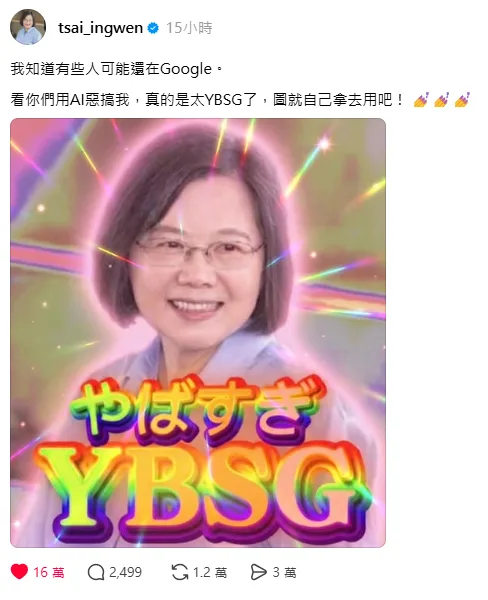
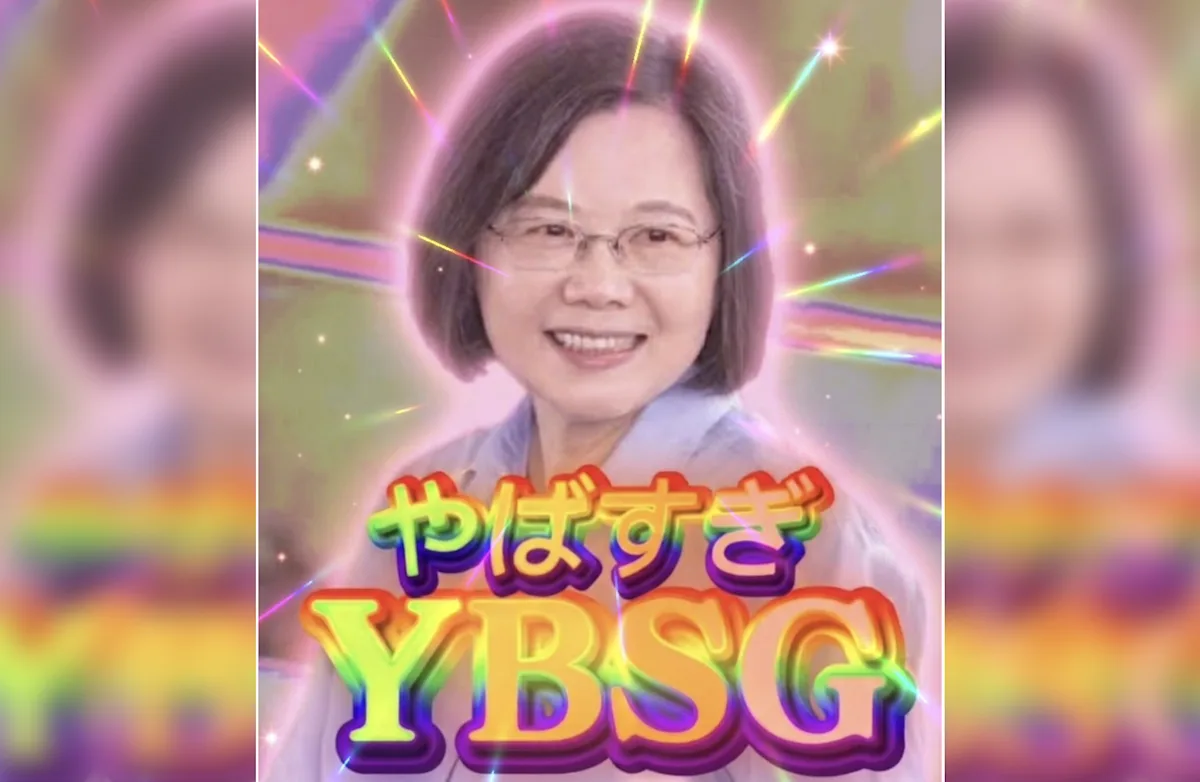
Later the same day, Tsai created and posted her own meme featuring the letters "YBSG" in rainbow-colored text alongside her profile photo. The post caption humorously acknowledged that some people were still Googling the phrase. Tsai wrote, "我知道有些人可能還在Google。看你們用AI惡搞我,真的是太YBSG了,圖就自己拿去用吧!" ("I know some people might still be Googling it. Seeing you AI-mock me, it's really too YBSG, feel free to use the image!") [1, 2, 3, 4, 5, 6, 9, 7, 8].
The meme post quickly attracted massive attention, gaining over 140,000 likes and more than one million views within ten hours [1, 2, 3, 6, 9]. Tsai's Threads account reportedly has 1 million+ followers in 2026 [6].
Many netizens expressed surprise that Tsai, a former president, was so fluent and current in trendy Japanese internet slang. One joked, "最恐怖的事不是小英知道YBSG,是小英知道YBSG,而我還要去Google YBSG是什麼" ("The scariest thing is not that Tsai knows YBSG, but that she knows it while I still have to Google what it means") [1, 2, 3, 6, 7, 8, 9].
The phrase and Tsai’s meme crossed Taiwan’s borders. Japanese media, including Kyodo News, reported on her use of "YBSG," explaining the term and its popularity. Japanese netizens responded positively; one noted, "凡是去過台灣的人都知道,很多台灣人日文程度比你想像的要好得多" ("Anyone who’s been to Taiwan knows many Taiwanese speak Japanese better than you think") [8].
The story began June 4 with a netizen’s "taro sushi" post sparking debate and Tsai’s comment shortly after. Her meme post followed in the evening, fueling the viral spread. On June 5, Japanese media further amplified coverage [1, 2, 3, 4, 5, 6, 9, 7, 8].