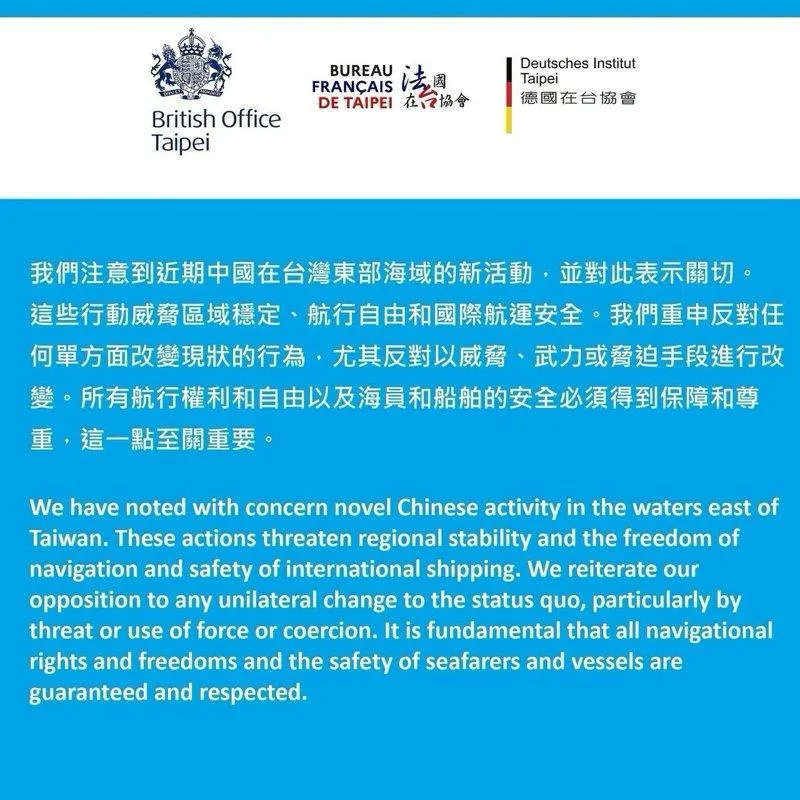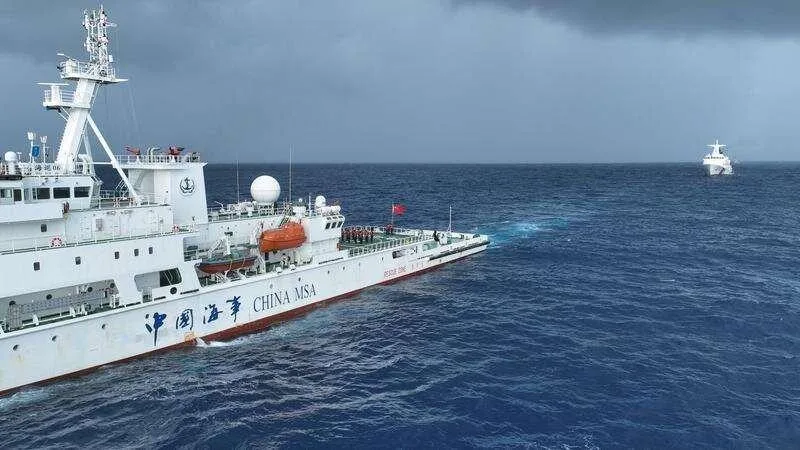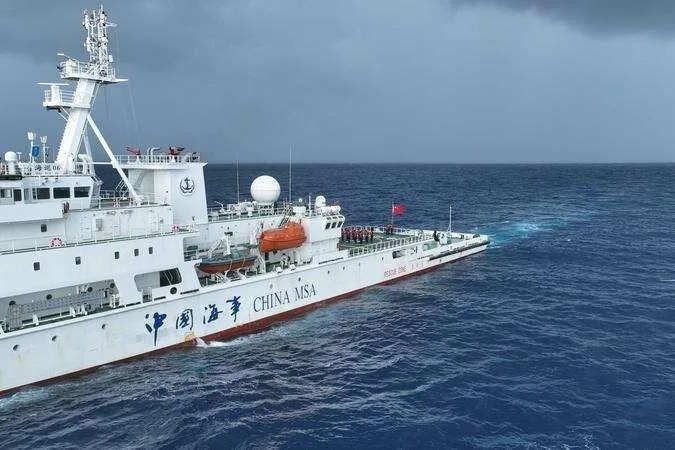
The UK, France, and Germany jointly issued a rare statement on June 24 expressing concern about new Chinese activities in the waters east of Taiwan. They said these actions threaten regional stability, freedom of navigation, and the safety of international shipping. "We reiterate opposition to any unilateral changes, especially by threat or coercion," the statement said, emphasizing the need to respect navigation rights and maritime safety [1, 2, 3, 4, 5, 6, 7].
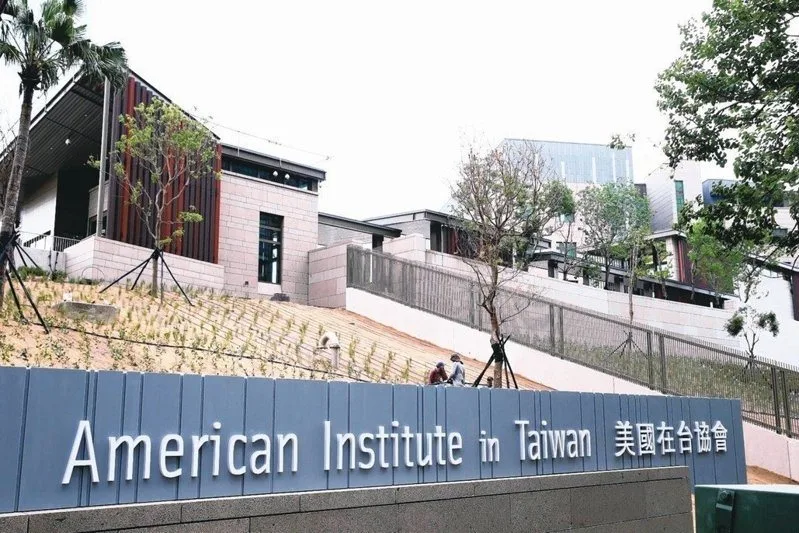
The US Taiwan Association (AIT) also raised alarm on June 24 over harassment by Chinese coast guard and maritime authority vessels of commercial ships in eastern Taiwan waters. The AIT stated the US "rejects any Chinese claim interfering with navigation freedom, flight freedom, laying of submarine cables, or other lawful maritime rights," and urged Beijing to cease military, diplomatic, and economic pressure on Taiwan while engaging in dialogue with its democratically elected authorities [1, 8, 9, 10].
China announced on June 6 the launch of a "maritime traffic special enforcement operation" in these waters. The operation deploys coast guard and public service vessels for patrols and law enforcement actions. China asserts these steps respond to Japan and the Philippines initiating boundary delimitation talks on overlapping Exclusive Economic Zones and continental shelf claims near Taiwan. Beijing says these talks infringe on its sovereignty and maritime rights [2, 6, 11, 7].
During the enforcement operation, Chinese coast guard inspected 198 foreign ships, correcting 3 vessels according to Chinese claims to assert sovereignty. A Chinese research ship, Xiangyanghong 22, recently entered Taiwan's Exclusive Economic Zone, which Taiwan suspects signals Beijing's expansionist intentions [10, 6, 11, 7].
Taiwan condemned these Chinese activities. The Ministry of Foreign Affairs, Ocean Affairs Council, and Mainland Affairs Council called the patrols threats to Taiwan's security and violations of international law, damaging regional peace and stability. Taiwan's National Security Council Secretary-General Wu Zaoxie thanked the US, UK, France, and Germany for standing with Taiwan and condemning Chinese maritime pressure. Wu said maintaining the rules-based international order, the status quo, and regional peace are shared concerns, and urged China to stop its maritime expansionism [1, 10, 11, 7].
China dismissed the Western joint statements as interference supporting "Taiwan independence". A Chinese Foreign Ministry spokesperson urged other countries to respect China's sovereignty, territory, and maritime rights, and to stop distorting facts. The spokesperson said relevant institutions should refrain from making inappropriate remarks [12, 11].
Stanford University scholar Raymond Powell described China's maritime strategy near Taiwan as a "slow-motion quarantine," with incremental incursions aimed at isolating Taiwan without open conflict. He said each act appears minor and not worth fighting over, which is the main intent [10].
The next scheduled marker in this dispute is not yet announced, but the ongoing Chinese patrols and international reactions make this a continuing flashpoint in East Asian maritime security.