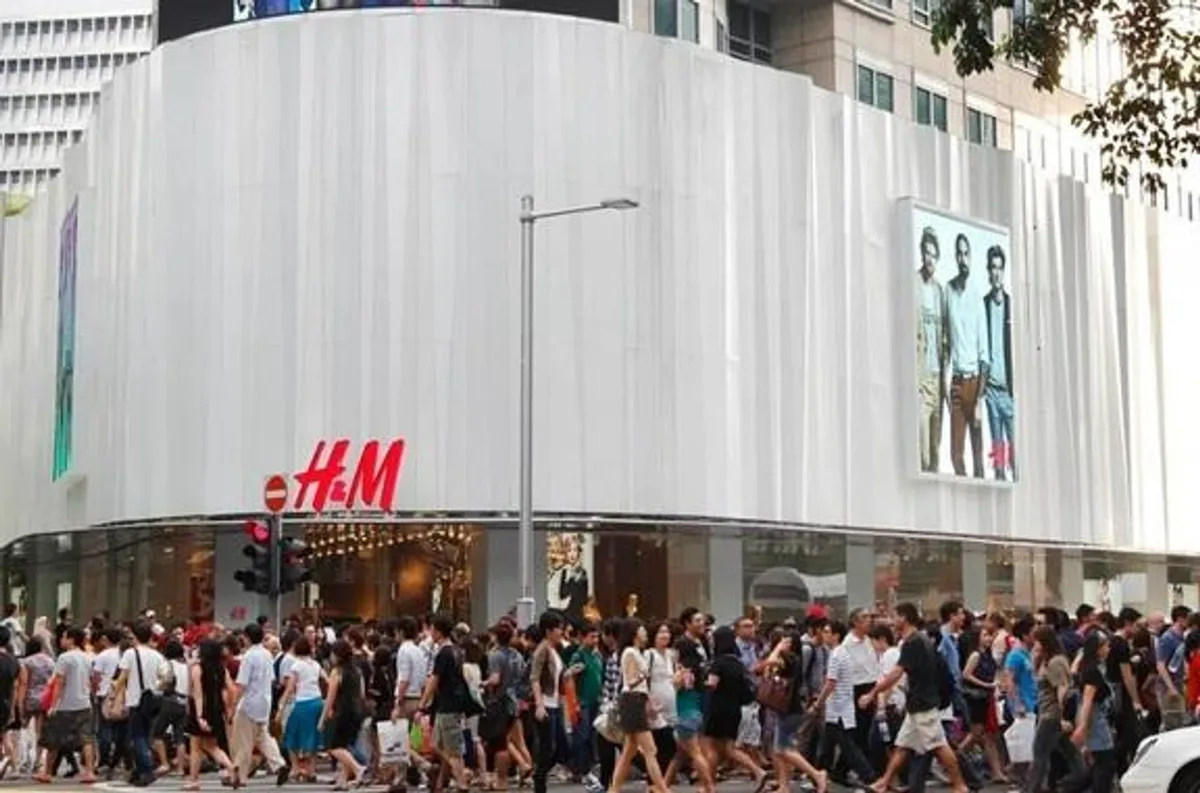
H&M will move its Southeast Asia regional headquarters from Singapore to Kuala Lumpur, affecting its regional support workforce and operations, the company said today. [1, 2, 3, 4]
The fashion retailer plans to eliminate 78 of the 256 regional support positions, representing a 30% reduction in staff. Most layoffs are expected within the Singapore office. [1, 3, 4]
In addition to the move, H&M will offshore some support functions from Singapore and Ho Chi Minh City. Its Seoul and Manila offices will also be downsized. Meanwhile, the Northeast Asia sales market headquarters will relocate to Tokyo, and a new Asia-Pacific headquarters overseeing five sales markets will be established in Shanghai. [1, 3, 4]
H&M Singapore said it will maintain retail operations with six store outlets remaining in the city, signaling a continued presence despite the organizational changes. “We are constantly working on improvements to adapt to our customers’ expectations. As part of that, we regularly review how we work to ensure our organisation remains flexible, efficient, and fast-moving,” the company said. [2]
H&M formally notified employees of the relocation and job cuts on May 11, 2026, following an initial briefing on April 16. [1, 2, 3, 4]
Affected employees will undergo a calibration and evaluation process beginning May 21, continuing through mid-June, involving interviews and assessments for retention or layoffs. Those not placed in the new structure will be offered mutual separation agreements, with details to be announced later. [1, 3]
Andy Lim, secretary-general of the Singapore Manual & Mercantile Workers’ Union (SMMWU), stated, “The National Trades Union Congress and the SMMWU stand ready to offer assistance and resources to help our members and workers transition to new job opportunities and provide financial support if needed.” He added that all companies, including non-unionised ones like H&M Singapore, are encouraged to cooperate with unions to support workers during transitions. [2]
The new organizational structure and relocations are expected to be operational by July 1, 2026. [1, 3]