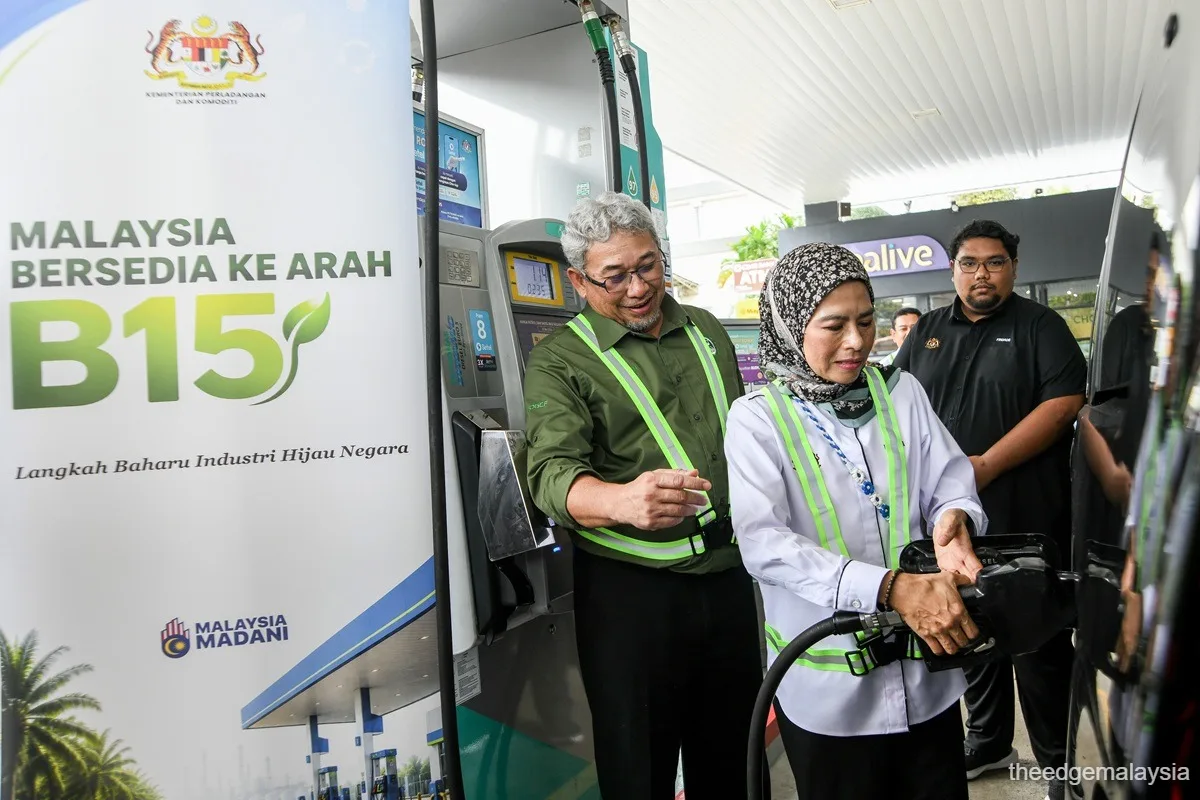
Malaysia launched the nationwide rollout of its B15 biodiesel mandate on June 1, 2026, increasing the palm oil-based biodiesel blend from B10 to B15 across most regions [1, 2, 3, 4]. The mandate aims to boost national energy security, reduce fossil fuel reliance, and support sustainability and the palm oil sector, according to Plantation and Commodities Minister Datuk Seri Dr Noraini Ahmad, who called it a "strategic government measure" [1].
Biodiesel blending rates vary across the country. Sarawak (except Bintulu), Labuan, and Langkawi use B20 blends, while most other areas have shifted from B10 and B12 levels to B15 [1, 3, 4]. The Klang Valley Distribution Terminal remains a key strategic hub for petroleum storage, distribution, and biodiesel blending [1, 4].
The B15 mandate is expected to consume about 0.801 million metric tonnes of crude palm oil annually without harming export markets, which make up the bulk of Malaysia’s 20 million tonnes annual palm oil output [1, 3, 4]. Felda Chairman Datuk Seri Ahmad Shabery Cheek said, "Export markets are good... but sometimes they impose various conditions, quotas, or taxes. If our own country uses it (palm oil), it will benefit the domestic plantation industry and protect settlers’ incomes" [2].
Malaysia has roughly 19 to 20 biodiesel plants nationwide, with blending capacity up to 30%, though many currently run below capacity due to limited demand [1, 2, 3, 4]. The National Biodiesel Programme is supported by 452 palm oil mills, 54 refineries, 19 biodiesel plants, and 34 blending depots spread across the country [1, 3, 4].
Biodiesel use began with B5 in 2011 and gradually increased to B7, B10, B12, and now B15. Dr Noraini said, "Previously, we have already implemented B10, B7 and B12. There shouldn't be a problem adapting to B15. The move reflects the government's continued commitment to strengthening the palm oil industry by increasing domestic palm oil consumption and advancing the biofuel sector" [3, 4].
The upgrade to B15 could save Malaysia about RM1.5 billion annually in fuel subsidies by reducing reliance on fossil fuels [3]. It is also expected to stabilize palm oil prices and increase utilization rates at biodiesel plants [2, 3].
The government will continue monitoring the program’s impact on domestic consumption and export balance as the B15 mandate progresses nationwide.