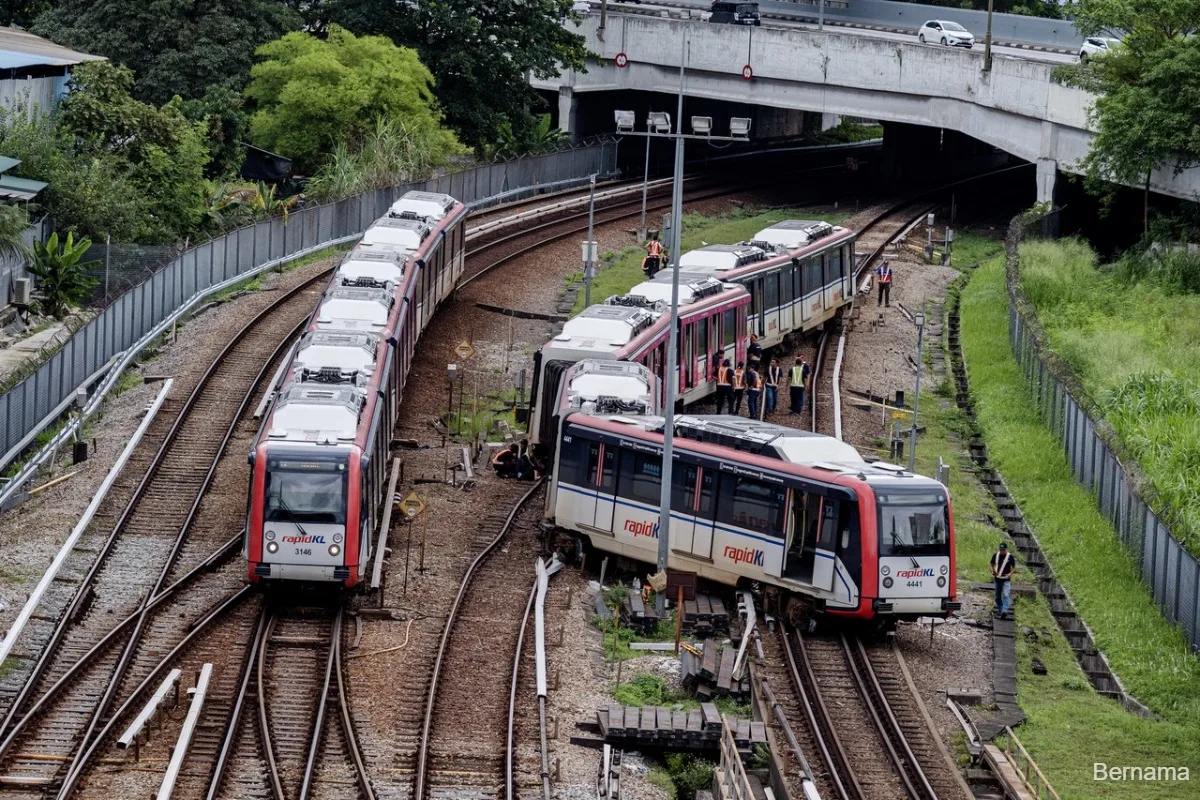
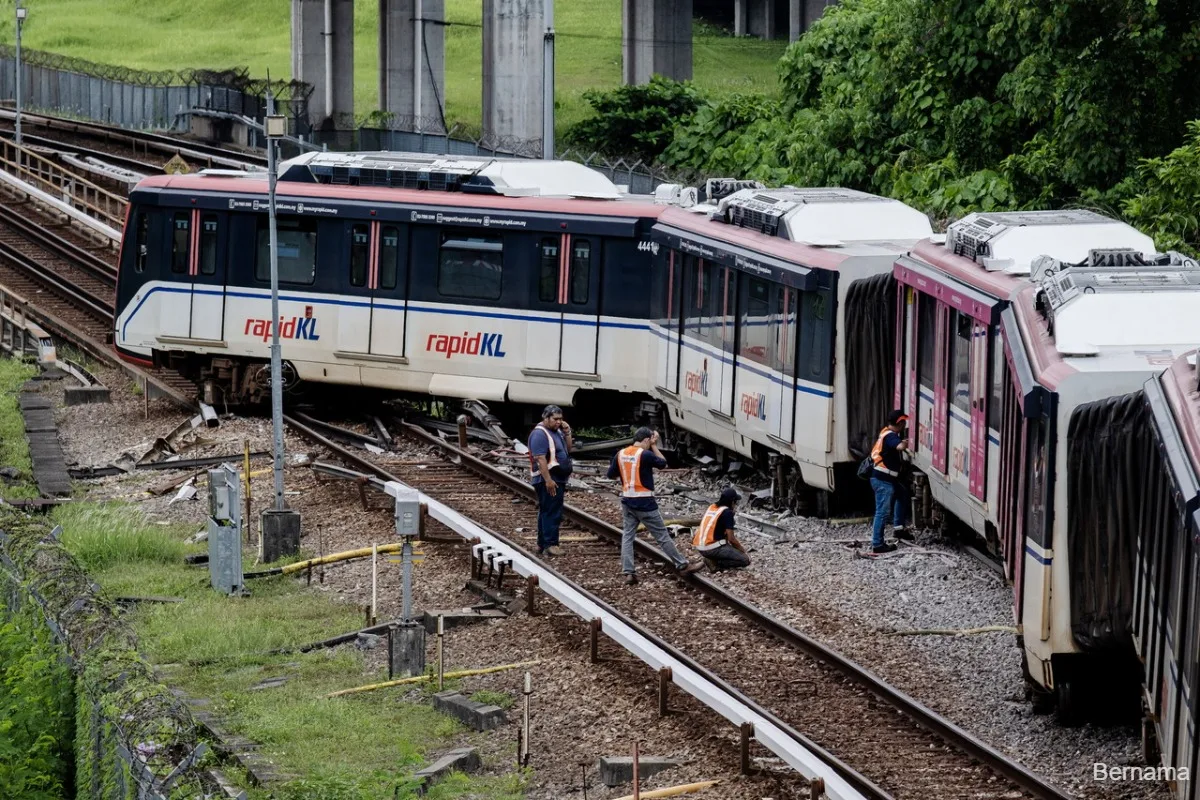
An Ampang/Sri Petaling Line train derailed on May 28 near the Chan Sow Lin station in Kuala Lumpur after a faulty track switch caused the rear carriages to veer onto a different track, pulling the front carriage off the rails. The incident involved four derailed train cars, and all 25 passengers on board were safely evacuated, with no injuries reported [1, 2, 3, 4, 5, 6, 7, 8, 9].
Transport Minister Anthony Loke described the derailment as "a very serious incident," emphasizing that such events carry high safety risks for passengers and staff. He said, "Although all 25 passengers involved in this incident were safely evacuated with no injuries, the ministry remains firm that we will not allow public safety to be compromised" [5].
The minister ordered a special task force led by the Chief Air Accident Inspector and railway engineering experts to investigate all possible causes, including human error and system failure. The task force has 30 days to complete its report and submit it to the Cabinet, with findings to be made public. Loke also mandated maximum punitive action against operator Prasarana Malaysia if negligence is confirmed, warning that "not even Prasarana’s top management will be exempt from accountability" [4, 5, 10, 6, 7].
Following the derailment, Rapid KL implemented an alternative service plan. Shuttle trains operated with varied frequencies between affected stations, and free shuttle buses connected key stations to maintain passenger movement. Commuters heading to the city centre were advised to transfer to the Putrajaya Line at Sungai Besi station. Some stations operated on alternating platforms during the disruption [1, 2, 11, 8, 9].
The four derailed train cars were recovered and returned to the depot for inspection between May 29 and 30. Repair work on the affected track section of the Ampang/Sri Petaling Line is underway and expected to be completed by June 3, 2026, when normal service should resume [7, 9].
Commuters and experts expressed concern about ageing rail infrastructure and maintenance standards. LRT user Augustin Francis said, "The track, especially, looks like it needs to be replaced because there have been two or three track-related problems before." Saravanan Thambirajah, CEO of the Federation of Malaysian Consumers Associations, added, "Public transportation should be the backbone of the country’s mobility network and economic productivity, not a source of daily anxiety and uncertainty for consumers" [3, 12].