Some leading European countries have acknowledged that ships passing through the Strait of Hormuz may have to pay fees to Iran and Oman for services like navigation, security, and pollution control, amid heightened regional tensions and stalled negotiations [1, 2, 3]. The UK, France, and other European powers are pushing to create an international maritime coalition to clear mines in the strait, but deployment depends on advances toward a permanent peace agreement [1, 2].
The United States and Gulf Arab countries oppose any fees or charges for passage through the strait, citing international maritime law. Bahrain’s government denied it has accepted or indicated acceptance of any transit fees, saying "The free and unimpeded passage of international shipping through the strait is a matter of international law, not a matter for negotiation" [1, 2]. Japan and Saudi Arabia also oppose such fees and have coordinated their positions [2].
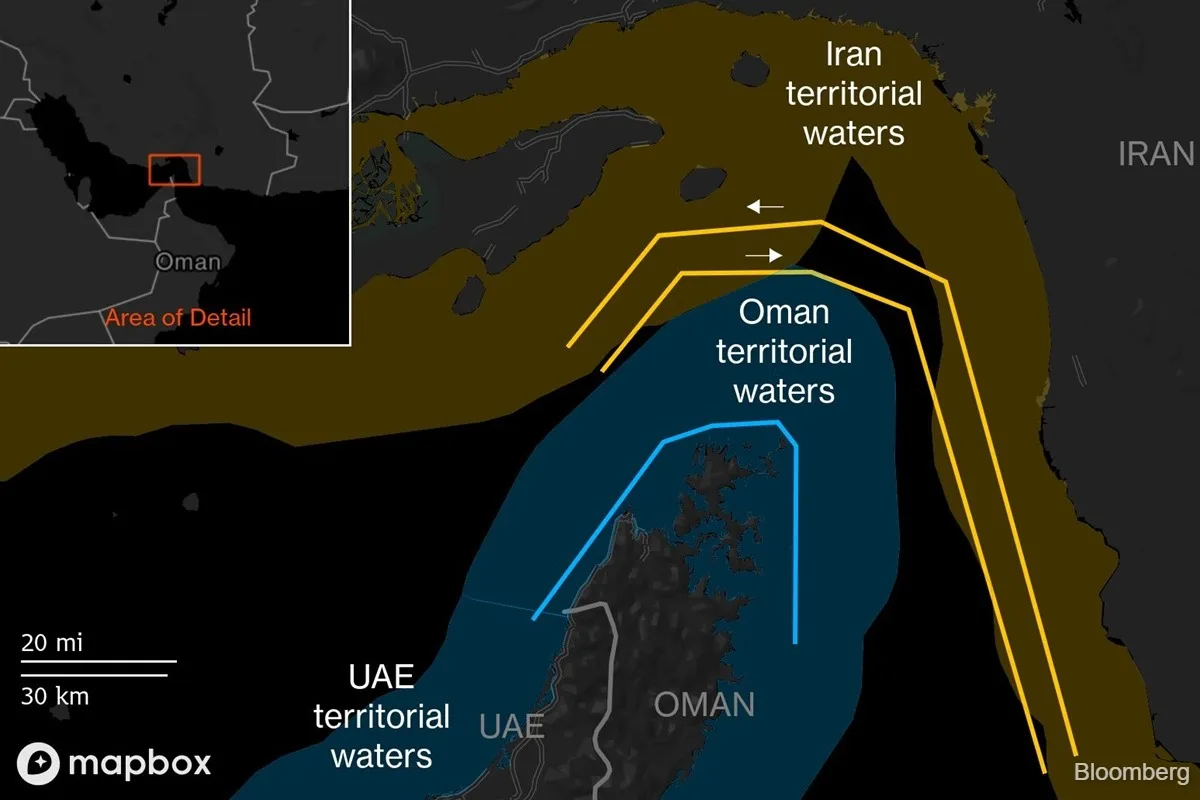
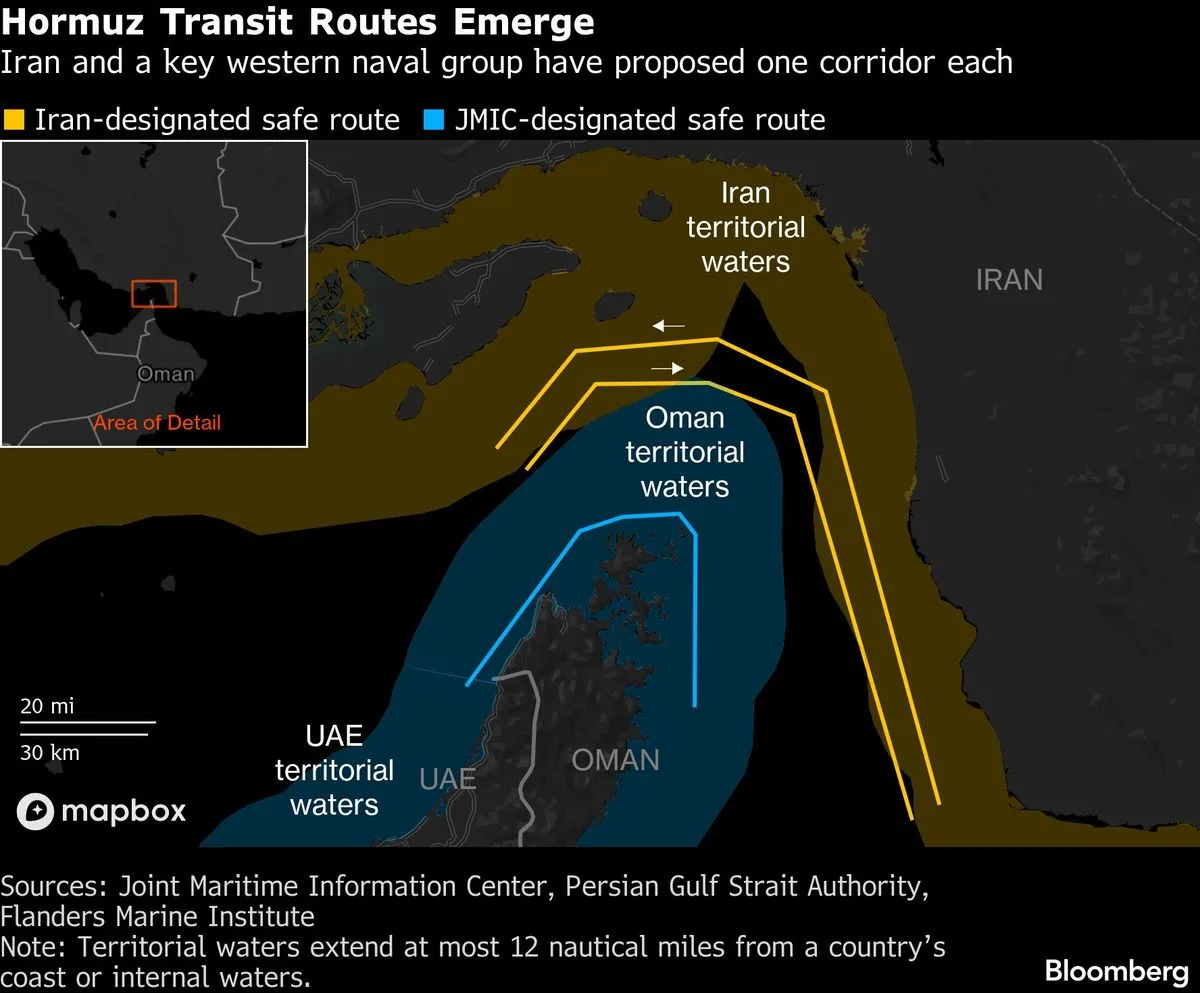
Some Gulf Arab officials privately acknowledge fees may be inevitable, but this is not the official stance of their governments [1, 2, 3]. The Strait of Hormuz is approximately 21 nautical miles wide at its narrowest point and is fully covered by Iranian and Omani territorial waters, meaning there is no continuous high seas corridor [4]. Iran demands ships register and obtain permission to transit, with mandatory payments denominated in Iranian currency, reportedly around $1 per barrel of oil transported [4]. Oman proposes voluntary service fees to fund safety, environmental protection, and clearance services, distinguishing these from mandatory transit fees [4].
Experts say that mandatory or voluntary fees both function as passage tolls with significant economic impact. Lee Kuan Yew School of Public Policy director Kishore Mahbubani noted, "Even if Iran avoids the term 'transit fees' and calls them 'service fees,' mandatory payments required for passage essentially amount to transit fees" [4]. James Dorsey, a researcher at NTU, explained, "The strait is effectively covered by the territorial waters of Iran and Oman, so there is no true high seas corridor" [4].
Iran has increased military warnings threatening rapid and forceful responses to ships not following Iranian-approved routes through the strait [2]. Sanam Vakil, director at Chatham House Middle East, said, "Iran is trying to open the strait on its own terms and is unwilling to relinquish the leverage it has gained. But it is easier for Tehran to disrupt the strait than to manage it sustainably" [2].
The United States and Oman attempted to negotiate unfreezing up to $100 billion in Iranian overseas assets in exchange for Iran dropping plans to charge fees on Strait of Hormuz passage. Iran rejected this offer [2]. A previous temporary framework between the US and Iran allowed merchant ships to pass the strait without fees for 60 days starting June 17, 2026, but that period expired in mid-August, leaving the fee situation uncertain [4].
European nations continue efforts to forge cooperation on maritime security in the strait, but broader arrangements remain elusive amid conflicting positions. The 60-day fee-free transit window has ended, and ships may now face mandatory or voluntary fees as the negotiations remain unresolved.