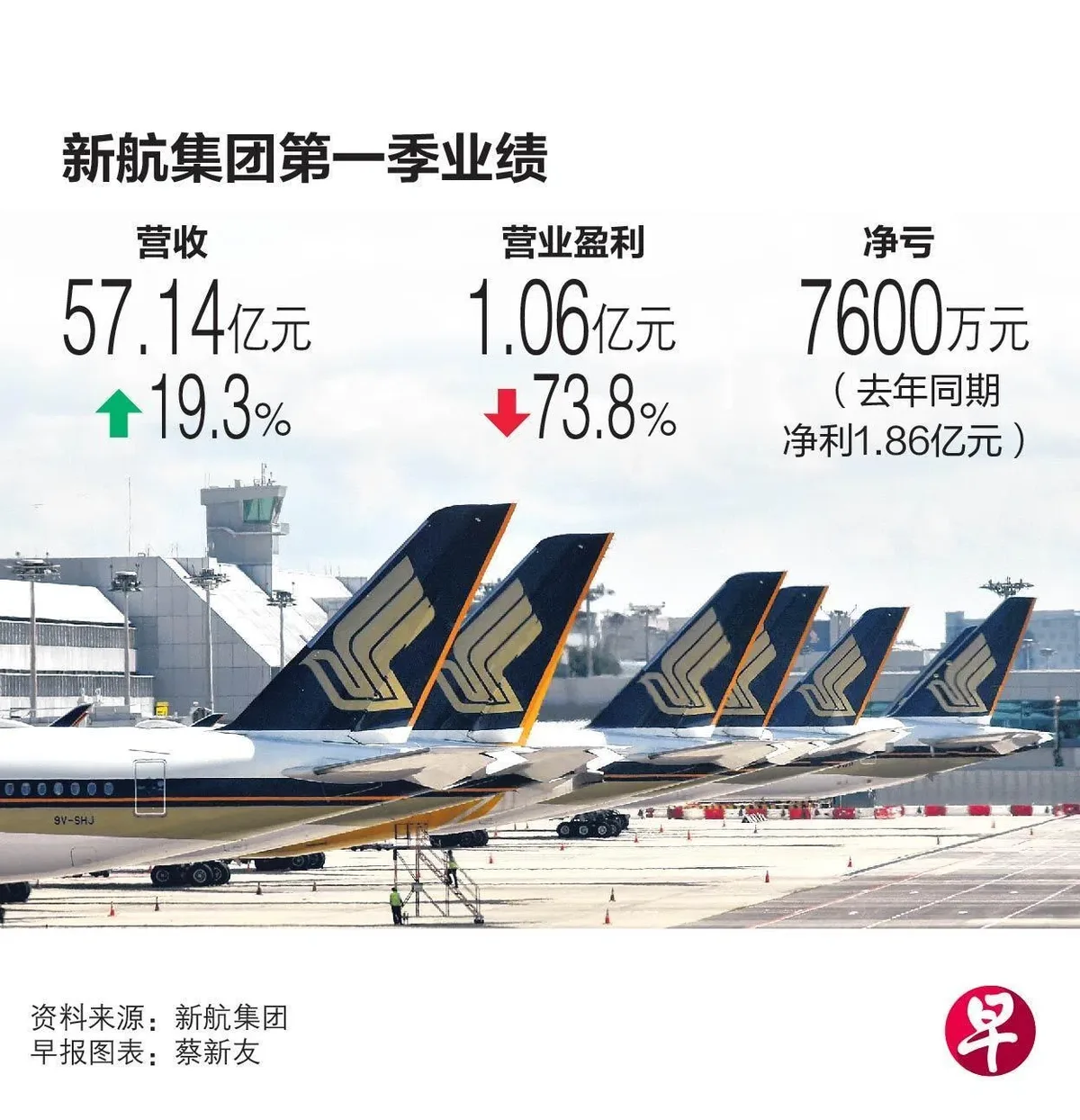
Singapore Airlines Group reported a net loss of S$76 million for the first quarter ending June 30, 2026, reversing from a net profit of S$186 million a year earlier [1, 2, 3]. The loss primarily stemmed from a 78.5% rise in fuel costs to about S$2.25 billion, driven by the Middle East conflict, and an increased share of Air India losses amounting to about S$42 million [1, 2, 3, 4].
Group revenue rose 19.3% year-on-year to a record S$5.7 billion, supported by strong passenger and cargo demand [1, 2, 3, 4]. Passenger revenue increased 18.6% to about S$4.58 billion, with a record 10.9 million passengers carried, up 6.3% from the previous year [1, 3, 4]. However, overall group expenditure rose 27.9% to S$5.6 billion, mainly due to the surge in fuel costs [1, 2, 3].
Operating profit fell sharply by 73.8% year-on-year to S$106 million [1, 3]. Singapore Airlines owns a 25.1% stake in Air India, which reported a record US$2 billion loss for its past financial year and may take up to a decade to turn around, according to Tata Sons chairman. He said, "The turnaround for Air India could take up to a decade due to supply-chain disruptions, legacy system overhauls, culture, fleet, and workforce rebuilding" [1].
Singapore Airlines stated, "Together with Tata Sons, we remain committed to Air India's long-term transformation, which is a key pillar of our multi-hub strategy" [1]. The group also expanded its fleet with delivery of one Airbus A320neo and three Boeing 737-8 aircraft in the quarter, increasing its operating fleet to 220 as of June 30 [1, 4].
The passenger load factor dipped slightly to 87.1% as capacity growth outpaced traffic growth, while cargo load factor rose 1.9 percentage points to 58.8%, supported by demand from semiconductor and data center sectors [3, 5]. SIA invested in upgrading customer experience with new SilverKris lounges, refreshed onboard amenities, updated entertainment systems, and plans for Starlink connectivity [6].
The airline is also broadening global partnerships, including joint ventures and code shares with Malaysia Airlines and Air China, pending regulatory approvals [6]. Shares dropped over 4% on July 29, 2026, following the earnings announcement [7, 8, 9].
Analysts are divided on outlook. DBS Group Research called the results "well below expectations," warning of negative market reaction, while Morningstar's Lorraine Tan said the loss was unsurprising given fuel cost pressures but noted benefits from passenger traffic diverted from Middle East competitors [10].