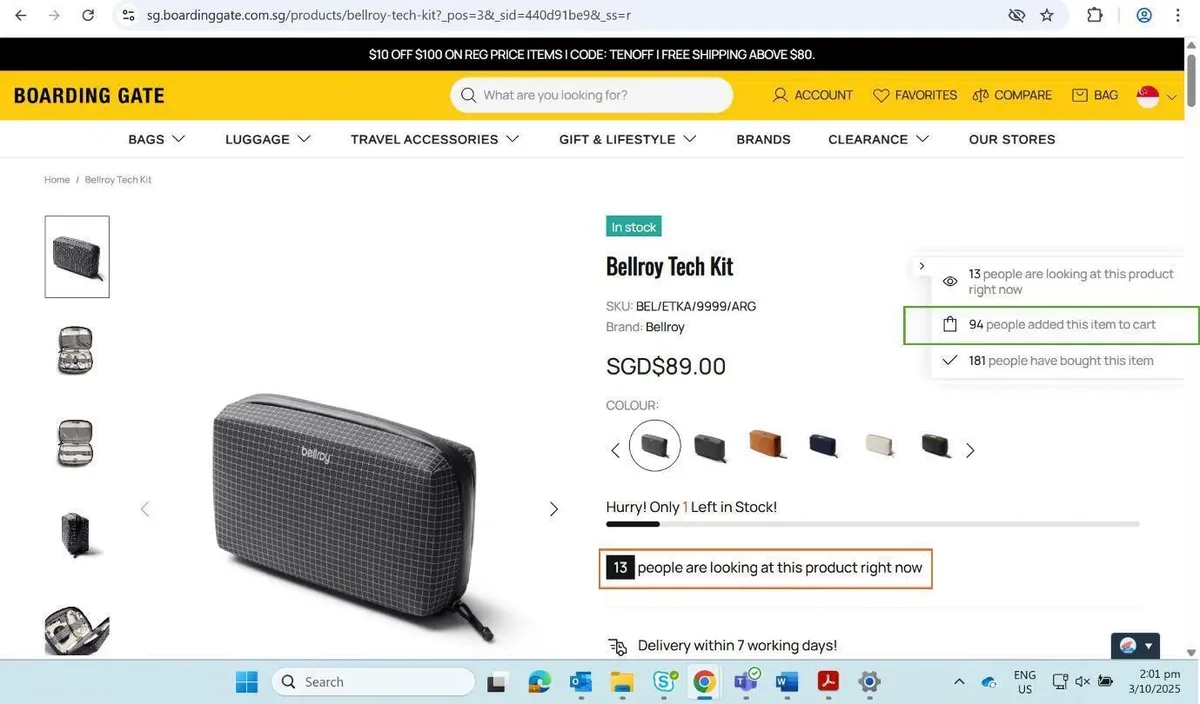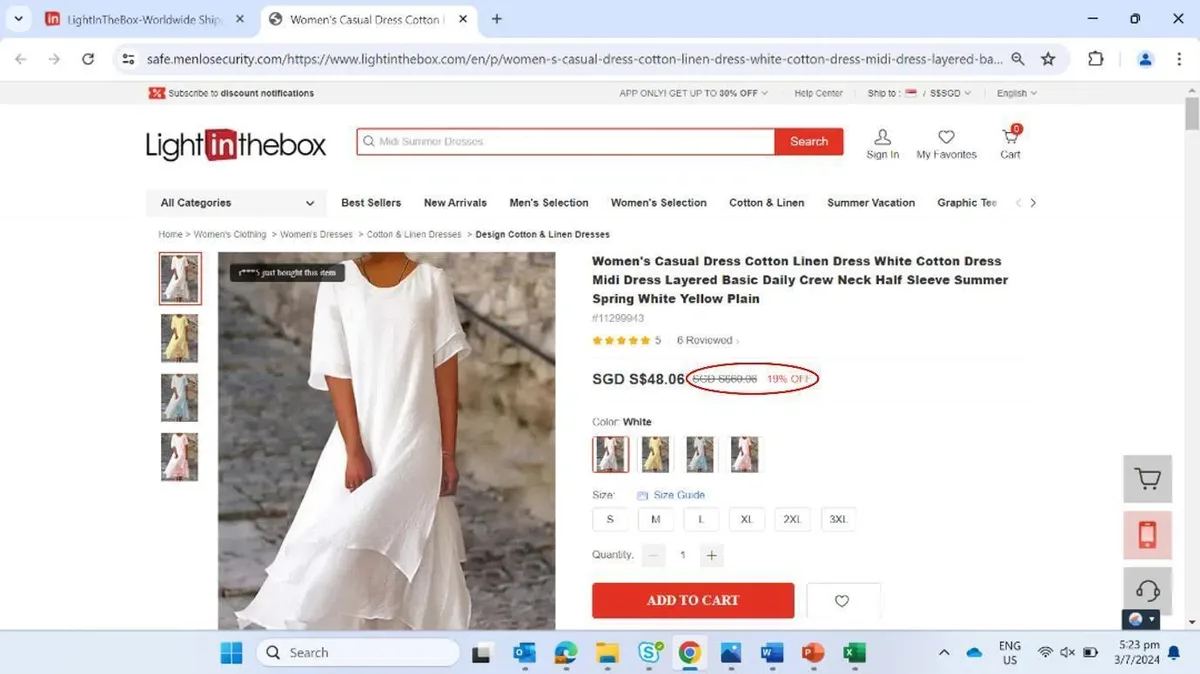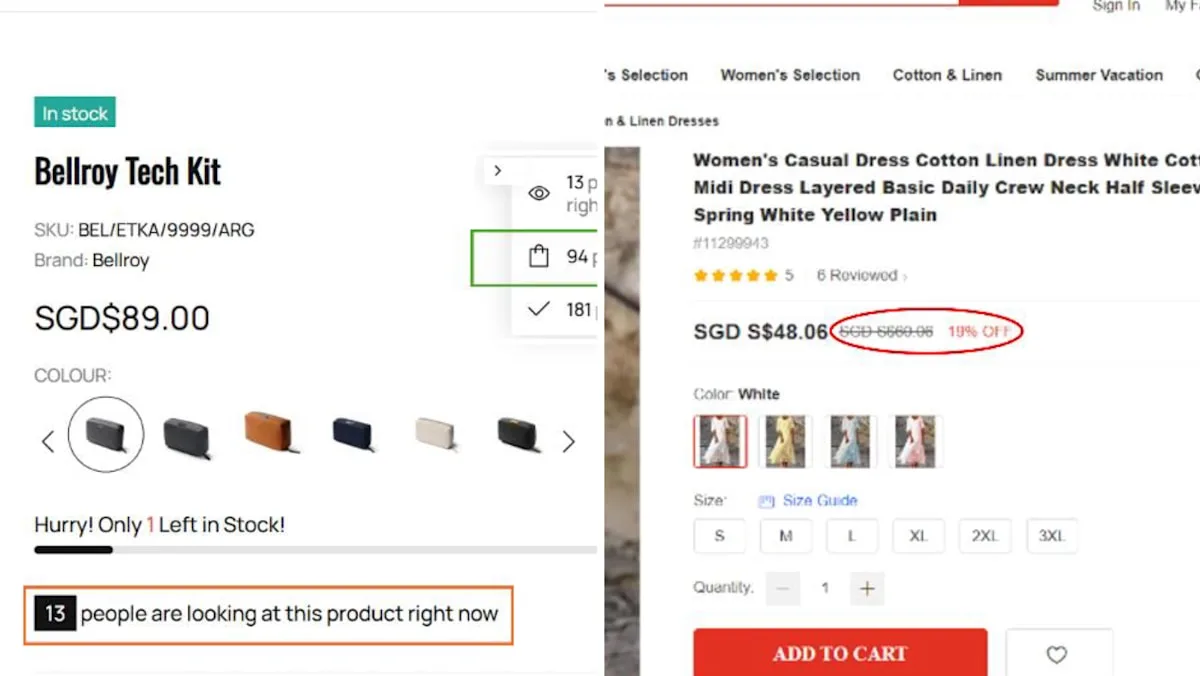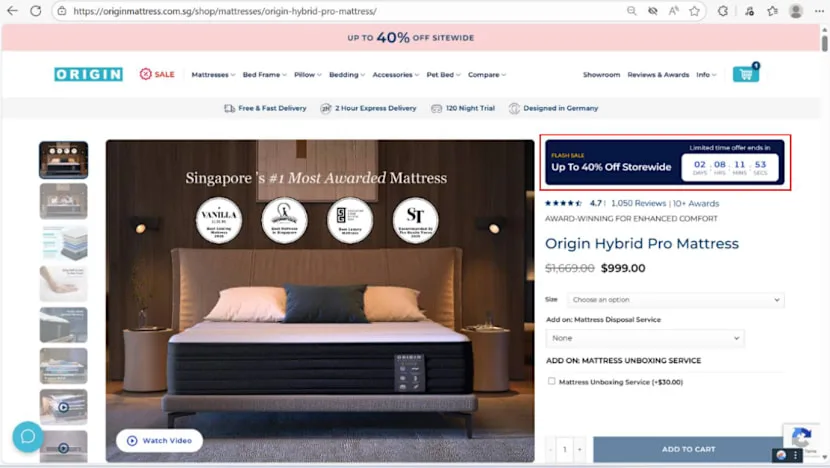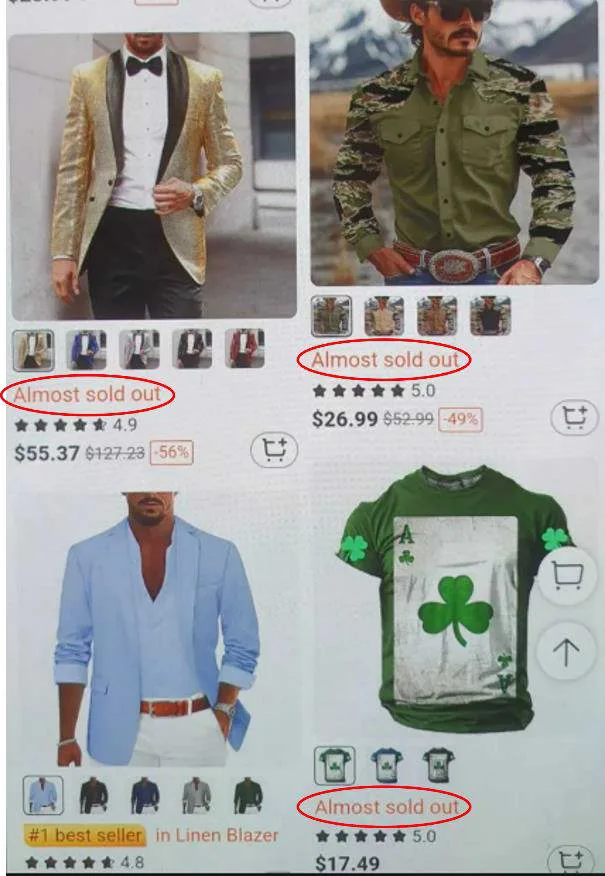
Singapore's Competition and Consumer Commission (CCS) announced on May 18 it has found three online retailers—Seager Inc (operating Boarding Gate), Origin Sleep, and Light In The Box—used misleading website features to create artificial urgency and pressure consumers [1, 2, 3].
Boarding Gate displayed messages such as “XX people are looking at this product” and “XX people added this item to cart,” but CCS found these visitor counts were randomly generated with no real data backing [1, 2, 3]. Origin Sleep showed similar fake visitor activity and cart addition claims. The site also featured countdown timers at checkout implying shoppers had limited time to complete purchases, though the timers did not affect product availability [1, 2, 3]. CCS noted Origin Sleep ran supposedly time-limited "flash sales" continuously for nearly two years, misleading customers on urgency with promotions like Valentine’s Day Sale and 3.3 Mega Sale [1, 2, 3]. These sales falsely advertised discounts up to 40% [2, 3].
Light In The Box used “Almost sold out” warnings to create false scarcity, despite operating on a made-to-order model with little or no inventory. CCS said “In reality, these scarcity labels were applied randomly for promotional effect” [1, 2, 3]. The company also showed discounted prices against inflated “original” prices that were never actually offered, misleading consumers about potential savings [1, 2, 3]. Light In The Box was reported to CCS by a European regulator, highlighting the cross-border nature of the unfair practices [2, 3].
All three retailers have ceased the misleading practices and provided formal undertakings to CCS to stop unfair trading [1, 3]. CCS emphasized that retailers remain responsible for unfair consumer practices regardless of whether they use third-party website templates [3]. CCS said, “These included displaying fake visitor counts, fabricated countdown timers, and false discount claims” [2].
The CCS announcement marks a concrete enforcement step to protect consumers from deceptive online selling techniques that pressure shoppers through false urgency and scarcity claims [1, 2, 3].