De Villar Rizalyn Panganiban, a 35-year-old Filipino woman, was sentenced on August 24, 2026 to 25 months in jail for her involvement in a Cambodia-based scam syndicate targeting Singapore residents [1, 2, 3, 4, 5]. The group used government impersonation scams to cheat victims, causing estimated losses of SGD 52.5 million [2, 3, 4, 5].
De Villar traveled to Cambodia on March 29, 2025 and was taken to a scam compound in Phnom Penh. She was later moved to another compound in Laos on April 24, 2025 [1, 2, 3, 4, 5]. She claimed she was recruited for a job promising US$1,500 monthly but later realized it was a scam operation [1, 5].
She took a test set by the syndicate on April 7, 2025 but failed and did not successfully scam victims. However, she participated in the syndicate’s training and planning activities, which established her involvement [2, 3, 4, 5]. Her passport was confiscated but she retained freedom of movement and access to phones and internet. She did not attempt to escape or seek help [1, 5].
The syndicate had a three-layer structure with roles such as bank officers and government officials. They used AI-rendered backdrops and uniforms mimicking Singapore government agencies [2, 3, 4]. Criminal proceeds were laundered through mule accounts and converted into cryptocurrency to anonymize transactions, described by Deputy Public Prosecutor Yeo Kee Hwan as "a distinct and equally sophisticated operation" [2, 3, 4].
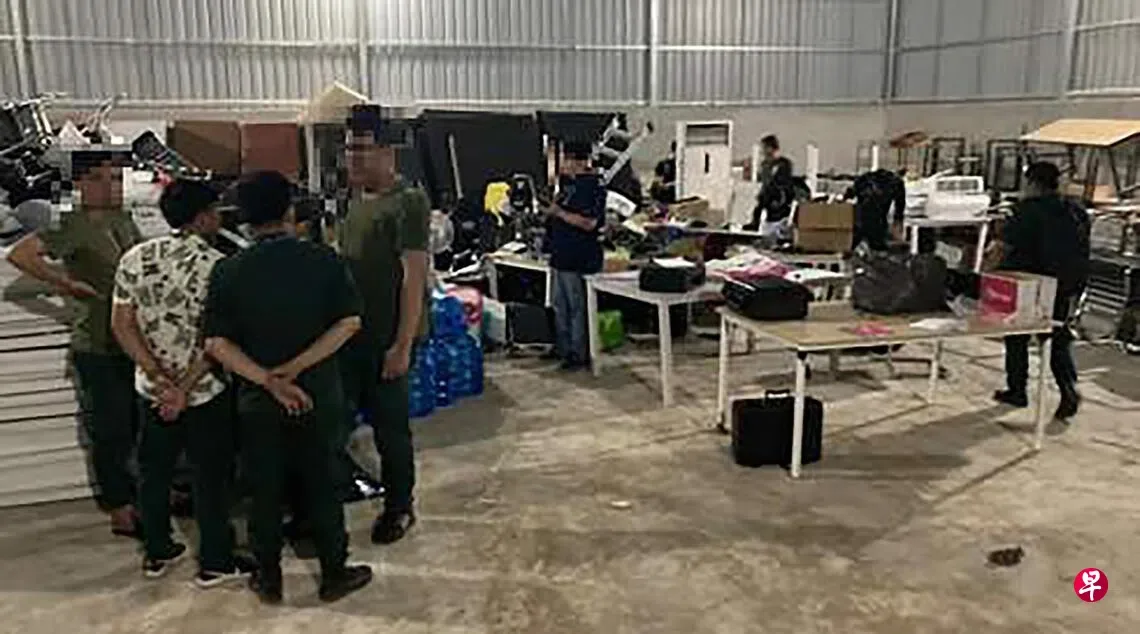
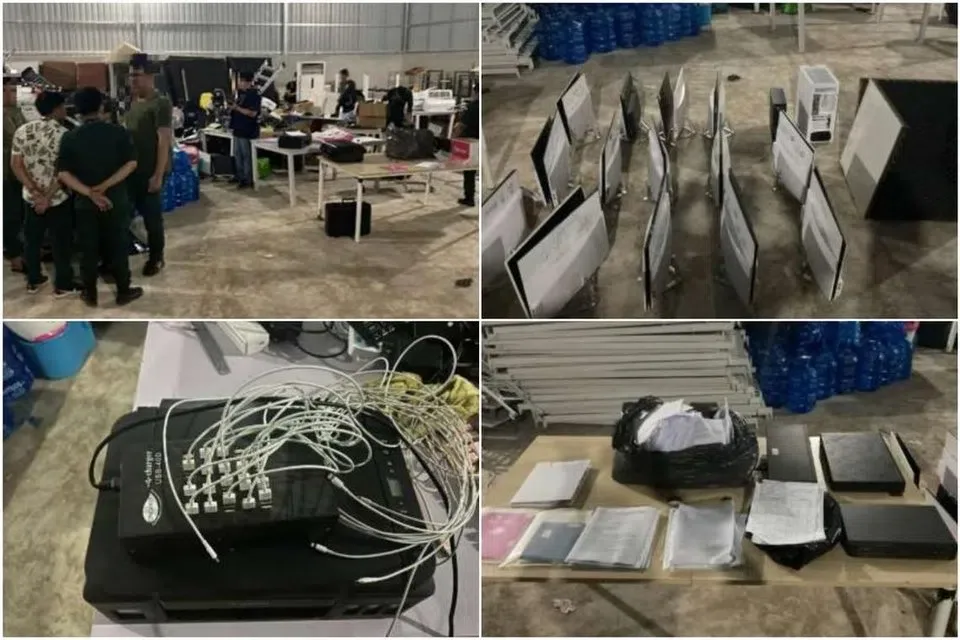
De Villar was among 12 people charged in September 2025 after a joint operation between Singapore Police and Cambodian National Police dismantled the syndicate [1, 2, 3, 4, 5]. Nine Singaporeans and two Malaysians were arrested alongside her [s1,s2,s3,4,s5]. The syndicate had at least 78 members and defrauded about 90 elderly victims (aged 65 and older) out of approximately SGD 11.8 million [5].
Prosecutors sought a jail term of at least 27 months, citing the seriousness and transnational nature of the syndicated crime. De Villar’s defense argued she was unaware the work was a scam, failed the syndicate test, was not a core member, and requested a sentence not exceeding 15 months [2, 3, 4, 5].
Principal District Judge Thian Yee Sze said the sentence prioritized general deterrence, stating, "The overriding sentencing consideration in De Villar’s case was general deterrence, especially given the transnational reach of the organised crime group involved in this case. The sentence had to be substantial enough to deter those tempted to become involved in similar activities" [2].
De Villar received about USD 1,000 and SGD 300 upon leaving the syndicate after requesting to go home in June 2025. Her time with the group lasted about four weeks [5]. The case was resolved with the prison sentence imposed on August 24, 2026 [1, 2, 3, 4, 5].