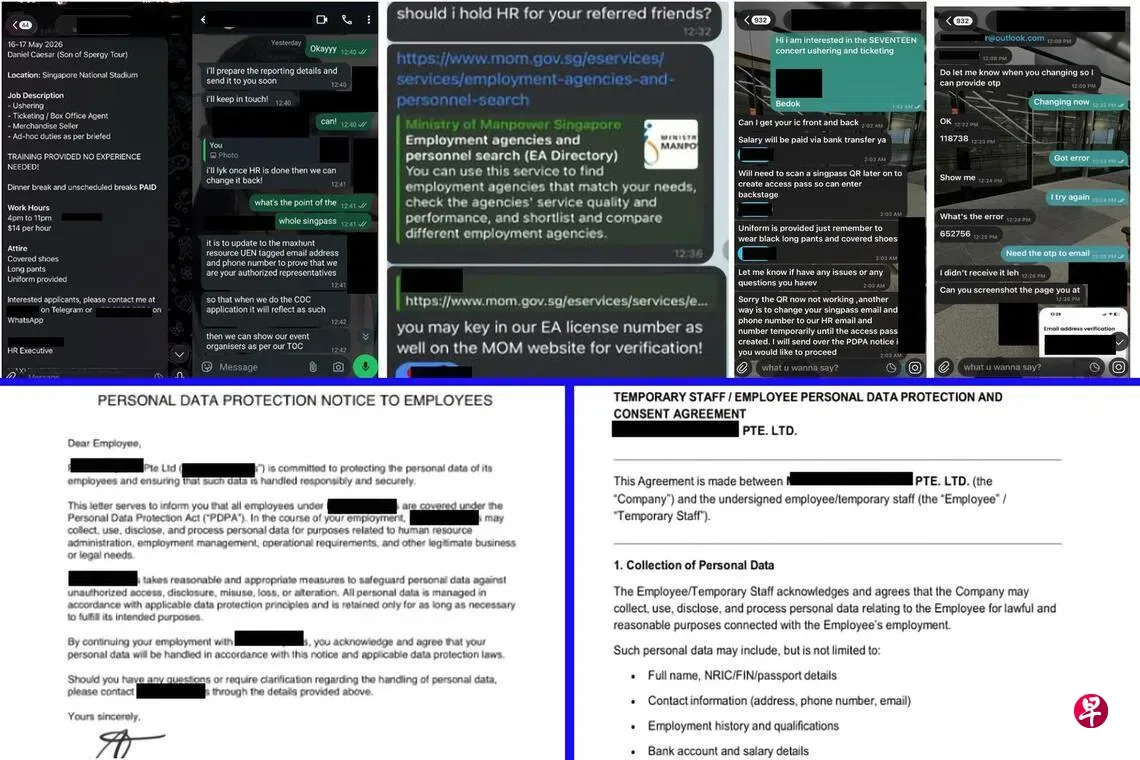
Since March 2026, Singapore authorities have detected at least 20 job scam cases where scammers impersonated recruitment agencies and misused Singpass accounts, targeting job seekers with fake concert crew job ads on platforms like Telegram and Carousell [1, 2].
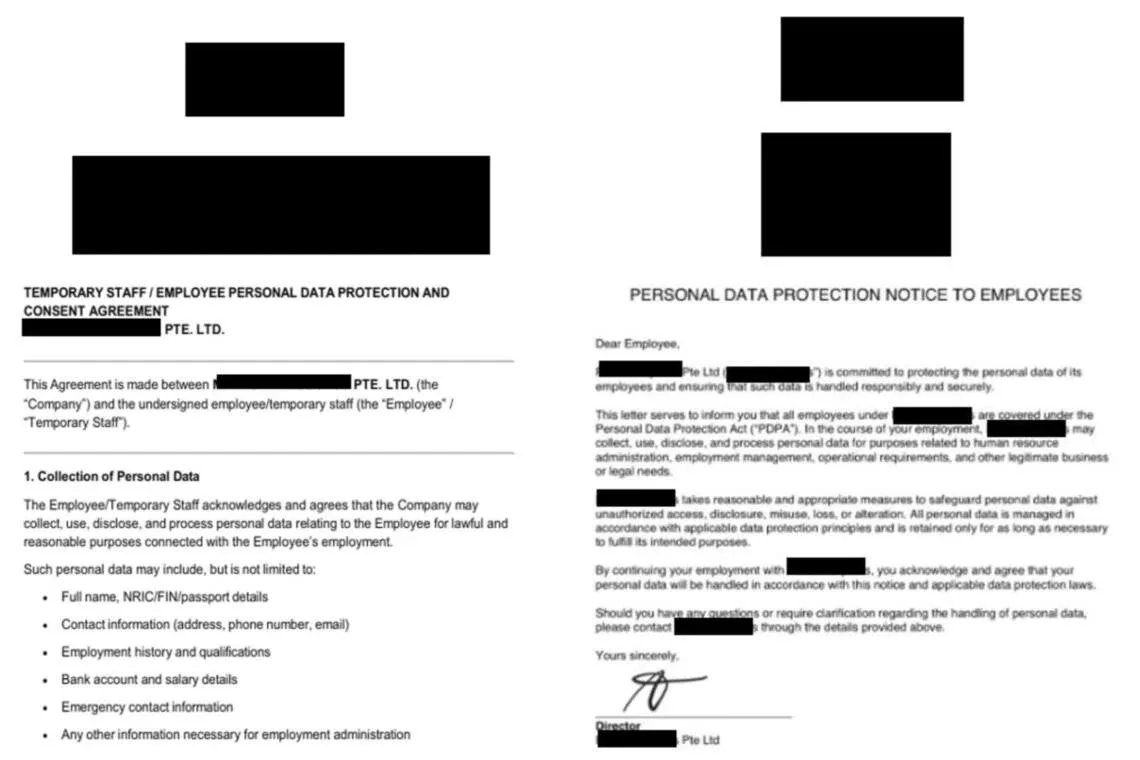
The fraudsters asked victims for personal information including name, NRIC number, date of birth, and required signing a Personal Data Protection Act agreement [1, 2]. To build credibility, the scammers supplied legitimate recruitment agency licence numbers, prompting victims to verify them through the Ministry of Manpower’s Employment Agencies Directory [1, 2].
Victims were instructed to change the email and mobile number registered on their Singpass accounts to contacts controlled by the scammers. This was falsely claimed to be necessary for applying for a Certificate of Clearance (COC) or gaining concert access passes [1, 2]. The authorities clarified that a COC is not required for local employment purposes [1, 2].
After these changes, scammers reset the Singpass accounts and took full control, bypassing security features like facial recognition by intercepting one-time passwords sent to the new contact details [1, 2]. This allowed the criminals to open financial accounts with payment platforms such as LiquidPay and YouTrip in victims’ names [1, 2].
The Singapore Police Force and GovTech issued a joint statement on May 15, 2026, warning the public not to disclose Singpass credentials to anyone, including recruitment agencies, and not to register others’ contact details in their accounts [1, 2]. Authorities said, "Do not assume that a person is from a legitimate recruitment agency just because a valid recruitment agency’s licence number has been provided. A COC is not required for local employment purposes" [1]. Similar warnings were issued in Chinese to caution against trusting purported official documents and licence numbers [2].
The police urged the public to adopt the "ACT" steps: Add the ScamShield app, Check for scam signs, and Tell authorities if scammed [2].
The investigation into these scam cases remains active, and the authorities continue to warn job seekers to verify recruitment offers carefully and protect their Singpass accounts against unauthorized changes [1, 2].