Prime Minister Lawrence Wong unveiled new family support measures at the National Day Rally on August 23, 2026, aimed at helping working parents and improving access to preschool education in Singapore [1, 2, 3, 4, 5, 6, 7].
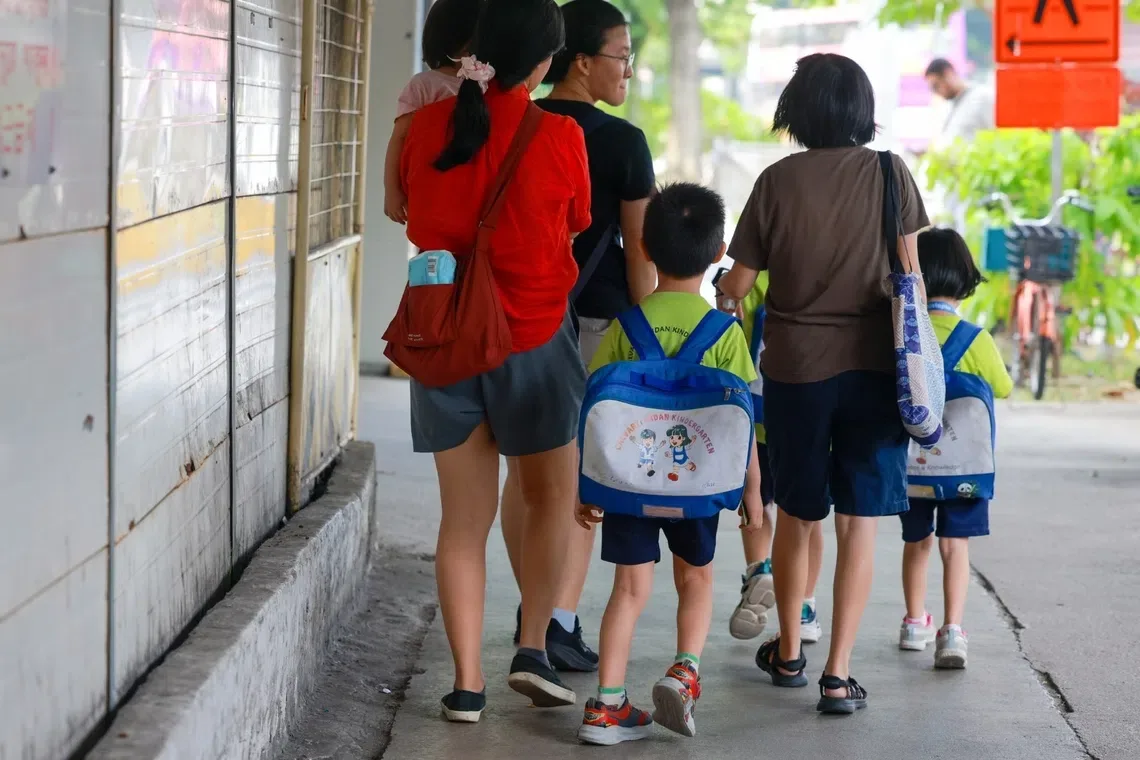
Under the new scheme, each working parent with Singaporean children aged 12 and below will receive childcare leave of 8 days annually for one child, 10 days for two children, and 12 days for three or more children. This is an increase from the current entitlement of 6 days when the youngest child is 6 and below, falling to only 2 days once the youngest starts primary school, regardless of number of children [8, 9, 10, 11, 12]. Employers will be fully reimbursed for the duration of child-related leave, while self-employed parents can claim compensation for lost income, supporting work-life balance [8, 9, 10, 11, 12].
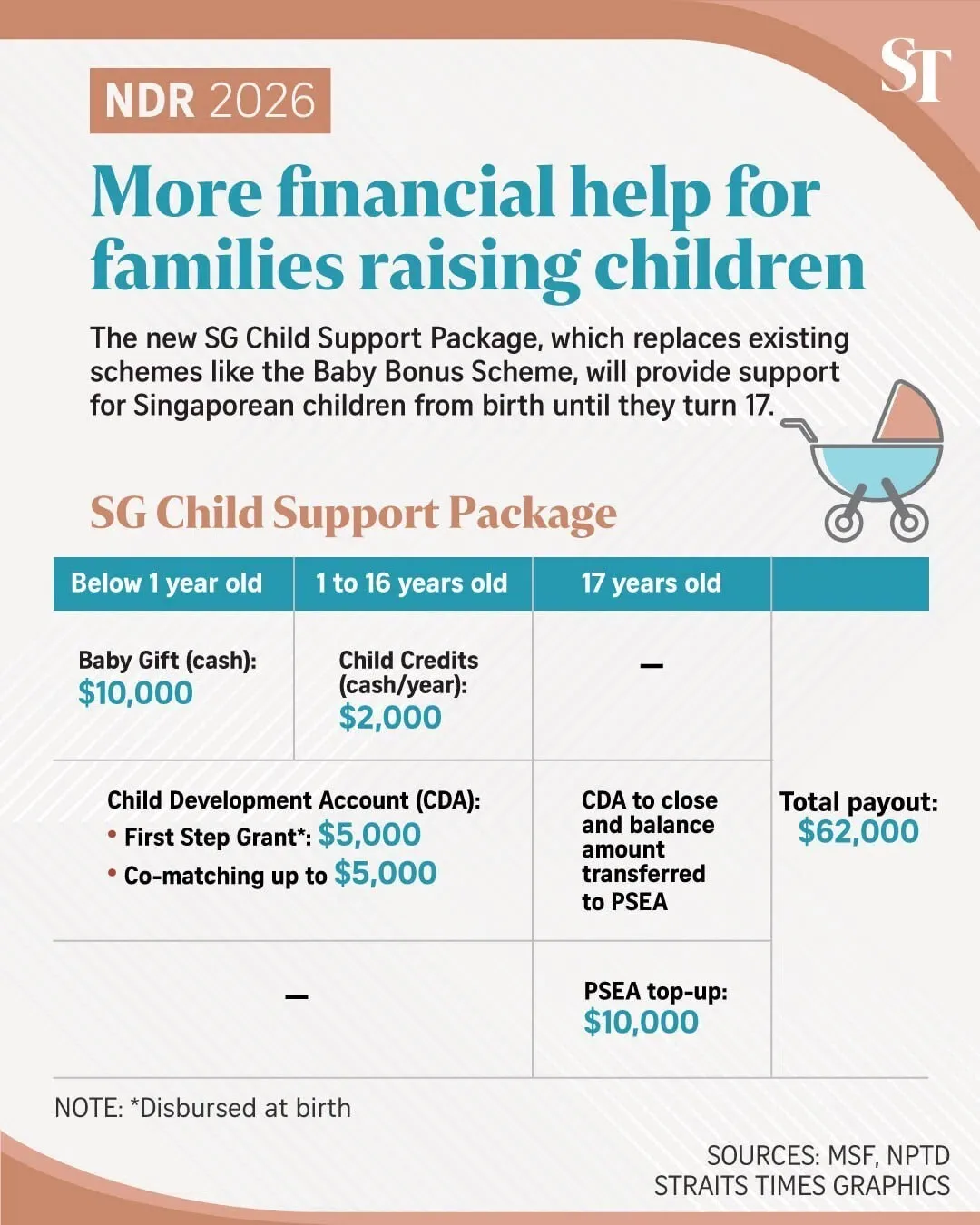
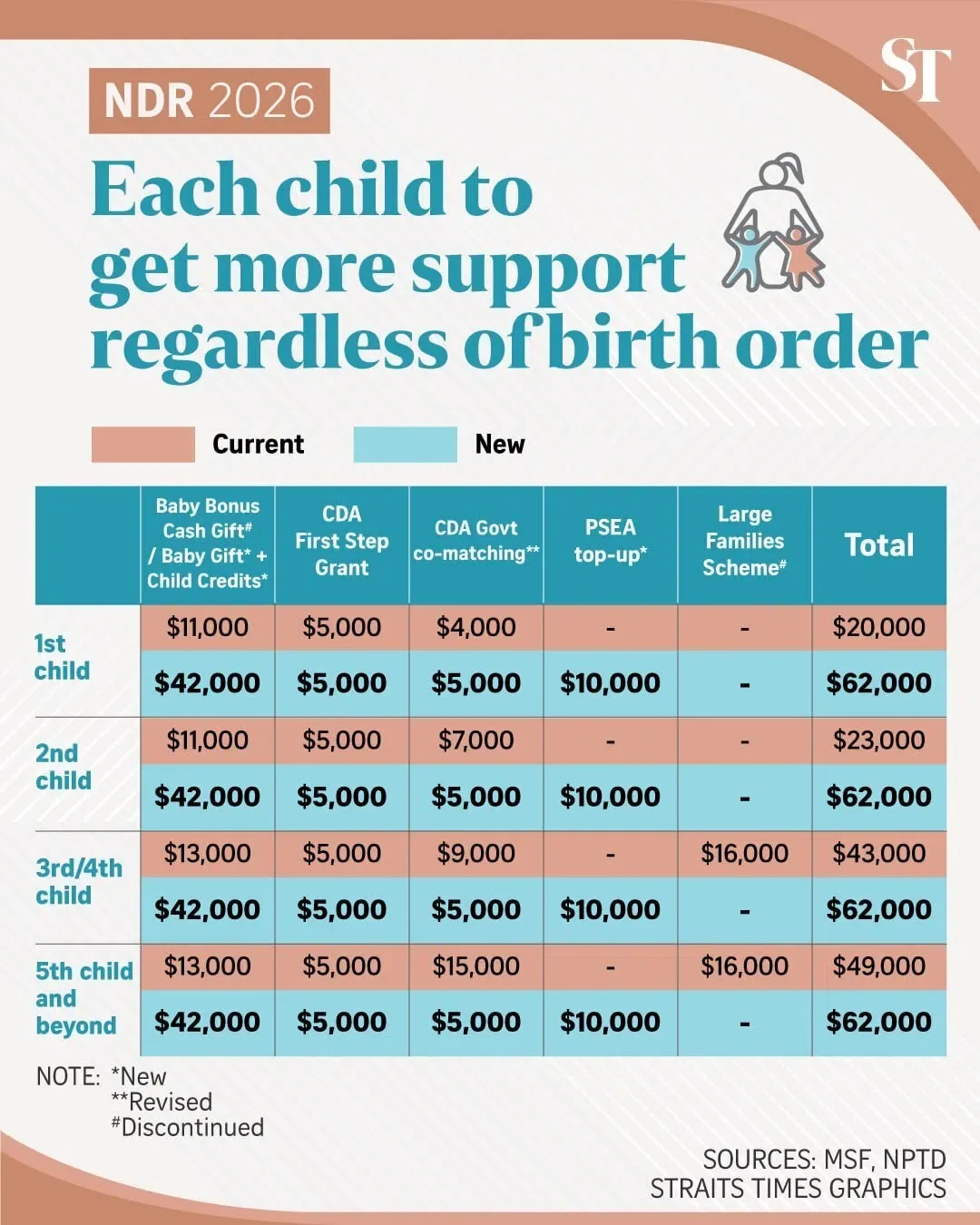
Financial support will also be extended. Singaporean children born on or after April 1, 2027, will receive a Baby Gift cash payout of S$10,000 and S$32,000 in Child Credits, replacing the current tiered Baby Bonus scheme. Child Credits will apply to all Singaporean children aged 16 and below in 2026, providing S$2,000 annually on their birthdays for any use. Existing Baby Bonus recipients born before April 1, 2027, will continue to receive payouts until March 31, 2027, with top-ups by April 30, 2027, to ensure total cash of at least S$10,000 [8, 9, 10, 11, 12].
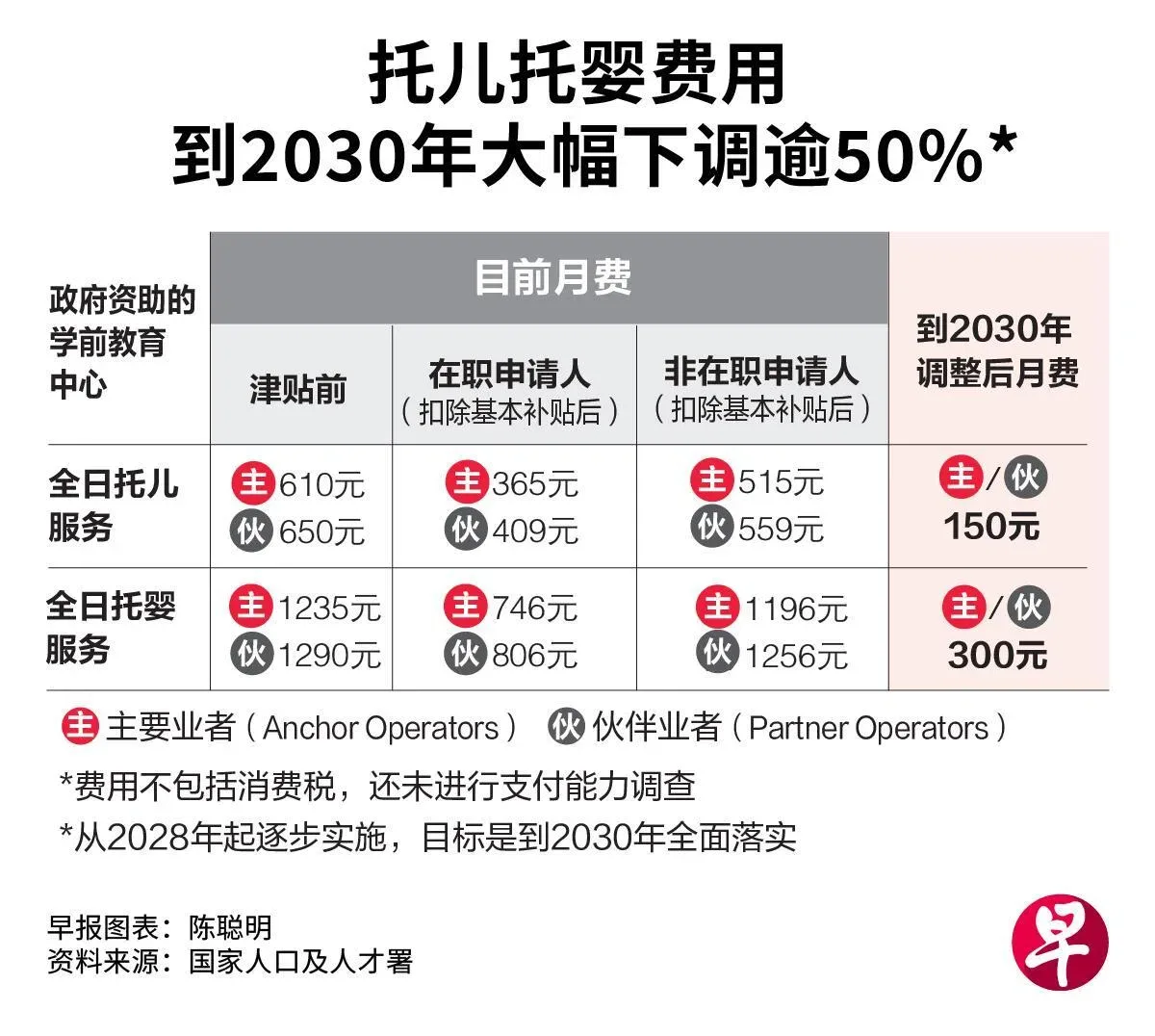
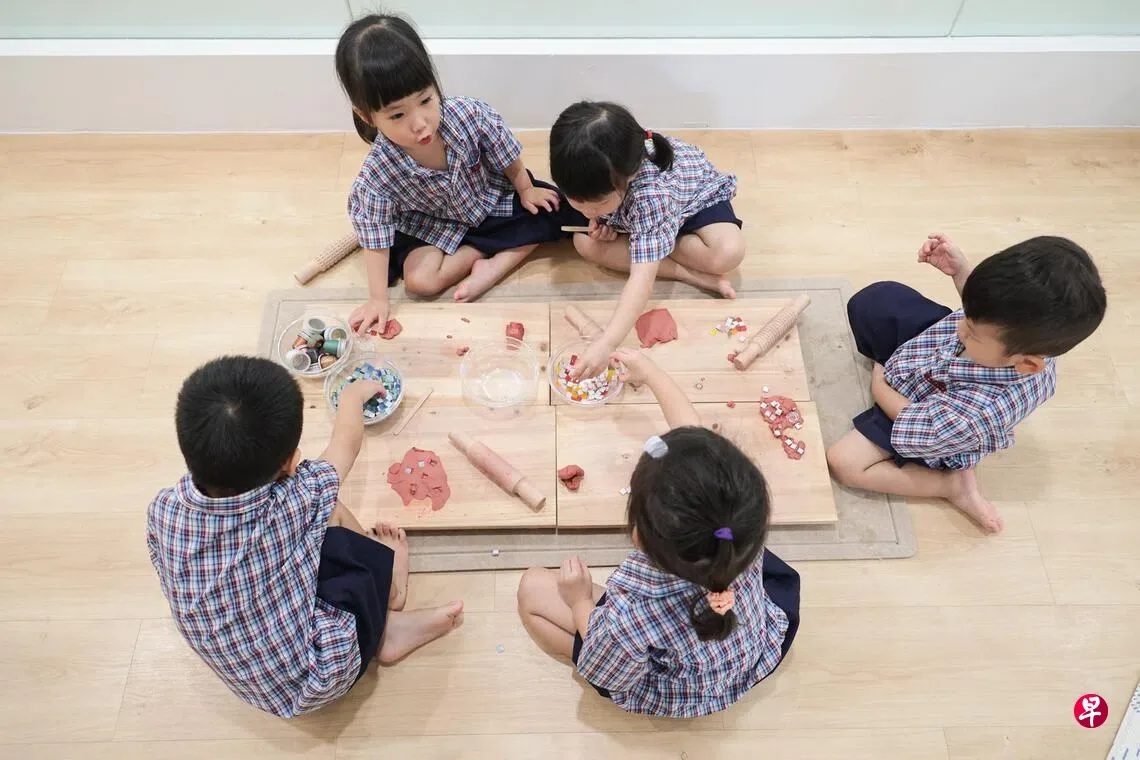
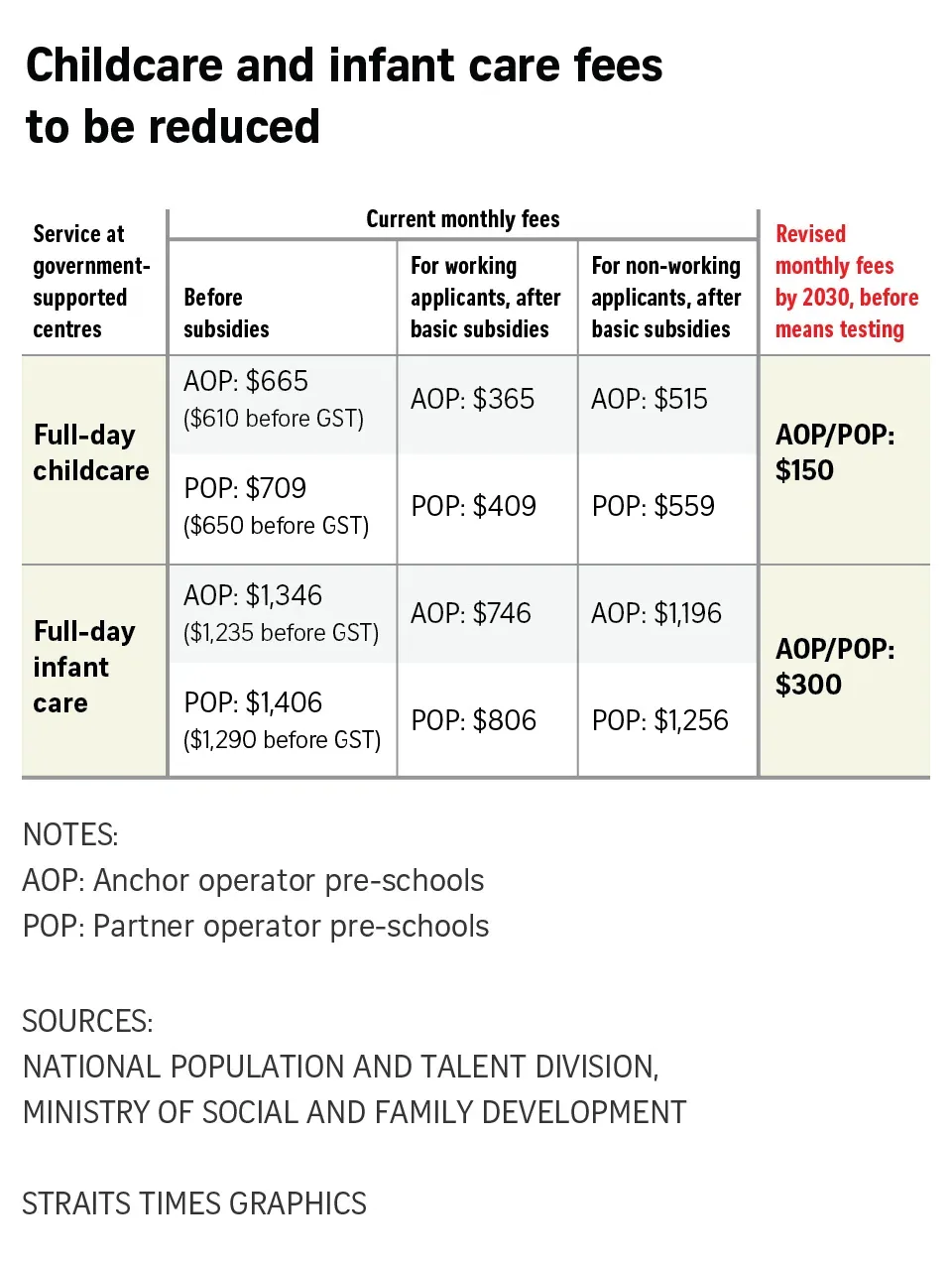
Monthly childcare fees at government-supported preschools will be reduced by more than half to S$150 by 2030, and infant care fees will drop to S$300 monthly. These fee reductions will start gradually in 2028. Full childcare and infant care subsidies will eventually be extended to all families with Singaporean children regardless of employment status, compared to current subsidies limited mostly to working families. Currently, working parents pay about S$365 monthly for childcare and S$746 for infant care before subsidies at anchor operator preschools [1, 2, 3, 4, 7].
Prime Minister Wong said, "Likewise, we want every Singaporean child to have access to quality pre-school at fees that families can comfortably afford" [1]. He added that "these changes are aimed at bringing support for government-supported pre-schools closer to that provided for primary education" [3]. He further emphasized the government's commitment, stating in Mandarin that support would be increased regardless of family income or parent employment, as every child deserves a good start in life [7].
The government will also expand the network of government-supported preschool operators to increase enrolment capacity and improve quality [7].
The new Baby Gift and Child Credits scheme will take effect for children born on or after April 1, 2027. Existing Baby Bonus cash payouts will conclude by March 31, 2027, with any necessary top-ups completed by April 30, 2027. The gradual fee cuts for childcare and infant care will begin in 2028 and reach the targets by 2030 [8, 1, 9, 2, 10, 3, 4, 11, 7, 12].