The European Parliament gave its final approval to the EU-US tariff trade deal on June 16, 2026, with a vote of 440 in favor, 151 against, and 50 abstentions [1, 2, 3, 4, 5, 6, 7]. The deal limits U.S. tariffs on most EU exports to 15%, while the EU agreed to remove tariffs on U.S. industrial goods and reduce import duties on selected agricultural products [1, 2, 8, 3, 4, 5, 6, 7].
The ratification process faced delays due to tensions over Greenland, a U.S. Supreme Court ruling that invalidated parts of Trump's tariffs, and former President Trump threatening to raise EU vehicle tariffs if the deal was not ratified by July 4 [1, 2, 8, 3, 4, 5, 6, 7]. Trump set a July 4 deadline for the EU to complete ratification to avoid higher automobile tariffs [1, 4, 5, 6, 9, 7].
Bernd Lange, Chair of the European Parliament’s trade committee, said, "Under considerable pressure, we secured important guardrails to keep European interests on track" [1]. He added in Chinese, "这项协议仍远非完美,但已大幅强健。欧洲议会将持续密切监视协议的落实状况。" (The agreement is still far from perfect but much stronger, and the European Parliament will closely monitor its implementation) [5]. Swedish MEP Jörgen Warborn said, "This deal is not perfect but is the best we could get and what businesses urgently need. It’s about supporting European companies, not supporting Trump" [9]. German automotive industry head Hildegard Mueller said, "Reliable operating conditions are of paramount importance to our companies" [3].
The deal also includes a sunset clause that will cause it to expire on December 31, 2029, unless renewed by both sides [1, 2, 8, 5, 6, 9, 10, 7]. It allows the EU to suspend the deal if the U.S. violates terms, including continuing tariffs on steel and aluminum products [1, 2, 8, 5, 6, 9, 10, 7].
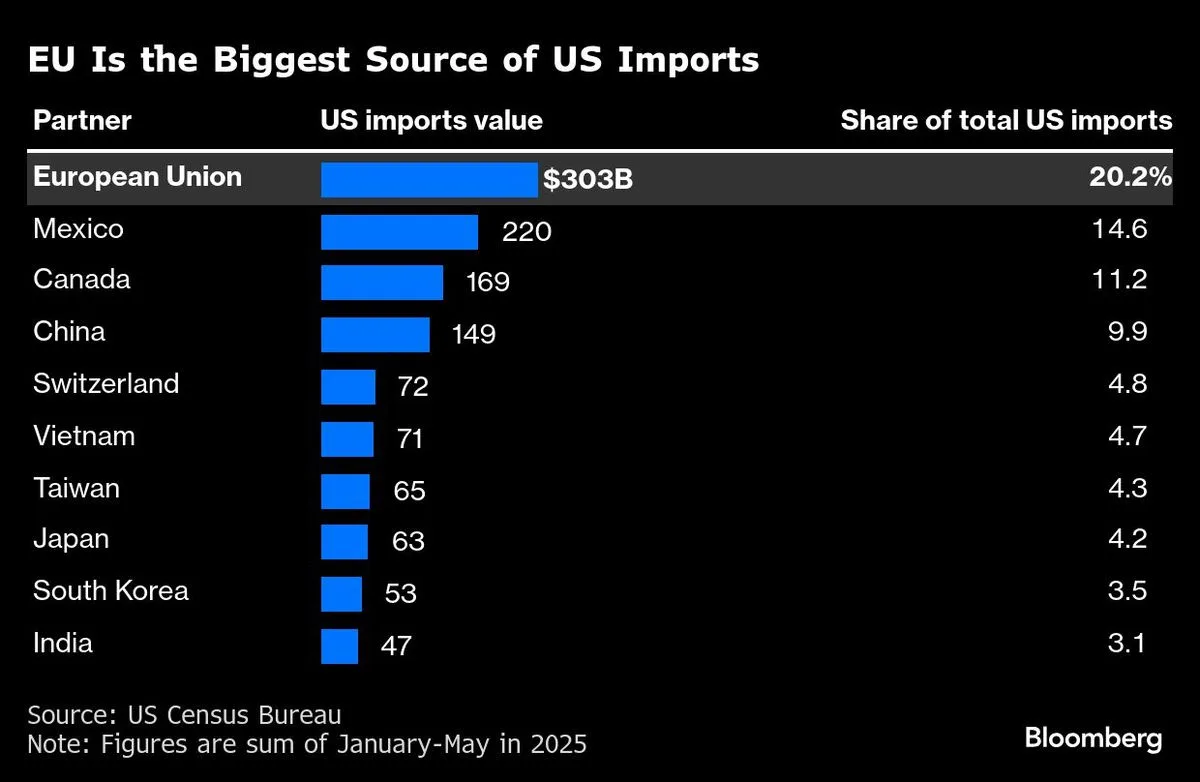
The total trade volume between the EU and U.S. was about €1.7 trillion in goods and services in 2024, showing the scale of the relationship this deal affects [9, 10]. The EU member states are expected to give final approval around June 26, 2026, after which the deal will be formally adopted and published in the EU Official Journal, allowing it to take effect shortly thereafter [1, 11, 2, 3, 4, 5, 6, 7].
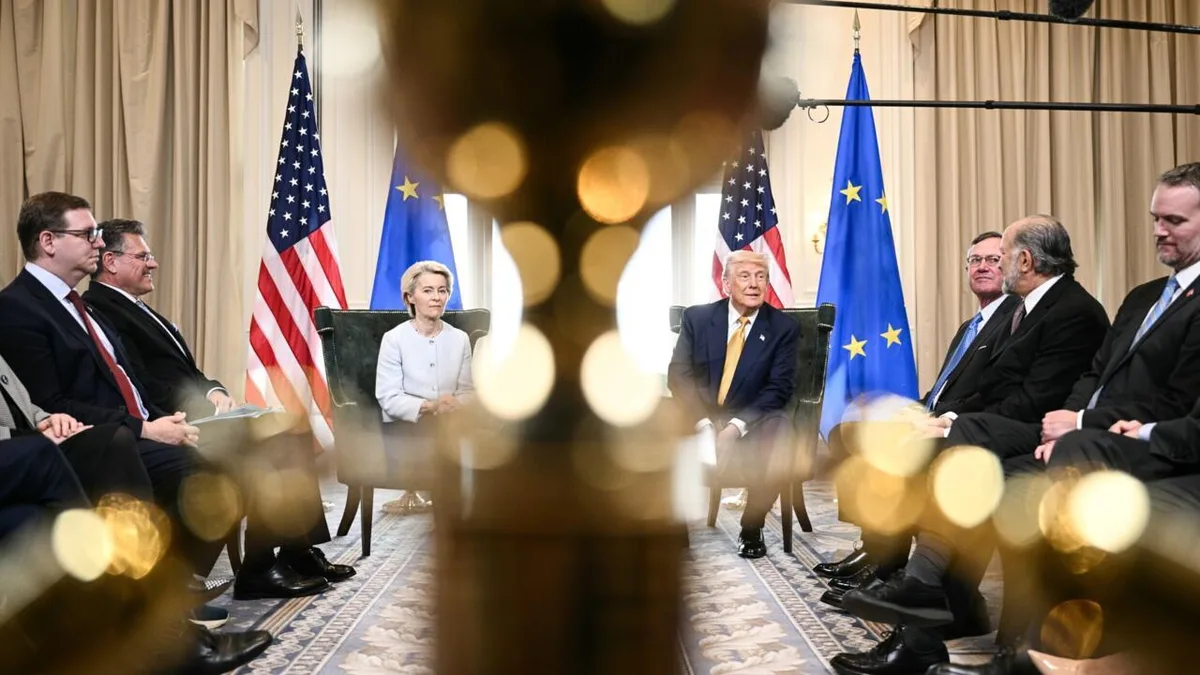
The original agreement was reached in July 2025 at Trump’s Turnberry golf course [1, 2, 4, 9]. The EU aims to meet the July 4 deadline set by Trump to finalize the ratification and avoid potential tariff increases on automobiles.