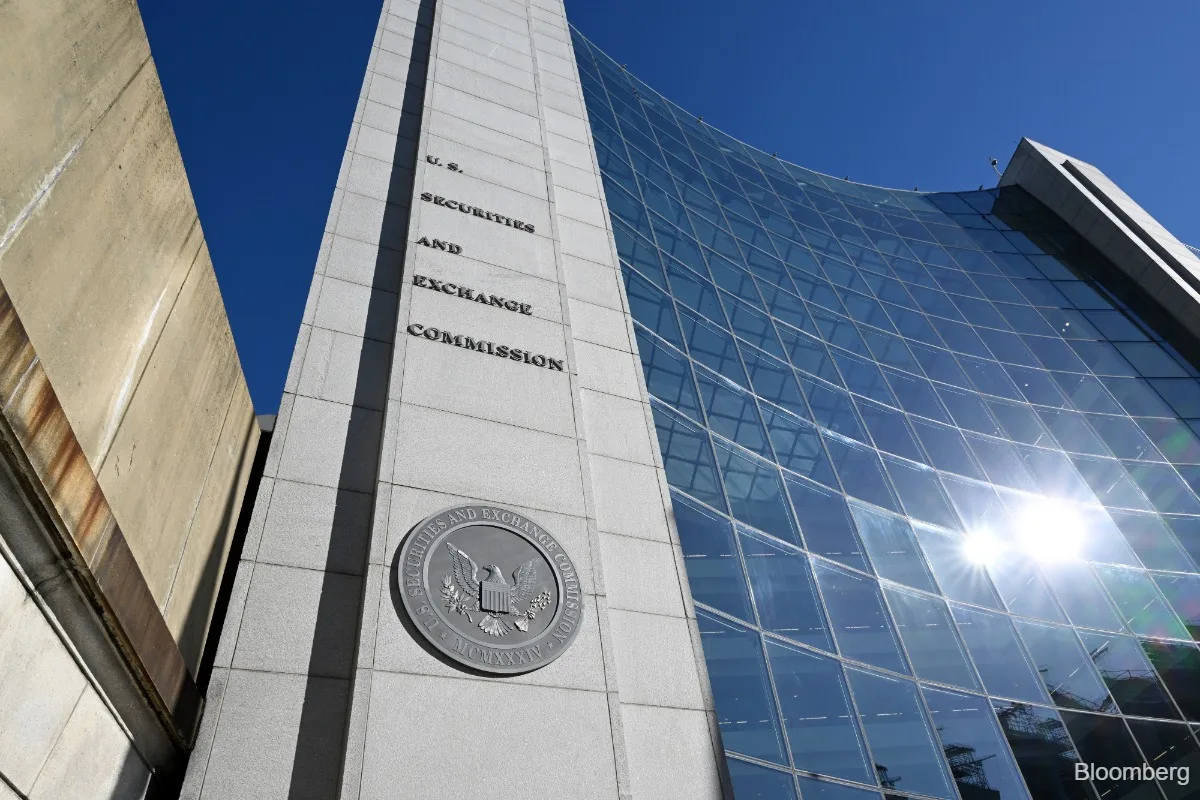
The US Securities and Exchange Commission announced a delay in its planned innovation exemption that would permit crypto firms to trade tokenized assets linked to US stocks on decentralized platforms [1, 2, 3, 4]. The proposal sought to enable trading of digital representations of equity securities currently available in secondary markets [1, 2, 3, 5].
One contentious issue involves the plan allowing third-party tokens issued without backing or consent from the public companies whose shares they represent [2, 3, 5]. Traditional financial institutions and exchanges, including Nasdaq, Cboe, and CME Group, exerted strong pressure on the SEC to halt or slow the proposal, citing concerns over market fragmentation, investor protection, and unfair competition [5].
SEC Commissioner Hester Peirce emphasized the exemption would be "limited in scope" and "facilitate trading only of digital representations of the same underlying equity security that an investor could purchase in the secondary market today" [2]. However, disagreement remains within the SEC on whether to permit third-party tokens not authorized by issuers [2, 3, 5].
Under the proposal, platforms would be mandated to ensure token holders receive shareholder rights, including dividends and voting rights [2]. Former regulators and market participants have raised concerns about the practical challenges of fulfilling these obligations using blockchain tokens [2, 3].
Paul Grewal, Chief Legal Officer at Coinbase, noted the SEC was preparing regulations aimed at providing market clarity for capital markets tokenization [3]. The innovation exemption is part of the SEC's "Project Crypto" initiative led by Chairman Paul Atkins and Commissioner Peirce [5].
Initial reports indicated the SEC planned to release the exemption as early as May 22 but formally announced the delay on May 23 amid ongoing discussions with exchanges and stakeholders [1, 2, 3, 4].
The delay heightens regulatory uncertainty for crypto firms operating in the US and could impact digital asset regulatory approaches internationally [4, 6, 5]. The SEC continues to review input from exchanges and regulators before making a final decision [1, 2, 5].