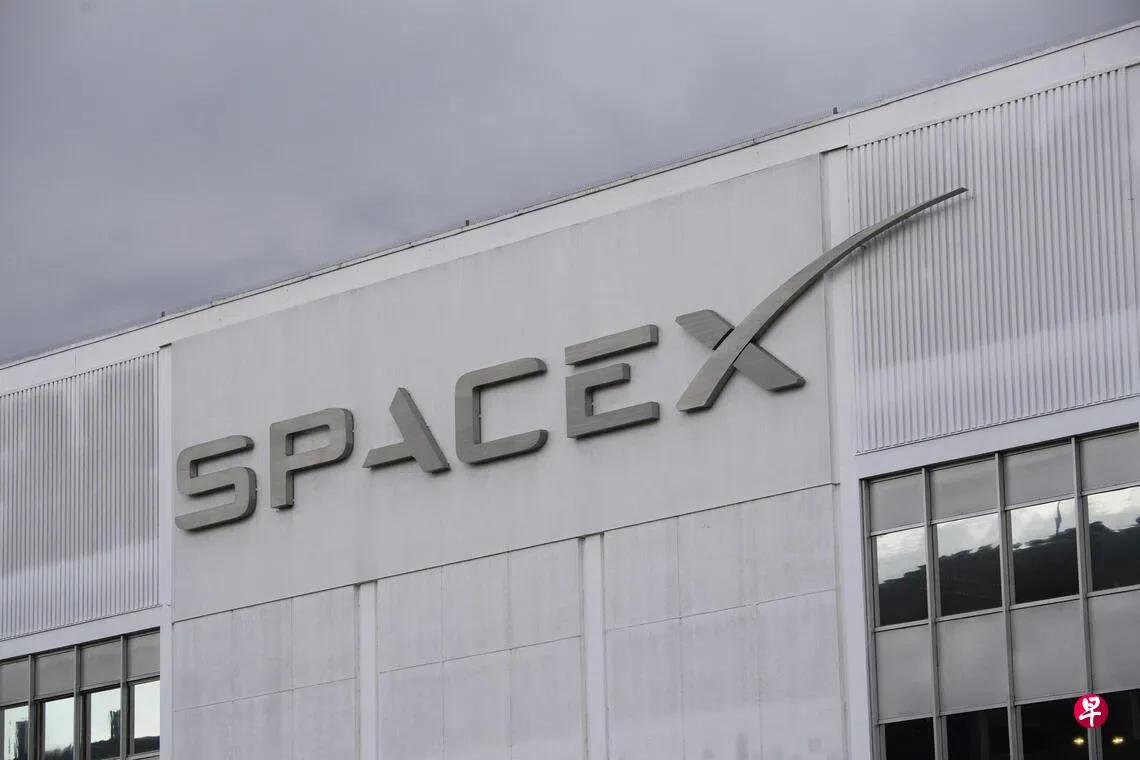
SpaceX submitted its initial public offering documents to the U.S. Securities and Exchange Commission on May 20 and 21, 2026, with plans to list on Nasdaq under ticker SPCX [1, 2, 3]. The company aims to raise as much as $75 billion (approximately SGD 96 billion), potentially valuing SpaceX between $1.5 trillion and $2 trillion, making it one of the largest IPOs ever [1, 4, 2, 3].
Elon Musk will hold about 85% of voting rights after the IPO through a dual-class share structure, where Class B shares carry 10 times the voting power of Class A shares [1, 5]. He owns roughly 12.3% of Class A shares and 93.6% of Class B shares [1, 5]. The current board consists mostly of Musk allies, preserving his firm control over the company [6, 5].
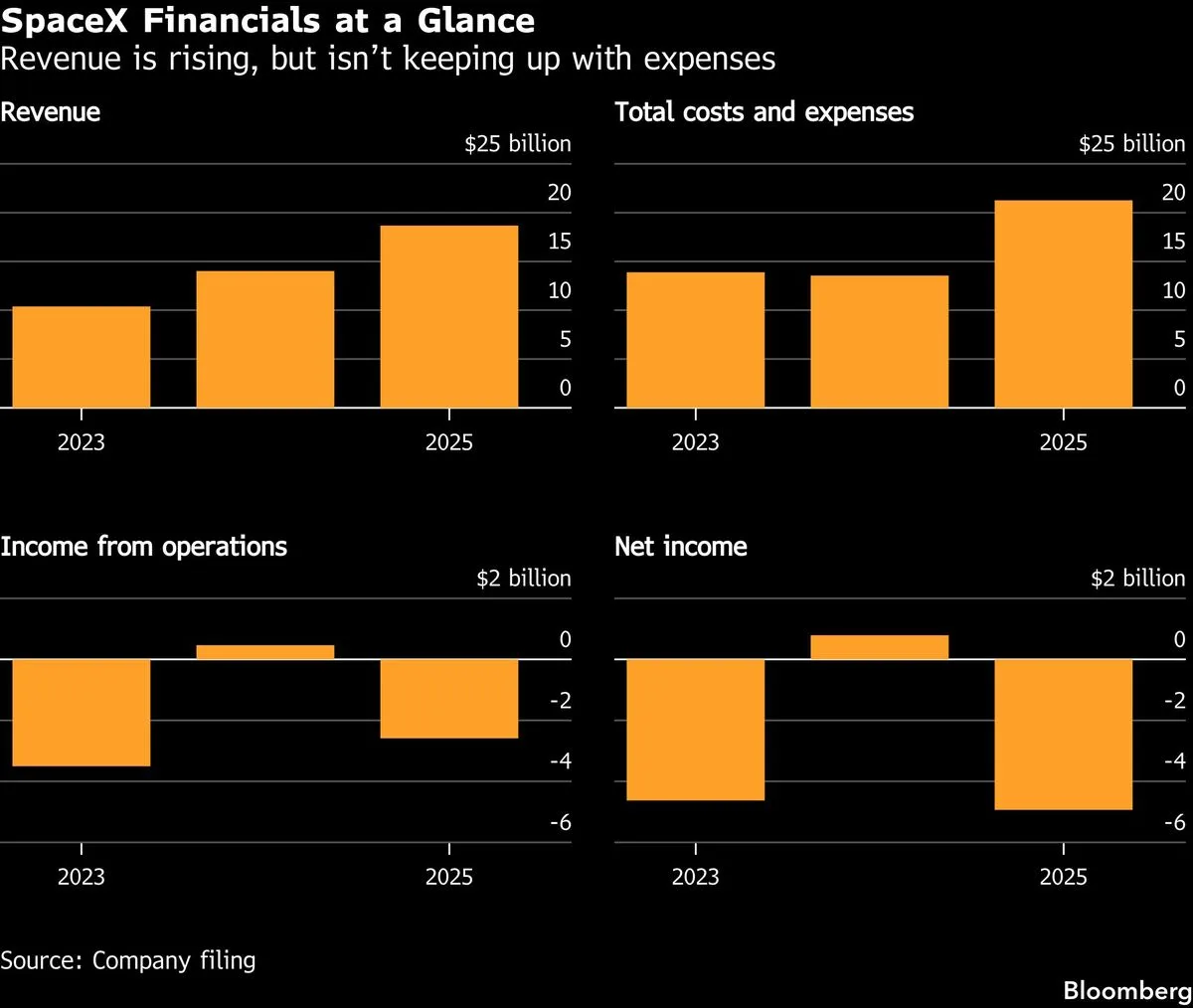
Financial results show SpaceX’s revenues increasing but losses widening. Q1 2026 revenue was $4.69 billion with a net loss of $4.28 billion, a sharp rise from the $528 million net loss in Q1 2025 [1, 4]. For full year 2025, revenue hit $18.7 billion, up from $14 billion in 2024, but the net loss ballooned to $4.94 billion compared with a $791 million profit in 2024 [1, 4].
Most revenue comes from the Starlink satellite internet service, which grew its user base from 2.3 million in 2023 to 8.9 million in 2025 [1]. Starlink generated $11.4 billion in 2025 revenue with $4.4 billion operating income, a roughly 50% increase year-over-year [6, 7]. The rocket launch division continues to lose money, reporting $619 million in Q1 2026 revenue but a $662 million operating loss, with 2025 ending at $4 billion revenue and $657 million loss [1, 7].
SpaceX absorbed AI startup xAI in February 2026. The AI segment earned $3.2 billion in 2025 but operated at a $6.4 billion loss amid expanding AI data centers and computing power [6, 7]. Total capital expenditures in 2025 were $20.7 billion, with over half spent on AI initiatives [1, 7].
Among planned projects are solar-powered orbital data centers with 100 terawatts of AI computing capacity annually, representing about 20% of U.S. 2025 power generation [1, 6]. Anthropic has agreed to pay SpaceX $1.25 billion monthly through May 2029 for computing capacity from those centers [7, 8].
Tesla owns about 19 million SpaceX Class A shares, and the two companies collaborate on chip fabrication and a solar factory to power AI centers [6]. Internal transactions among Musk-owned entities reached $650 million in 2025, raising governance concerns [6]. Market experts warn the IPO may divert capital from Tesla, potentially pressuring Tesla’s stock price—"我们认为马斯克的重心将更多转向SpaceX," said Gilbert, portfolio manager at Integrity Asset Management [9].
Musk earned a $54,000 base salary in 2025 with compensation tied to performance milestones, including reward shares if SpaceX establishes a million-person Mars colony and reaches $6.6 to $7.5 trillion valuation [6, 10].
SpaceX’s IPO roadshow is expected to start June 4, with pricing and trading on Nasdaq anticipated between June 11 and 12 under ticker SPCX [2, 3, 7].