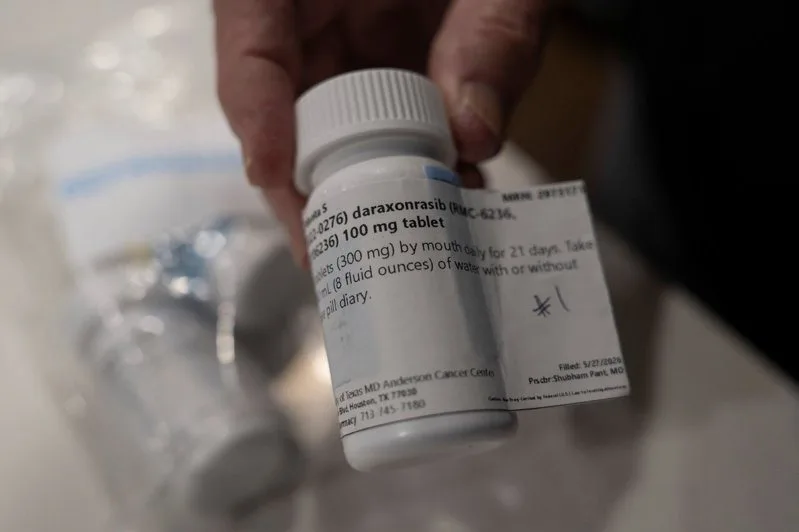
Daraxonrasib, an experimental oral drug, doubled median survival time for patients with metastatic pancreatic cancer from around 6.6-6.7 months to about 13.2 months in a large randomized clinical trial involving 500 patients worldwide [1, 2, 3, 4, 5, 6]. The trial compared Daraxonrasib to standard chemotherapy in patients whose disease had progressed after previous treatments [1, 2, 3, 4, 5, 6].
The drug also extended median progression-free survival, or tumor control time, to 7.2 months compared to 3.6 months with chemotherapy [3, 4, 5, 6]. It targets the KRAS gene mutation, present in over 90% of pancreatic ductal adenocarcinoma cases, by acting as a molecular glue that inhibits the mutated KRAS protein, blocking cancer growth [1, 2, 3, 4, 5, 6].
Patients on Daraxonrasib reported fewer side effects and better quality of life, experiencing reduced pain and improved symptoms compared to chemotherapy [1, 3, 4, 5, 6]. Oncology experts described the results as "landscape-changing," with Dr. Rachna Shroff calling them "unprecedented survival" and Dr. Julie Gralow labeling the study a "grand slam" in pancreatic cancer treatment [1].
Zev Wainberg noted, "This is the first drug to show clear superiority over chemotherapy in this patient population," adding it was one of the hardest studies he has been involved in [2, 3]. Brian Wolpin stated Daraxonrasib has "the potential to become the new standard for metastatic pancreatic cancer patients after prior therapy failure" [3].
The Food and Drug Administration has planned accelerated review and expanded access programs for Daraxonrasib [2, 6]. Researchers are exploring its use in earlier stages of pancreatic cancer as well as other KRAS-driven cancers [2, 3, 4, 5, 6].
Pancreatic cancer remains deadly, with an estimated 67,000 new US cases and over 52,000 deaths expected in 2026, and only a 13% five-year survival rate [2]. The trial’s positive results were presented on May 31, 2026, at the American Society of Clinical Oncology annual meeting in Chicago and published in the New England Journal of Medicine [1, 2, 3, 4, 5, 6].
A patient named Helene Rubin began taking Daraxonrasib under the trial in February 2026 [6]. As Daraxonrasib moves closer to regulatory approval, its future use in clinical practice and further trials will be closely watched.