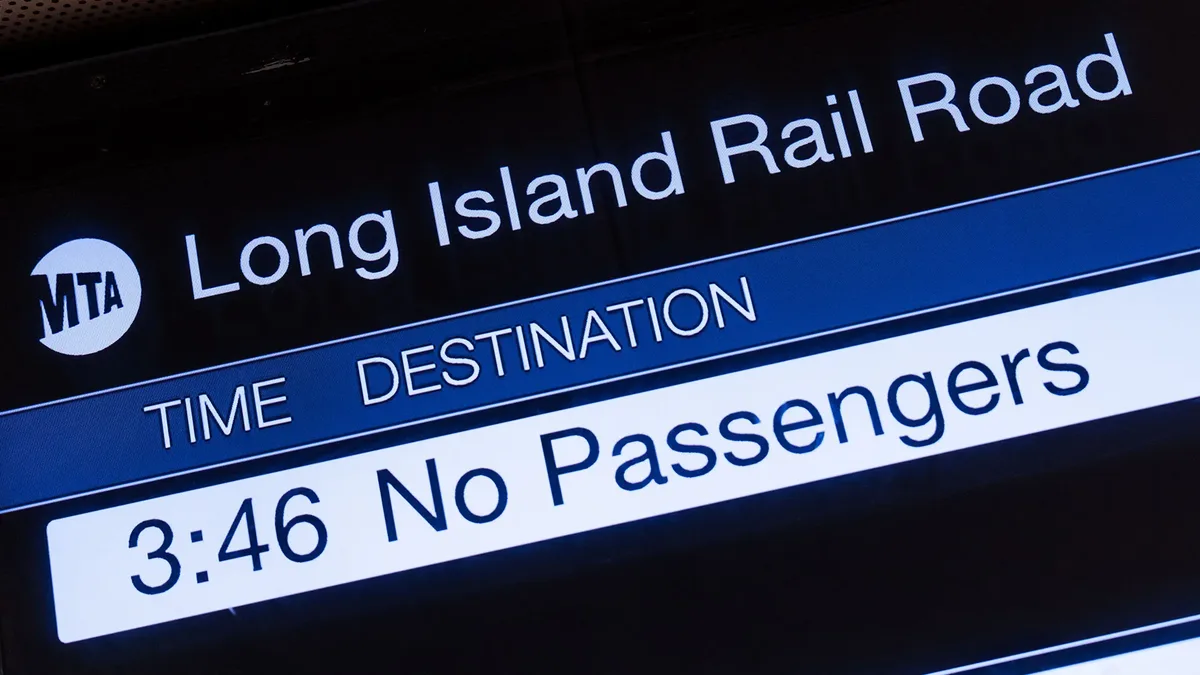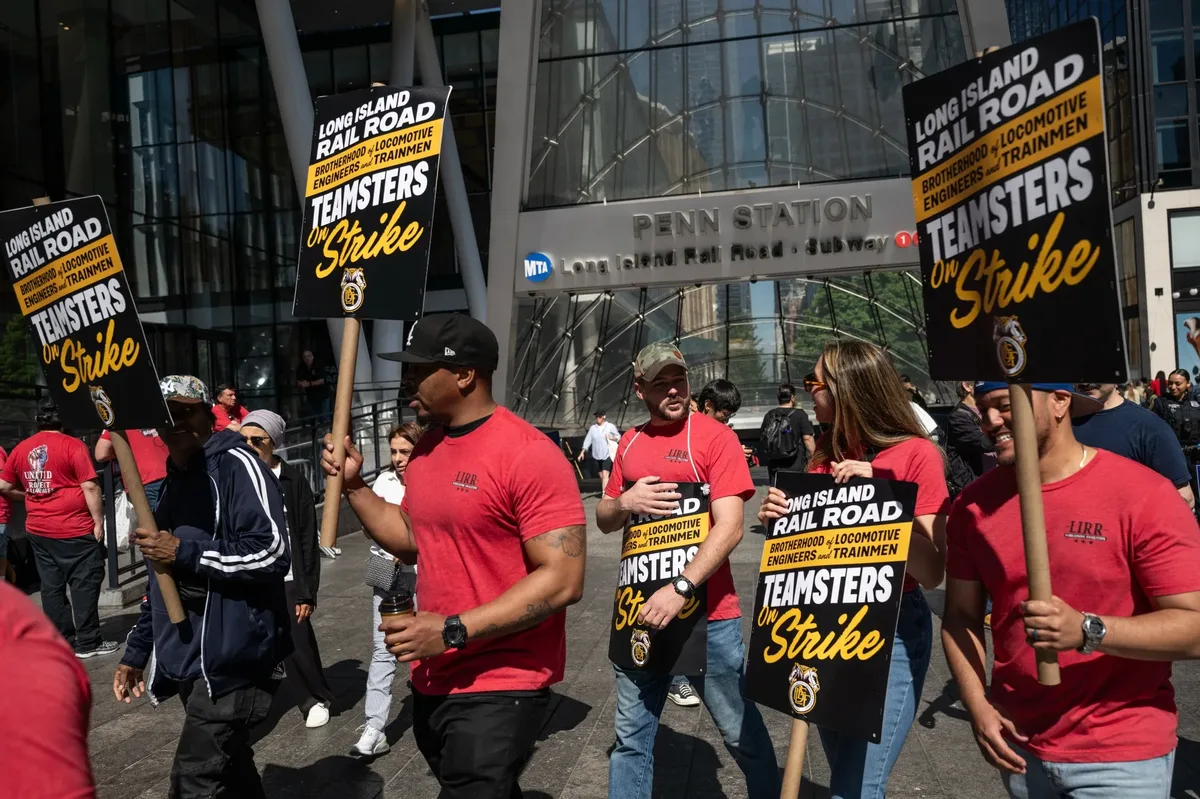
About 3,500 workers from five unions representing engineers, electricians, signalmen and other roles at the Long Island Rail Road (LIRR) began a strike at 12:01 a.m. ET on May 16, 2026, halting the busiest commuter rail system in North America [1, 2, 3, 4, 5, 6, 7]. This was the first LIRR walkout since 1994, ending more than 30 years of continuous service without stoppage [1, 2, 3, 5].
The strike suspended all LIRR operations, affecting nearly 300,000 daily passengers according to most sources, though some estimated about 250,000 [8, 2, 3, 4, 5, 9, 6, 7, 10]. With no trains running, commuters faced severe congestion on Long Island roads as many sought alternate transport or teleworked [2, 5, 9, 6, 11, 7, 10]. New York Governor Kathy Hochul urged residents to work from home and called on both parties to return to negotiations amid the disruption [3, 5, 9, 6, 11, 7].
The labor dispute centered on wages. Unions demanded a roughly 5% pay increase starting June 2026 to keep pace with inflation, while the Metropolitan Transportation Authority (MTA) had offered just under 4.5% with higher healthcare contributions for new employees [2, 6, 11]. MTA CEO Janno Lieber said, "We cannot, and will not, do a deal that shifts huge cost to our riders by forcing extra fare hikes. And we can’t expect taxpayers to foot the bill either" [2]. Lieber added the agency had "given the union everything they said they wanted in terms of pay" [5]. Unions rejected the final offer, citing increased costs for riders and taxpayers as unacceptable [2, 3, 5, 9]. Kevin Sexton, Brotherhood of Locomotive Engineers and Trainmen vice president, said, "We’re far apart at this point. We are truly sorry that we are in this situation" [5].
The unions represent about half of the LIRR workforce [5, 9, 7]. The strike came just ahead of the Memorial Day weekend and peak summer tourism season for Long Island beaches, worsening the impact [2, 3]. Sports fans attending New York Yankees, Mets, and Knicks playoff games also faced travel disruptions [5, 9, 7, 10]. New York State Comptroller Thomas DiNapoli estimated a daily economic loss near $61 million [2].
To ease hardship for essential workers who could not work remotely, the MTA offered limited shuttle buses during weekday peak hours [3, 5, 6, 11, 7]. Governor Hochul pressed for renewed good-faith talks, saying, "For weeks, the MTA has attempted to negotiate in good faith and put multiple fair offers on the table" [3]. Mark Wallace, Brotherhood president, warned, "We hope LIRR gets serious soon to avoid further unnecessary disruptions for hundreds of thousands of New Yorkers" [3].
The Trump administration had previously appointed emergency mediation boards aiming to avert the strike, but negotiations failed [3, 4].
The strike began May 16 and continued through May 17 with ongoing disruptions and statements from officials [9]. On May 19, a deal was reached to end the strike and resume LIRR service [12].