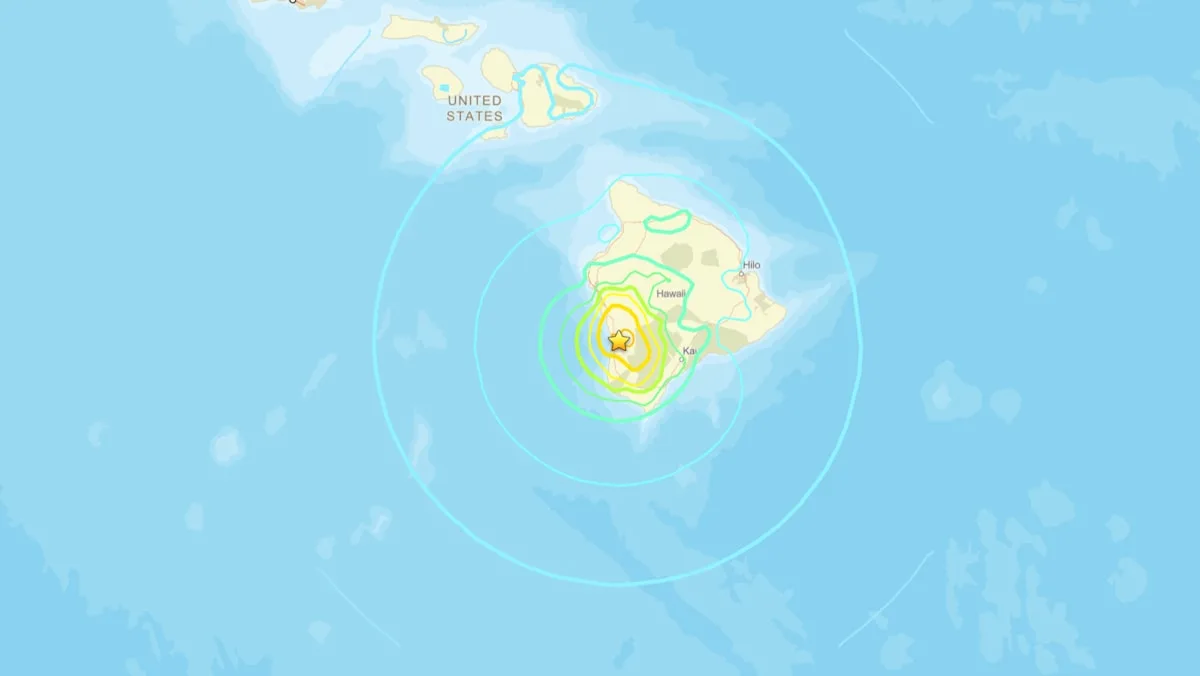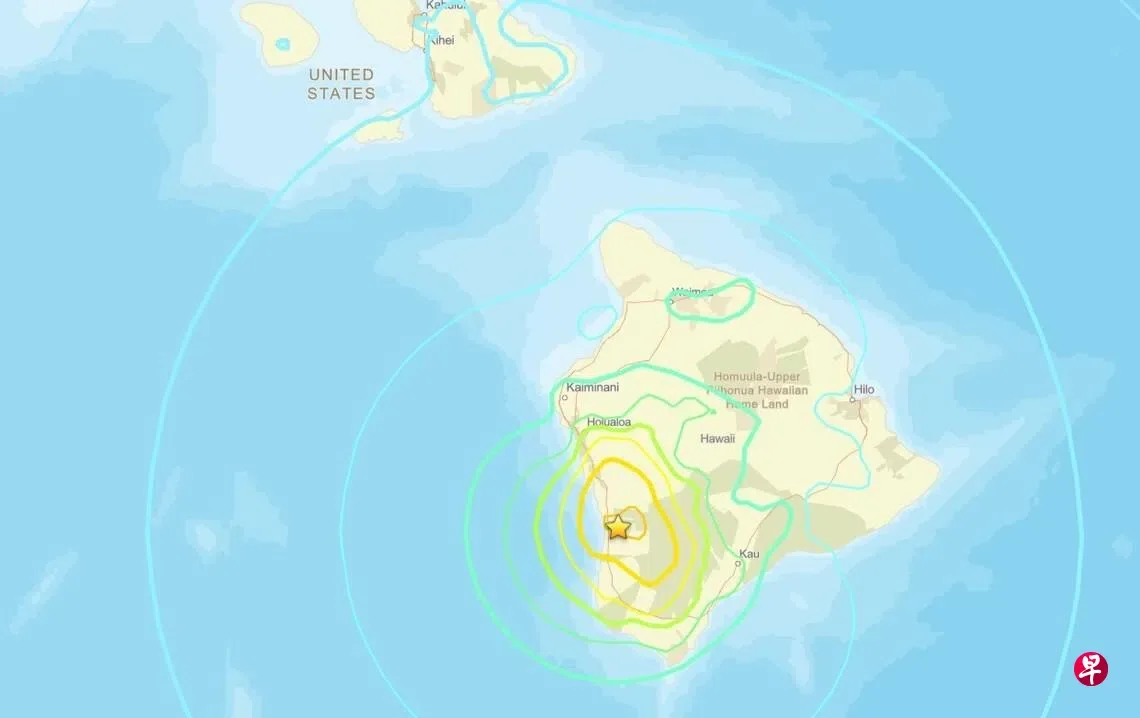
A magnitude 6.0 earthquake struck near Honaunau-Napoopoo on Hawaii's Big Island at 9:46 p.m. local time on May 22, 2026, with an epicenter about 11 to 12 kilometers south-southeast of the town on the southwest coast [1, 2, 3, 4, 5, 6, 7, 8, 9]. The quake occurred at a depth estimated between 22.4 and 23 kilometers [1, 2, 3, 4, 5, 6, 7, 8, 9].
Strong shaking from the earthquake was felt across the Big Island and on neighboring islands including Maui, Oahu, and Kauai. Over 2,500 residents and visitors submitted felt reports indicating the intensity of the tremor [2, 5, 7, 8, 9]. Despite the strength of the shake, no casualties or significant property damage have been reported [1, 2, 3, 4, 5, 6, 8, 9].
Shortly after the mainshock, a magnitude 3.2 aftershock was recorded six minutes later northwest of the initial epicenter [5, 7]. The Pacific Tsunami Warning Center confirmed the earthquake did not trigger a tsunami and issued no warnings [1, 2, 4, 5, 7, 8, 9].
The US Geological Survey (USGS) and the Hawaiian Volcano Observatory are actively monitoring Kilauea volcano near the earthquake area. Kilauea, one of the world's most active volcanoes, has been erupting intermittently since December 23, 2024 [1, 2, 4, 7, 8, 9]. Experts forecast the next eruption could occur between May 24 and May 27, 2026 [2, 7, 8, 9].
USGS experts said the quake likely resulted from stress due to bending of the oceanic plate caused by the weight of the Hawaiian island chain, rather than direct volcanic activity. "The depth, location, and recorded seismic waves of the earthquake suggest that it was caused by stress due to bending of the oceanic plate from the weight of the Hawaiian island chain," the agency said [5, 7].
Residents and scientists will continue to watch Kilauea closely as the expected eruption window approaches in the coming days [2, 7, 8, 9].